
FROM THE EDITORIAL DESK
Editor’s note
A fuller account of the Chapter, and a clearer invitation to participate.
Dear members,
A professional community becomes useful when you can see where you fit within it. You may be preparing for a certification, looking for peers in your industry, considering a leadership transition or hoping to put your experience to work for someone else. This edition of Member’s Dialog is organized around those needs.
Our April–September 2026 account follows the Chapter’s monthly seminars, regional engagement in Nagpur, academic collaborations, mentoring and volunteer contribution. It also introduces the programs and services that help turn an occasional visit into sustained participation. We want new members to understand the Chapter and established members to discover another way to take part.
You will find dedicated introductions to PMI, the Chapter and its three Special Interest Groups. Professional development, networking, Pune Women’s League, member services and volunteering each have their own place. The Member Access Hub directory connects the publication with the routes through which members can act on what they read.
This issue also creates a regular home for our newest members and for members who have achieved professional certifications. These milestones are celebrated at monthly seminars; recording them here gives the wider community an opportunity to welcome and congratulate the people involved.
A record of learning as well as activity
An event report is most valuable when it explains what a member could learn, not simply who was present. We invite contributors to share a practical takeaway, a question that remained unresolved or an experience that changed how they approached their work. The strongest stories make their context clear and leave another reader with something useful to consider.
Historical achievements from FY 2025–26 appear in a clearly identified retrospective. Programme descriptions explain the offering; activity reports describe the work recorded for this issue.
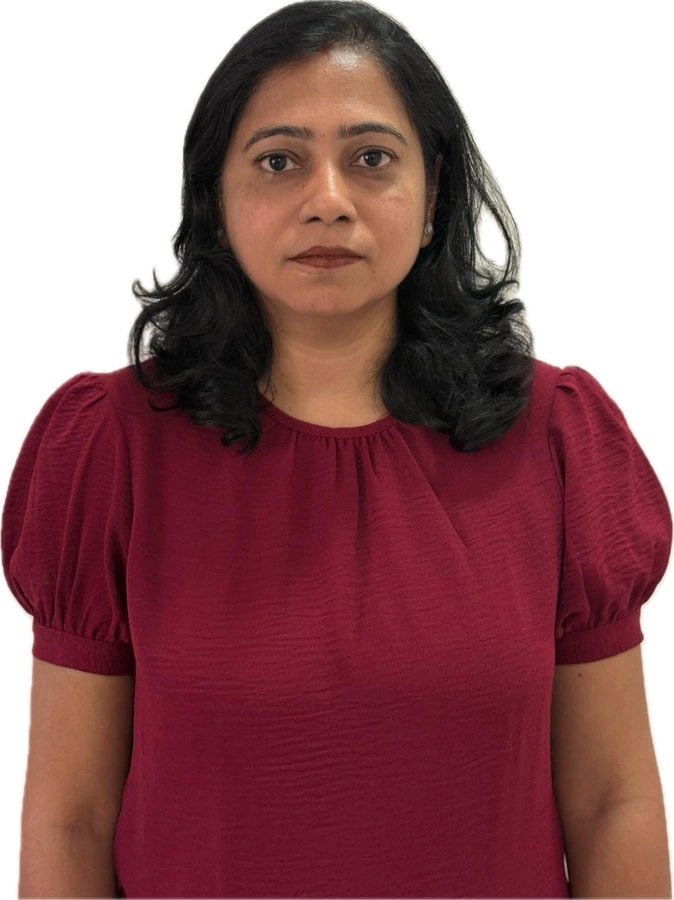
Thank you to the volunteers and portfolio teams who help document the Chapter’s work. Your photographs, accurate records and considered reflections make this publication possible. We look forward to carrying more of our members’ voices in the editions ahead.
The Editorial Team

Send a contribution | publications@pmipunechapter.com
Back to contents ↑FROM THE PRESIDENT
President’s message
Making membership relevant through learning, relationships and contribution.
Dear Chapter members,
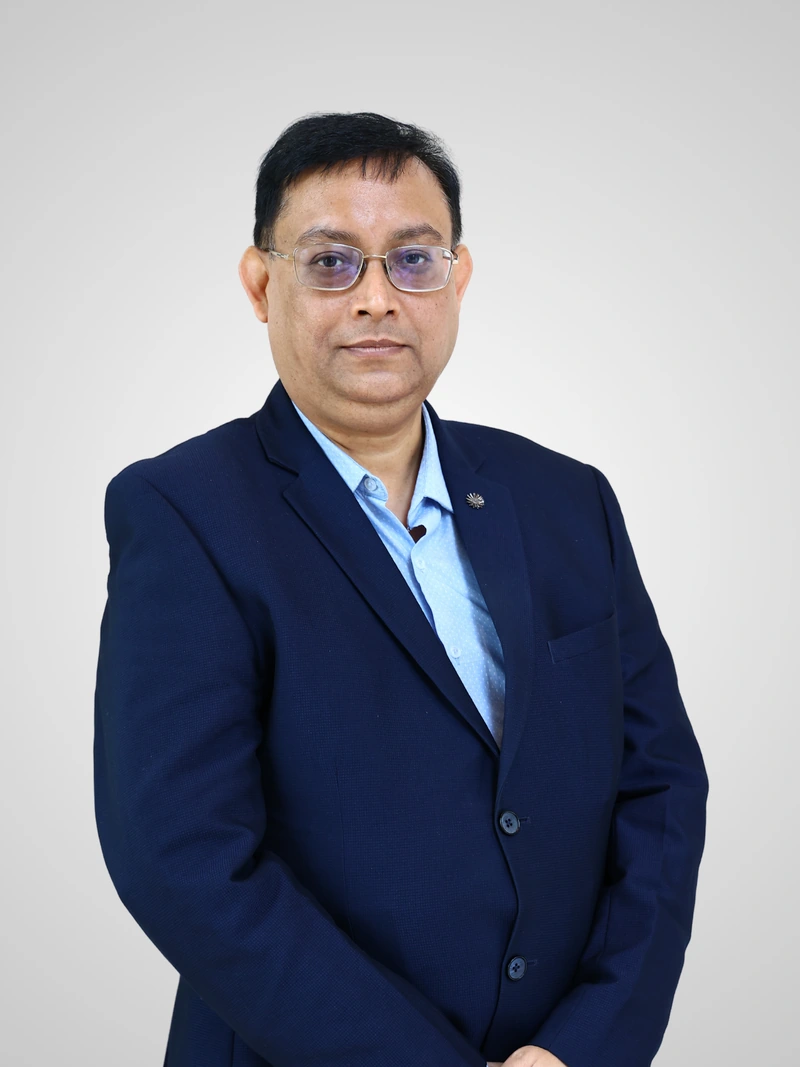
The value of a Chapter is experienced through participation: a useful conversation, a new skill, a trusted professional connection or an opportunity to contribute. Our responsibility is to make those experiences easier to discover and worthwhile to pursue.
During the first half of FY 2026–27, six monthly seminars sustained our regular learning calendar. Special Interest Groups brought greater focus to industry questions, while the Nagpur Leadership Conclave created a wider setting for engagement between industry and academia. Academic visits, student communities and mentoring added further ways for people to connect with professional practice.
I am encouraged by the relationships developing across these programs. A student learning about project management, a practitioner exploring a career transition and a senior professional offering to mentor will enter the Chapter with different expectations. We should help each person find an appropriate next step and understand how to take it.
The Member Access Hub is part of that effort. Its purpose is to make the Chapter easier to navigate, with clearer routes into support, resources, services, specialist groups and volunteering. MentorPRO, Pune Women’s League and our professional-development offering provide further opportunities to learn and contribute according to individual needs.
As we develop these platforms, we must remain attentive to what they deliver. Attendance, programme launches and partnerships are useful measures of activity; their significance lies in the learning, relationships and practical opportunities that follow. Continued participation and thoughtful feedback will help us improve that experience.
Thank you to our members, volunteers, speakers, partners and past leaders for giving this community your time and expertise. Much of the work happens between public events: preparing content, supporting participants, coordinating teams and following through on commitments. That work deserves recognition.
I invite you to choose one opportunity in this edition and pursue it. Attend a learning session, bring a question to a SIG, explore mentoring or discuss a volunteer role. The Chapter grows stronger when members help shape its work.
Back to contents ↑UNDERSTANDING YOUR PROFESSIONAL COMMUNITY
PMI and the project profession
Global knowledge and credentials, connected with local professional practice.
Project Management Institute (PMI) brings together a worldwide community concerned with how projects create value. Its purpose is to maximize project success to elevate our world. For practitioners, that translates into standards, professional credentials, research, learning and opportunities to exchange experience beyond an individual employer or industry.
A common language for project work
Standards and practice resources help professionals discuss delivery with greater precision. Credentials such as PMP®, CAPM® and PMI-ACP® provide recognized development pathways, while continuing learning helps practitioners keep their knowledge relevant as responsibilities and delivery environments change. A credential is one part of a professional journey, alongside experience, judgement and the ability to work effectively with others.
Learning throughout a career
PMI’s published membership offering includes professional resources, premium webinars and special access to PMI Infinity, its AI-powered project-management coach. The appropriate resource depends on the question you are trying to solve. A practitioner building foundational knowledge will use the ecosystem differently from a portfolio leader examining governance or a project manager preparing for a new role.
PMI’s current benefits and access conditions should be checked through the official membership pages. The Chapter’s role is to help members connect those global resources with local professional relationships and practical learning opportunities.
Where the local Chapter fits
PMI Pune–Deccan India Chapter provides a regional community in which members can meet peers, hear practitioners, participate in specialist conversations and contribute through volunteering. A seminar can introduce a new idea; a SIG can examine how it applies in an industry; mentoring can help a member think through its relevance to a personal development goal.
Global PMI resources and Chapter participation work well together when you begin with a specific need. Identify the capability or challenge you want to address, choose a relevant resource and use the community to compare interpretations and experiences. This makes professional development an active process rather than a collection of disconnected activities.
Explore PMI membership and benefits |https://www.pmi.org/membership
Explore PMI standards| https://www.pmi.org/standards
Back to contents ↑INTRODUCING PMI PUNE–DECCAN INDIA CHAPTER
What the Chapter does
A volunteer-led professional community connecting learning with practice.
Chartered in 2005, PMI Pune–Deccan India Chapter advances project, programme and portfolio management through a regional community of practitioners, leaders, educators, students and partners. Its work combines professional development with the relationships through which people learn, collaborate and contribute.
The Chapter in this reporting period
The Chapter had more than 6,500 members as of 31 August 2026. This issue covers April–September 2026, with selected earlier achievements identified separately. The community brings together people with different professional responsibilities and interests, giving members several ways to find relevant peers and contribute.
Offering | What it enables |
|---|---|
Professional development | Certification pathways, workshops, masterclasses and continuing learning. |
Programmes and events | Monthly seminars, the DiSHA conference, leadership forums and practitioner exchange. |
Industry communities | Automotive & Manufacturing, Construction & EPC, and AI & GCC SIGs. |
Career and inclusion | MentorPRO, CareerConnect and Pune Women’s League. |
Academic engagement | Institutional collaboration, student clubs, faculty interaction and campus-to-career connections. |
Contribution and service | Volunteering, publications, social impact, member support and collaboration space. |
How the work is organized
The Board provides direction and oversight. Portfolio leaders and volunteers organize delivery across programs, membership, professional development, corporate and academic engagement, technology, communications and social purpose. This structure connects individual contributions with a wider programme of Chapter activity.
For a member, the most useful entry point is the one that matches a current goal. You do not need to engage with every offering at once. Start with a learning need, an industry question or a contribution you can make, then build a more sustained relationship with that part of the community.
Start with the Member Access Hub | https://www.pmipunechapter.com/landing-pages/new/
Back to contents ↑YOUR MEMBERSHIP IN PRACTICE
Member benefits and how to use them
Choose the benefit that matches your next professional goal.
Membership is most valuable when it changes what you can learn, whom you can learn with and how you can contribute. The global PMI offering and the Chapter’s local programs provide complementary routes. Access, prices and eligibility vary by service; use the published terms for the specific activity.
Your goal | A useful starting point | Put it into practice |
|---|---|---|
Build knowledge | PMI resources and Chapter learning | Choose a topic linked to a live project or capability gap. |
Maintain a credential | Eligible learning and giving-back activities | Check PDU eligibility and retain the activity evidence. |
Find peers | Seminars, SIGs and networking | Bring a specific question and follow up with people you meet. |
Develop through guidance | MentorPRO | Identify the transition or development goal you want to work on. |
Explore career options | CareerConnect and PMI Job Board | Review the available service and control what information you share. |
Build leadership experience | Volunteer roles and programme delivery | Agree a realistic responsibility and complete it well. |
Increase professional visibility | Speaking, publications and PWL | Share experience that other members can learn from. |
Access practical support | Hub onboarding, resources and support | Use the appropriate route and provide the context needed to help you. |
Make a small plan for your membership
Select one learning priority and one community activity for the month ahead. Attend with a question, record what you learned and identify the next action. If the activity did not address your need, tell the relevant team what would have made it more useful.
For credential maintenance, PMI distinguishes Education PDUs from Giving Back to the Profession. Training, webinars and suitable learning activities can support the first category; eligible volunteering, mentoring and content creation may support the second. Requirements depend on the credential and the activity—participation alone is not a blanket assurance of credit.
Check PMI’s current membership benefits | https://www.pmi.org/membership
Understand eligible PDU activities |https://www.pmi.org/certifications/certification-resources/maintain/earn-pdus
Back to contents ↑DIGITAL MEMBER SERVICES
Your Member Access Hub directory
A practical route from reading about an opportunity to taking part.
The Chapter Access Hub brings member journeys, resources, support and programme routes into one place. Use it when you know what you need but are unsure which team or service to approach. The directory below connects each Hub route with the relevant coverage in this issue.
Use the route that matches your purpose
For a first visit, begin with Member Onboarding. For a document or guidance route, choose Member Resources. For an unresolved question, choose Member Support. Programme routes lead to the relevant offering; they do not replace the published eligibility, cohort, and event or booking conditions.
The programme pages that follow introduce each offering, share activity recorded for this issue and suggest a practical next step.
Back to contents ↑MEMBER ONBOARDING RESOURCES AND SUPPORT
Getting started and getting help
Three Hub routes help members find their way into the Chapter.
Member Onboarding
Joining the paid member family is the beginning of a relationship with the Chapter. The onboarding route introduces PMI, the local community and ways to participate. Its purpose is to help members move from registration to a useful first action: finding a relevant session, exploring a specialist group or understanding where to ask for help.
The Hub provides a published gateway into the Chapter and supports ongoing attention to onboarding and engagement.
Member Resources
The resources route brings together documents, decks, useful links and member-facing guidance. Start with the question you want to answer. If you need information about a programme, look for its current description and participation route; if you need help understanding the Chapter, begin with the orientation material.
Member Support
The support route provides enquiry and request options, Chapter office information and a complaint route. Give the team enough context to act: the service involved, the date of your request, the issue you encountered and the outcome you need. Avoid including unnecessary personal or payment information in an open message.
Digital support should also make human assistance easier to reach. The Chapter has described conversational-bot and CRM foundations, while multilingual support, voice functions and richer analytics remain future-development targets rather than completed capabilities.
Find onboarding resources and support
Back to contents ↑PROFESSIONAL DEVELOPMENT AND TRAINING
Training that supports professional growth
Certification preparation, practical workshops and continuing learning.
The Chapter’s professional-development offering covers more than attendance at events. Certification preparation provides a structured route towards a professional credential; skills workshops and masterclasses help practitioners address particular responsibilities. Both should be selected with a clear development goal.
The training offering
The Chapter’s training menu includes CAPM®, PMP®, PgMP® and PfMP® preparation, alongside leadership development, agile project management, high-performance teams, personal branding, office tools and ChatGPT in project management. The Chapter also offers capability-development conversations for organizations and PMOs.
Delivery recorded for this issue
This issue’s learning account includes six monthly seminars, SIG discussions and the MentorPRO launch.
How members can benefit
Choose a course according to the capability you need and the prerequisites you meet. Before registering, check the syllabus, facilitator, format, dates, fees, cancellation conditions and any stated contact-hour or PDU eligibility. After the programme, record one change you can make in practice and retain the evidence relevant to your certification needs.
Explore the Chapter training menu
Back to contents ↑MONTHLY PROGRAMMES AND NETWORKING
Six monthly seminars and a place to meet peers
Seminars #207–212 sustained the April–September learning calendar.
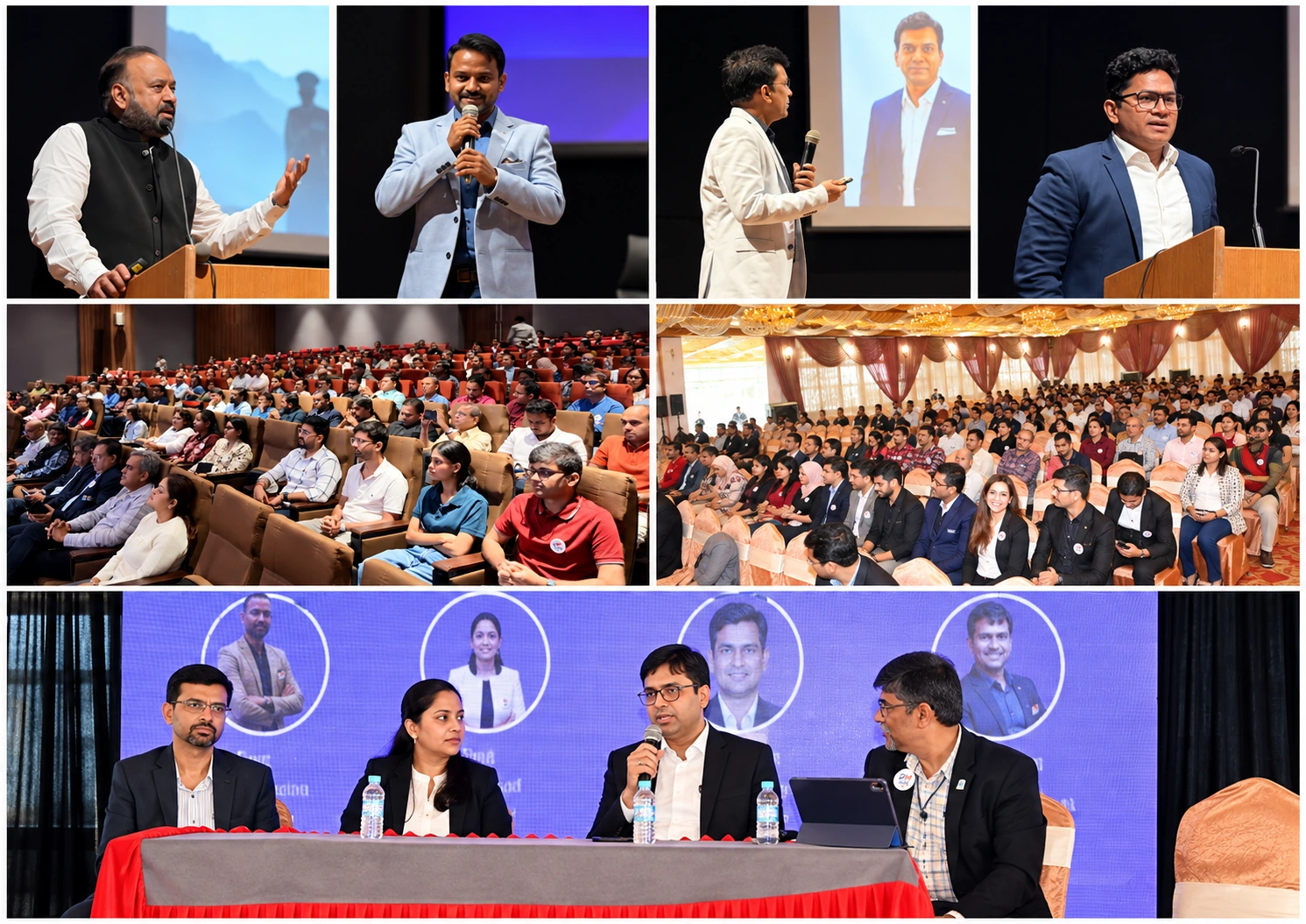
A selection of seminar sessions and member participation.
The Programs portfolio reports six monthly in-person seminars from April through September 2026, extending the uninterrupted series from #207 to #212. The regular calendar gives members a recurring place to hear practitioner perspectives, ask questions and reconnect with colleagues.
Learning and networking in the same setting
A seminar offers more than its presentation. The discussion before and after a session can help members understand how an idea applies in a different organization or industry. Recognition on stage also introduces new members and celebrates professional certifications, connecting individual milestones with the wider community.
To make networking useful, prepare a short introduction and a genuine question. Follow up with permission, refer to the conversation you had and offer something relevant in return. A thoughtful exchange is a stronger starting point than collecting contacts without context.
Seminar# | Date of Event | Speaker & Topic | Key Takeaway |
|---|---|---|---|
207 | 11-Apr-26 | Krishna Bothe: Agentic AI for Managers | The future of project management isn’t about tracking work. it’s about orchestrating humans and intelligent agents together |
207 | 11-Apr-26 | Vipul Rathi: The Human Advantage: Mastering AI for Elite Performance | Elite performance is built through human skills, strengthened by AI and sustained through consistent habits, continuous improvement and small wins. |
208 | 9-May-26 | Col. Nilanjit Srivastava, Retd: Ethical Leadership | Ethics & Results reinforce each other. Ethical culture requires intentional building & maintenance. |
208 | 9-May-26 | Mahesh Edake: Efficient Stakeholders Engagement and smart communication | Engage the stakeholders Collaboration is key Use AI tools for the communication |
209 | 20-Jun-26 | Satish Kulkarni: Project Management Complexity in MEGA Projects | Success of any mega project needs tight Mitigation action plan both for external and internal factors. |
209 | 20-Jun-26 | Roopesh Subramanian: The Power of Pause: Finding Calm Amid Deadlines, Decisions, and Demands | Small pauses can break the cycle of stress. Take a 2-5 mins brief pause anywhere to notice your breath, the sounds around you and your thoughts |
210 | 11-Jul-26 | Aniruddha Vaidya Shahapure: The Sentient Cities: Building Next-Gen infra and Redefining Execution | The Smart City Mission isn't a project. It's a mindset. And the most powerful 'smart' tool we have is empathy. Use tools & AI to make this easy, predictable & self-healing |
210 | 11-Jul-26 | Amit Auti: Strategic Stakeholder Nexus | Map before you message, Design Cadence Deliberately, Make Trust Deposit Early, Invite Sceptics into the room |
211 | 8-Aug-26 | Amit Dabhane: Agentic AI workflow for Risk Management | AI Agents, in any project, can help to increase efficiency, effective, speed & insights. |
211 | 8-Aug-26 | Amol Dhore: Change Management in Projects: Navigating Resistance | Resistance is a signal, no failure, People support what they understand and help shape, Measure adoption, not only implementation & change management belongs in the project plan from day one. |
212 | 5-Sep-2026 | Kalpaesh Thackery, Amruta Pore, Prabhat Pustake, Vivek Sonar: FUTURE READY PMO : NAVIGATING THE AI REVOLUTION | Be a future-ready PMO uses AI to move beyond tracking projects—enabling smarter decisions, proactive risk management and stronger business outcomes, while keeping human judgement at the center. |
REGIONAL EVENTS
Nagpur Leadership Conclave connected industry and academia
A regional programme combining leadership discussion and professional relationships.
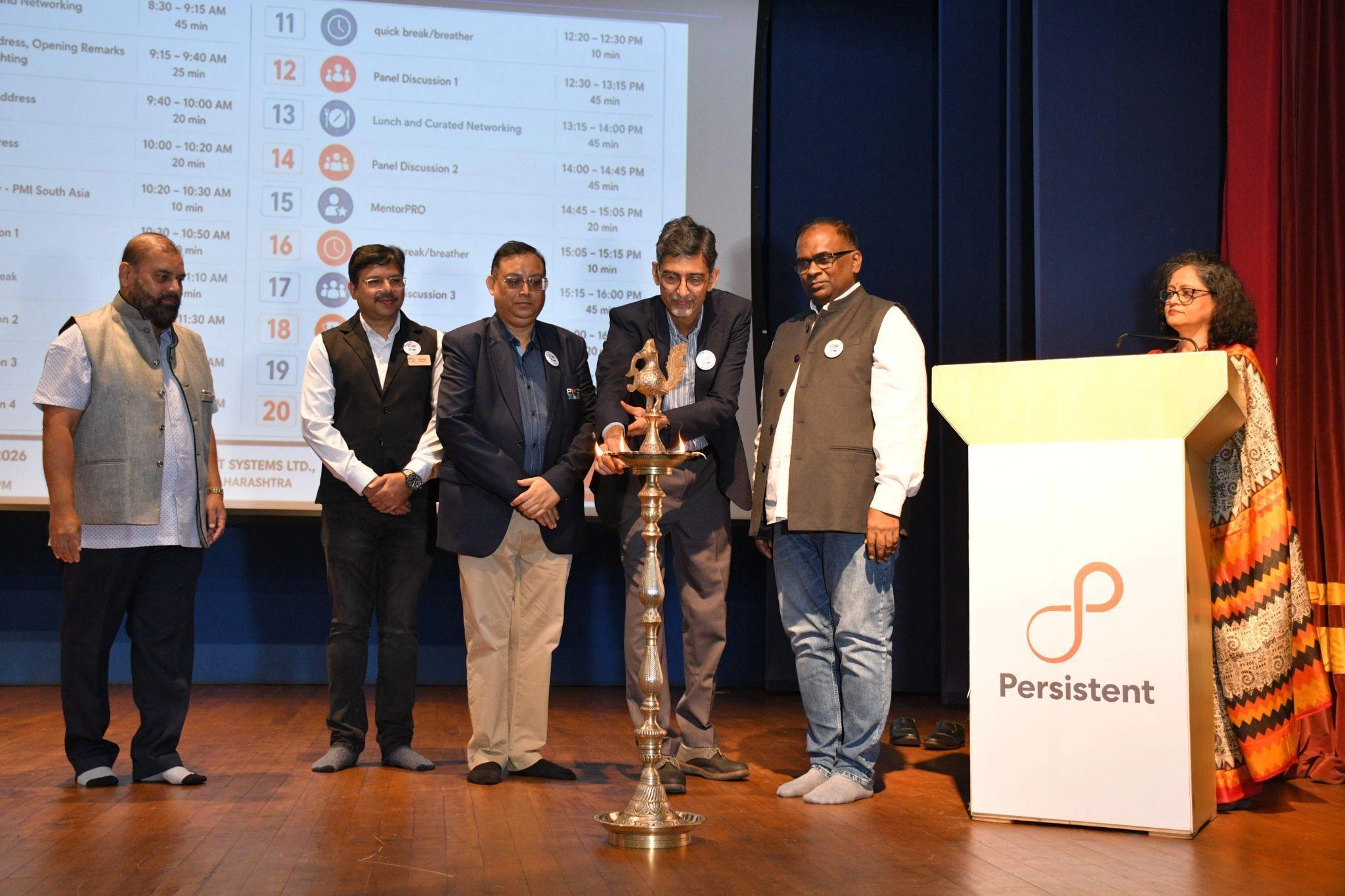
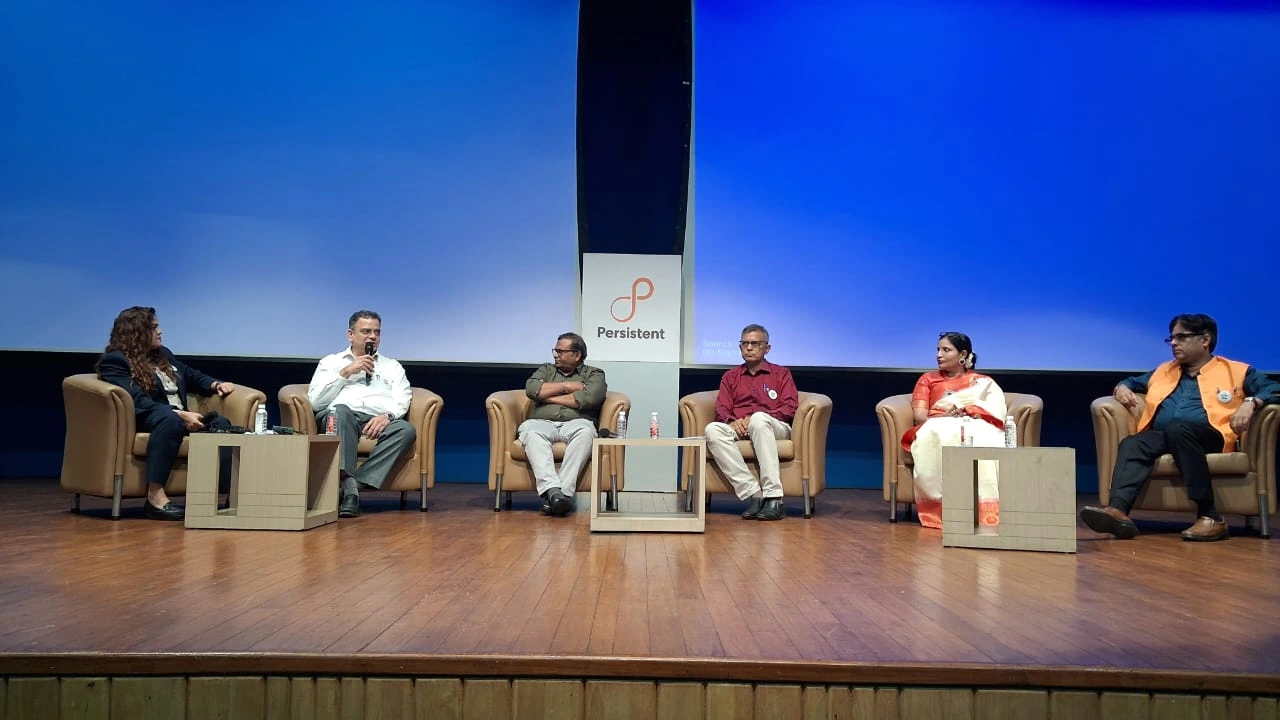
Nagpur Leadership Conclave: the opening ceremony and a panel discussion.
The Nagpur Leadership Conclave extended Chapter engagement beyond Pune. Participation brought together six universities, ten university leaders, more than twenty corporate organizations and two industry associations, VMA and VIA. The programme recorded more than 300 registrations.
What the programme delivered
The programme included five keynote sessions, three panel discussions, volunteer recognition and an associated leadership breakfast roundtable. Together, these formats brought academic and industry perspectives into a wider regional leadership conversation.
For the Chapter, the opportunity is to sustain access and relationships across the region. For members, the value lies in meeting people beyond a familiar organizational setting and hearing how leadership and delivery challenges are understood elsewhere.
How to stay involved
Bring forward topics that deserve further discussion, offer an appropriate practitioner case or ask about regional programme participation. The quality of follow-through will determine how a successful gathering becomes continued professional engagement.
Back to contents ↑CORPORATE OUTREACH AND CXO FORUM
Leadership roundtables and corporate partnerships
Connecting practitioner questions with organizational leadership and industry experience.
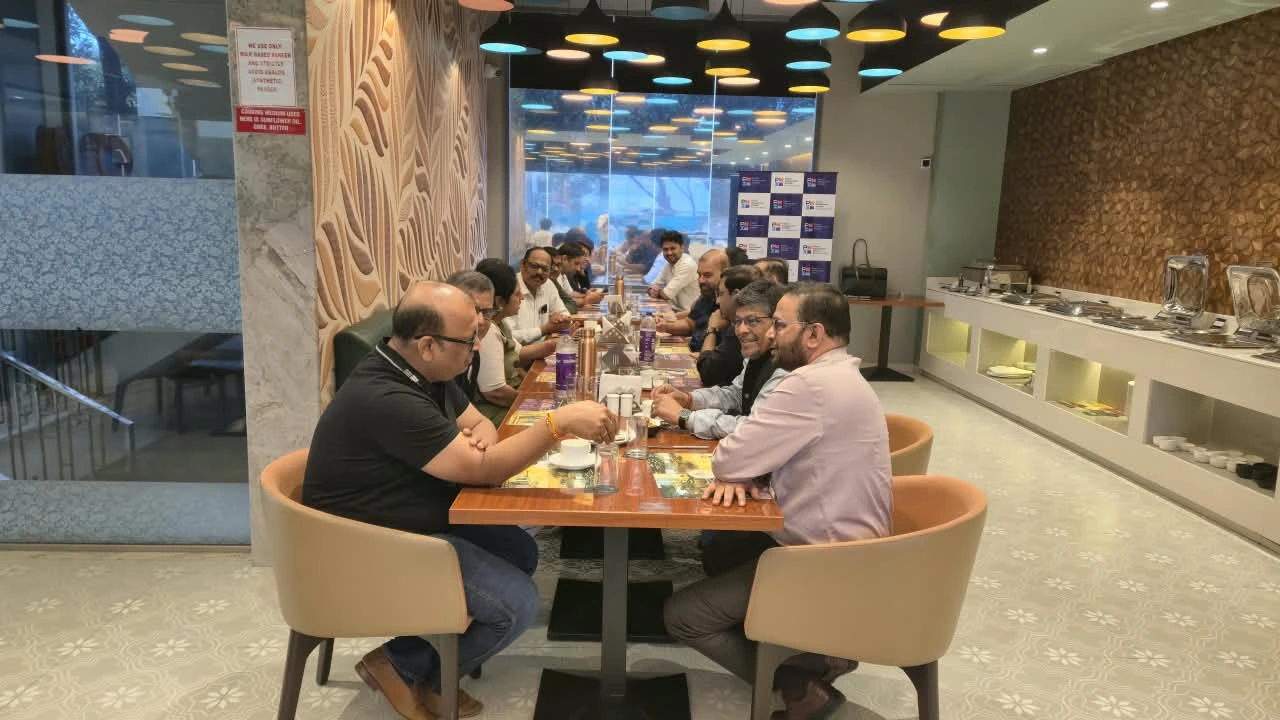
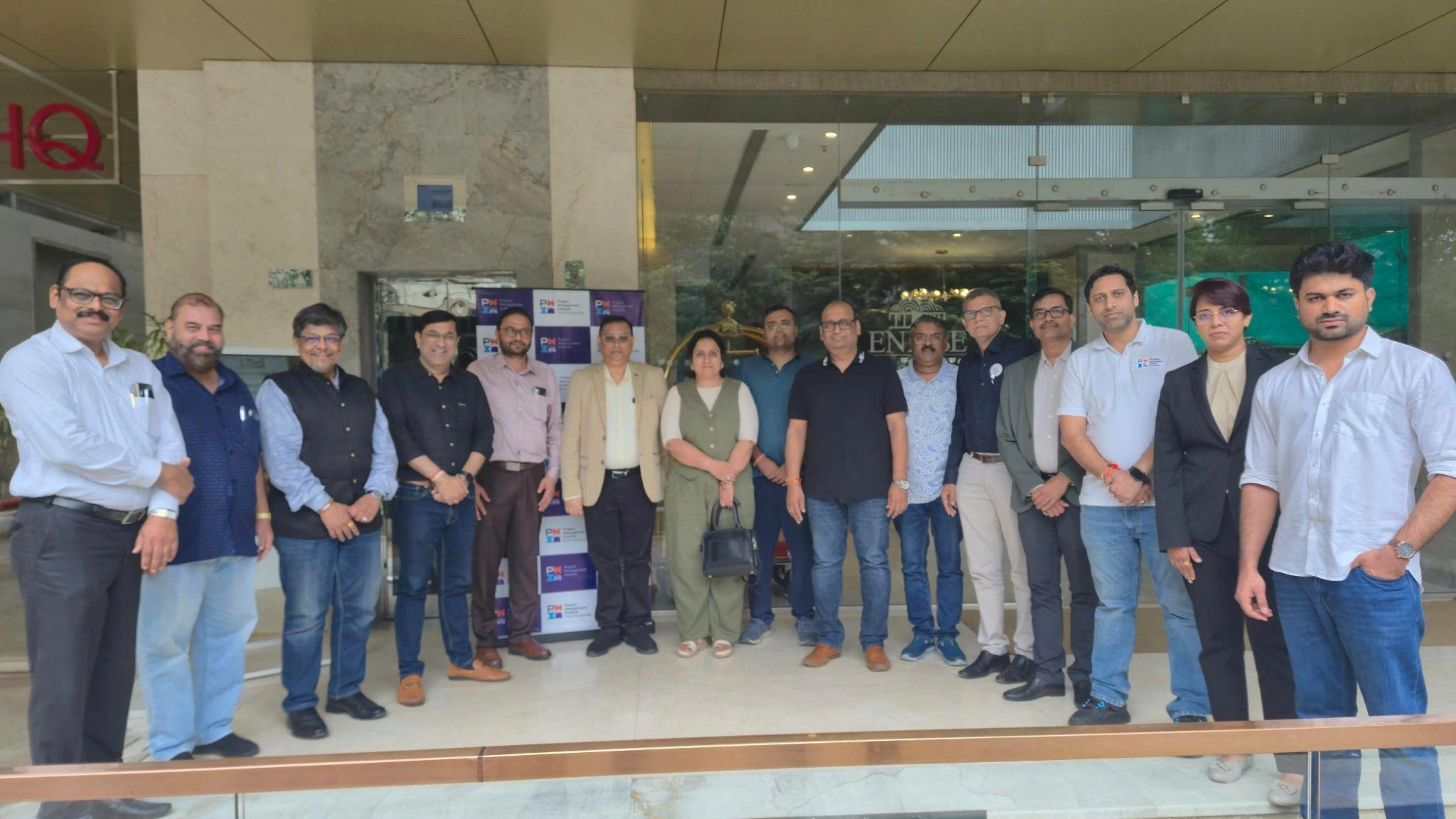
The leadership breakfast roundtable and participants in the associated corporate engagement.
Activity recorded in the reporting period
Corporate Outreach highlighted Automotive & Manufacturing SIG panels in June and September 2026 on resilient supply chains and the future-ready PMO in the AI era. A leadership breakfast roundtable created another setting for dialogue beyond the main programme.
What the CxO Forum offers
The CxO Forum connects senior leaders with questions about strategy, execution, governance and organizational change. It complements technical learning by examining how projects relate to business priorities, decision-making and leadership responsibilities. The Chapter connects these conversations with corporate PMO engagement and industry partnerships.
Members can benefit by contributing a well-framed organizational question or a relevant case. Participation in a particular executive forum depends on its published format and eligibility; an introduction to the platform is not a promise of unrestricted access to every event.
Corporate collaboration with a defined purpose
The emerging corporate model connects industry conversations, the consolidated Sponsorship Desk and the CxO platform. Useful partnerships can support speakers, practitioner content, learning opportunities and continued exchange. A meaningful proposal should explain the audience, the learning objective and the contribution each partner would make.
Explore the CxO Forum through the Hub
Back to contents ↑SPECIAL INTEREST GROUP
Automotive and Manufacturing SIG
Project leadership for mobility, production and industrial transformation.
The Automotive & Manufacturing SIG gives project professionals a setting in which general delivery disciplines meet sector-specific realities. Product development, supplier coordination, plant change and digital transformation all involve different technical constraints, but each requires clear scope, decisions, risks and stakeholder alignment.
What the SIG covers
The SIG’s focus areas include Industry 5.0, mobility, plant excellence, supply chains, AI in manufacturing and digital-factory change. These provide a useful basis for conversations involving manufacturers, suppliers, project offices, operational leaders and technology partners. Roundtables, clinics, site visits and masterclasses provide possible formats; check published announcements for the activities currently offered.
Activity recorded for this issue
An Automotive & Manufacturing webinar took place on 18 April 2026. Corporate Outreach also reports June and September panels on resilient supply chains and the future-ready PMO in the AI era. Across all three communities, the Chapter reports six SIG events and panels during the period.
How members can benefit
Bring a delivery question with enough context to support a useful discussion: the type of programme, the decision involved and the constraint you are trying to manage. A lesson about supplier readiness or plant adoption may be more valuable to peers than a general account of organizational success. Protect confidential information and seek permission before sharing identifiable cases.
Members can participate as learners, contributors, speakers or volunteers according to the opportunities offered. An industry specialist can help by translating experience into a practical case; someone new to the sector can begin by listening, asking precise questions and following the discussion over time.
Access the Automotive SIG route
Back to contents ↑SPECIAL INTEREST GROUP
Construction and EPC SIG
Practical discussion of cost, schedule, contracts and delivery predictability.
Construction and engineering, procurement and construction projects bring together owners, designers, contractors, consultants and specialist suppliers. Decisions made in one part of the project can affect many others. The Construction & EPC SIG offers a professional setting in which members can examine those interfaces and exchange delivery lessons.
What the SIG covers
The SIG’s areas of focus include project controls, contracts and claims, risk, safety, quality, BIM and digital twins, stakeholder governance and AI-supported delivery. The common concern is improving the quality of project decisions and the predictability of delivery.
How members can benefit
A useful contribution begins with a project question that others can examine: how a change was governed, how an early warning was recognized or how a coordination problem affected schedule and cost. Explain the circumstances and the trade-off and distinguish what the team knew at the time from what became clear later.
Members from planning, project controls, contracts, safety, quality and leadership roles can bring complementary perspectives. Participate in a published session, propose a focused case discussion or offer support with content and programme delivery. Use the Hub route to find the current participation options.
Access the Construction / EPC SIG route
Back to contents ↑SPECIAL INTEREST GROUP
AI and GCC SIG
Responsible adoption, delivery governance and the changing role of project professionals.
The AI & GCC SIG connects project professionals with the questions raised by artificial intelligence and Global Capability Centers. Its relevance lies in how organizations adopt new capabilities, organize delivery and demonstrate value—not simply in the availability of new tools.
What the SIG covers
Focus areas include generative and agentic AI, human oversight, AI governance, GCC operating models and the AI-enabled PMO. These themes connect technology with project controls, stakeholder expectations and responsible use. They also make room for practitioners who need to understand adoption and change without being AI developers themselves.
Activity recorded for this issue
The current-year SIG programme includes discussion of the project manager’s evolving role in the AI boom.
How members can benefit
Bring a specific workflow or decision to the conversation. Ask what problem the technology addresses, what information it uses, how its output will be checked and how a team would know whether the change helped. This keeps the discussion connected to professional practice and provides a basis for learning from other members’ experiences.
Members can contribute through cases, discussion, learning content and volunteer support. A useful case explains the limits as well as the benefits of an approach. It should avoid exposing confidential organizational information or presenting an unverified demonstration as a proven result.
Back to contents ↑MENTORING AND CAREER DEVELOPMENT
MentorPRO for guidance and career transitions
Structured conversations that begin with a clear development goal.
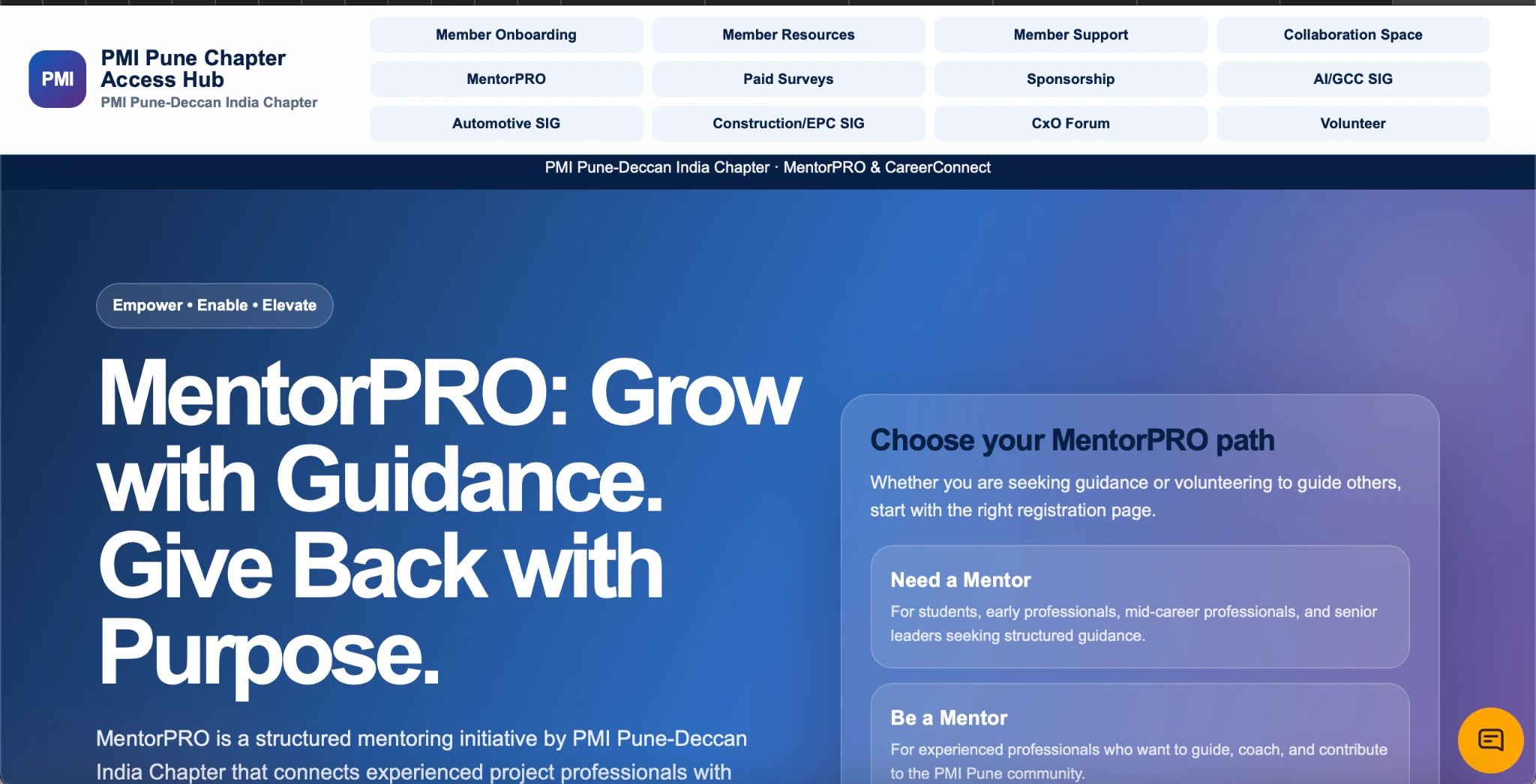
The MentorPRO mentoring programme.
Professional Development launched MentorPRO as a structured mentoring initiative. The programme describes four-to-six-month pathways and matching based on experience, goals and preferences. Members should check the current cohort description for the format and duration applicable to their chosen pathway.
Different needs across a career
The programme architecture includes Student Launchpad, Career Acceleration, Leadership Transition Studio and Mentor Academy. These distinguish support for emerging professionals, members navigating career development, experienced professionals taking on leadership responsibilities and senior practitioners preparing to mentor. Targeted clinics provide a more focused format; check their current scheduling separately.
How to make mentoring useful
Begin with a development question you can explain clearly. Identify the transition, responsibility or capability you want to work on, the context in which it matters and what progress would look like. A mentor can support reflection and learning, while the member remains responsible for decisions and follow-through.
Senior professionals can explore contributing as mentors. The value of that contribution comes from experience shared with care, attentive listening and a commitment to the agreed programme—not from prescribing the same career path for everyone.
Back to contents ↑CAREER OPPORTUNITIES AND MEMBER PARTICIPATION
CareerConnect and paid survey opportunities
Two distinct routes with different purposes and participation conditions.
CareerConnect and the PMI Job Board
CareerConnect connects members with career-related opportunities and professional development. The PMI Job Board is a separate global resource for exploring advertised roles. Members should distinguish a career service from a promise of placement and use the published scope of the specific offering.
Before using a career platform, decide what information you wish to share and review the conditions presented. The Chapter’s stated approach is that members elect to share their own information; the Chapter does not release its member database. Any assessment, mentoring or recruitment interaction should be understood on its own terms.
Paid Surveys through the Hub
The Hub includes a Paid Surveys route, giving this activity a visible place alongside other member services. A survey opportunity should state its purpose, participant eligibility, time requirement, data use and any reward conditions. Being listed as an opportunity does not establish that every member qualifies or that payment is guaranteed.
How to benefit responsibly
Use verified programme links, read the participation information and keep copies of relevant confirmations. Share only the information needed for the activity. If the purpose or payment terms are unclear, use Member Support before proceeding.
Find Paid Surveys and member services
Back to contents ↑PUNE WOMEN’S LEAGUE
PWL supports women in project leadership
A place for learning, mentoring, professional visibility and contribution.
Pune Women’s League (PWL) is the Chapter’s women-engagement platform. It supports learning, mentoring, professional visibility and contribution for women in project management.
Why a dedicated platform matters
Professional development involves the confidence to contribute as well as the knowledge to do so. A forum where members can share experience, hear role models and discuss career questions creates another route into the Chapter. PWL brings capability, mentoring, visibility, volunteering and inclusive leadership together, with allies welcomed into that purpose.
Ways members can take part
PWL’s themes include skill development, networking, knowledge sharing, mentoring and professional or social volunteering. Leadership confidence and opportunities to contribute are central to that purpose. Check with the team for current events and programme availability.
A member might begin by attending a discussion, bringing a development question, offering a practical experience or volunteering to help deliver an activity. An experienced practitioner can contribute as a role model or mentor; someone earlier in a career can help identify questions that deserve greater attention.
Back to contents ↑ACADEMIC OUTREACH
Campus partnerships connect learning with practice
Students, faculty and practitioners contribute different perspectives.
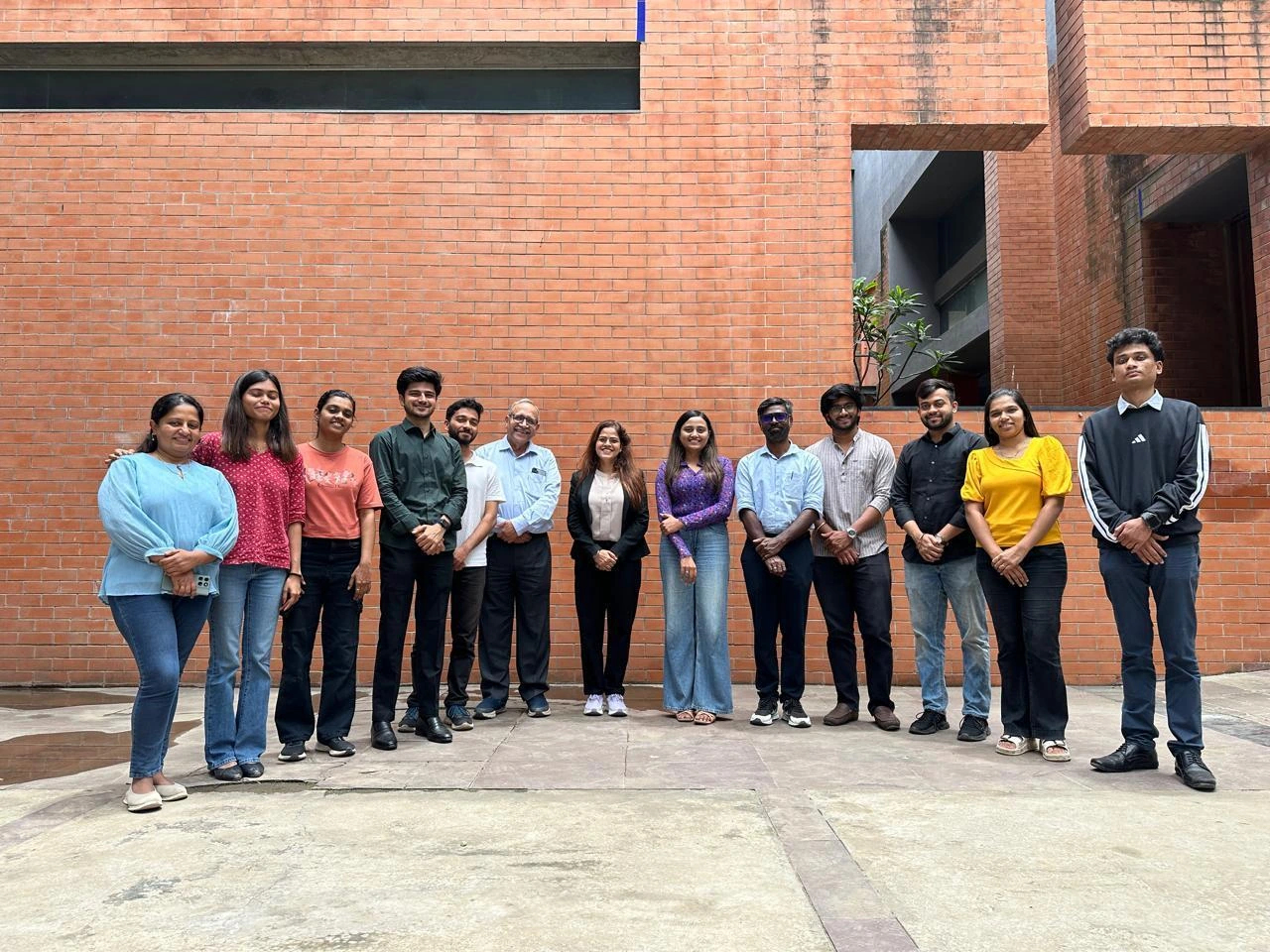
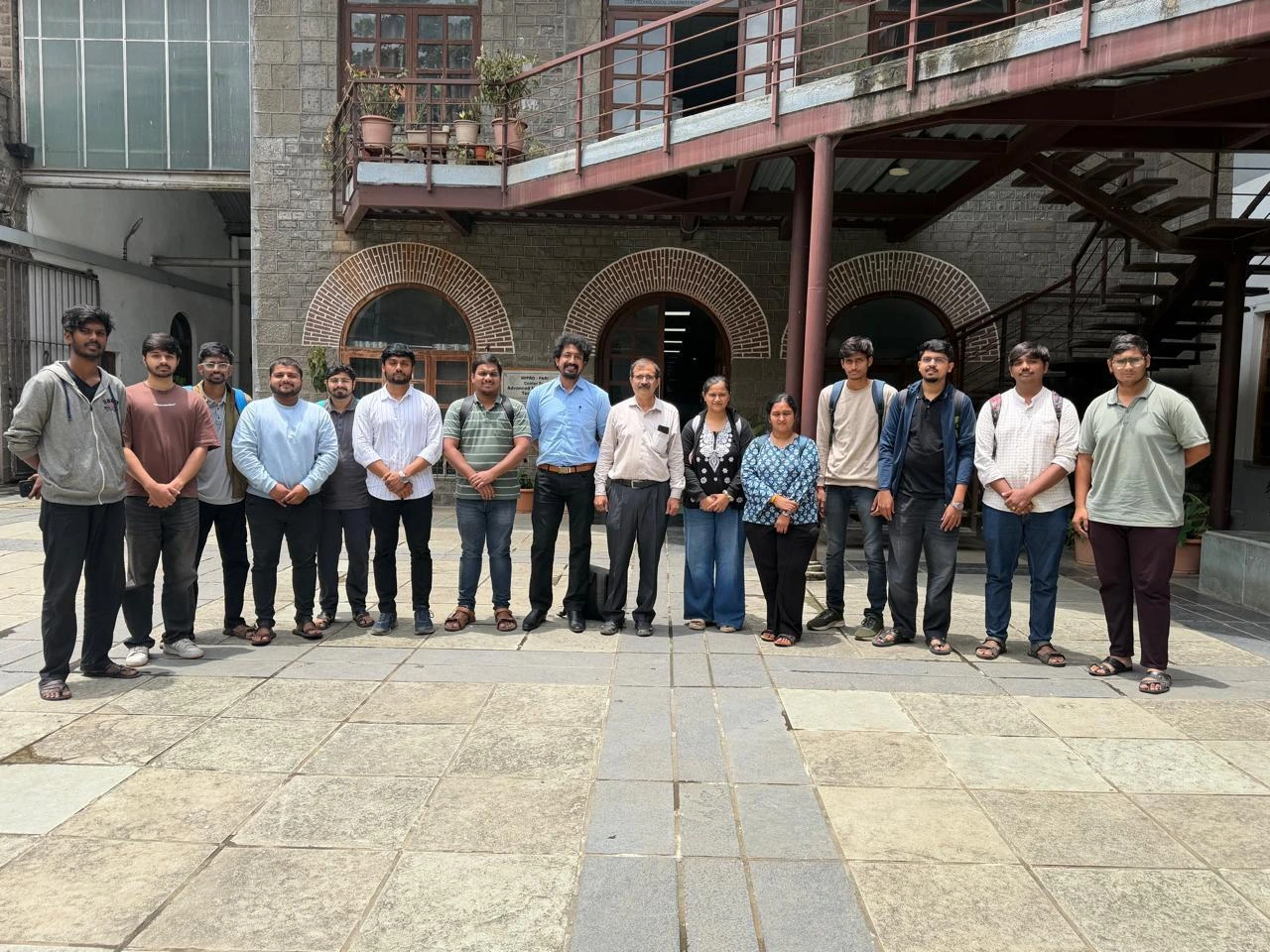
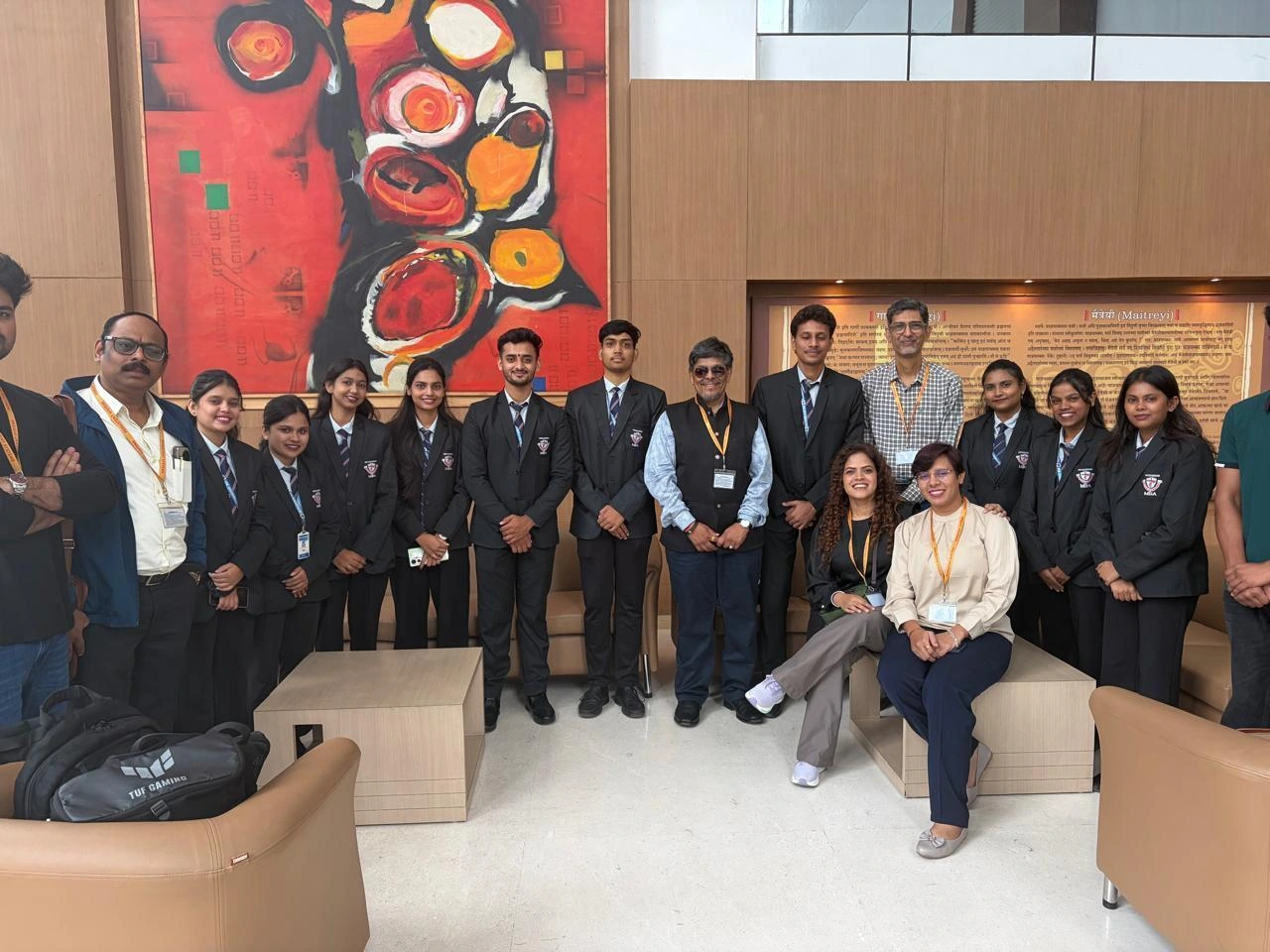
Academic engagement: the BRICK campus visit and COEP student-club formation.
The Academia portfolio’s April–September account combines institutional engagement with student leadership and professional-community participation. Highlights include a BRICK campus visit, formation of the COEP student club, NICMAR student leaders attending a monthly seminar and participation in the Voices of PMI South Asia podcast.
Building on established relationships
During FY 2025–26, the Chapter formalized five institutional relationships with BRICK Pune, Indira University, NICMAR, COEP and IICMR Pune. These are previous-year foundations. The current opportunity is to turn institutional contact into recurring faculty engagement, student activity, and mentoring and practitioner exchange.
The Chapter offering includes project-management awareness, faculty and curriculum conversations, student clubs and campus-to-career connections. Such relationships become useful when people continue meeting and when students can connect ideas with the experience of professionals working on projects.
How members can contribute
Offer an appropriate case, a guest session or mentoring support through the academic team. Explain the audience you can help and the practical learning you can provide. Contributions that make professional practice understandable are often more useful than a broad corporate presentation.
Back to contents ↑STUDENTS AND REGIONAL PARTICIPATION
Academic voices beyond the campus
Professional forums create further opportunities to participate and learn.
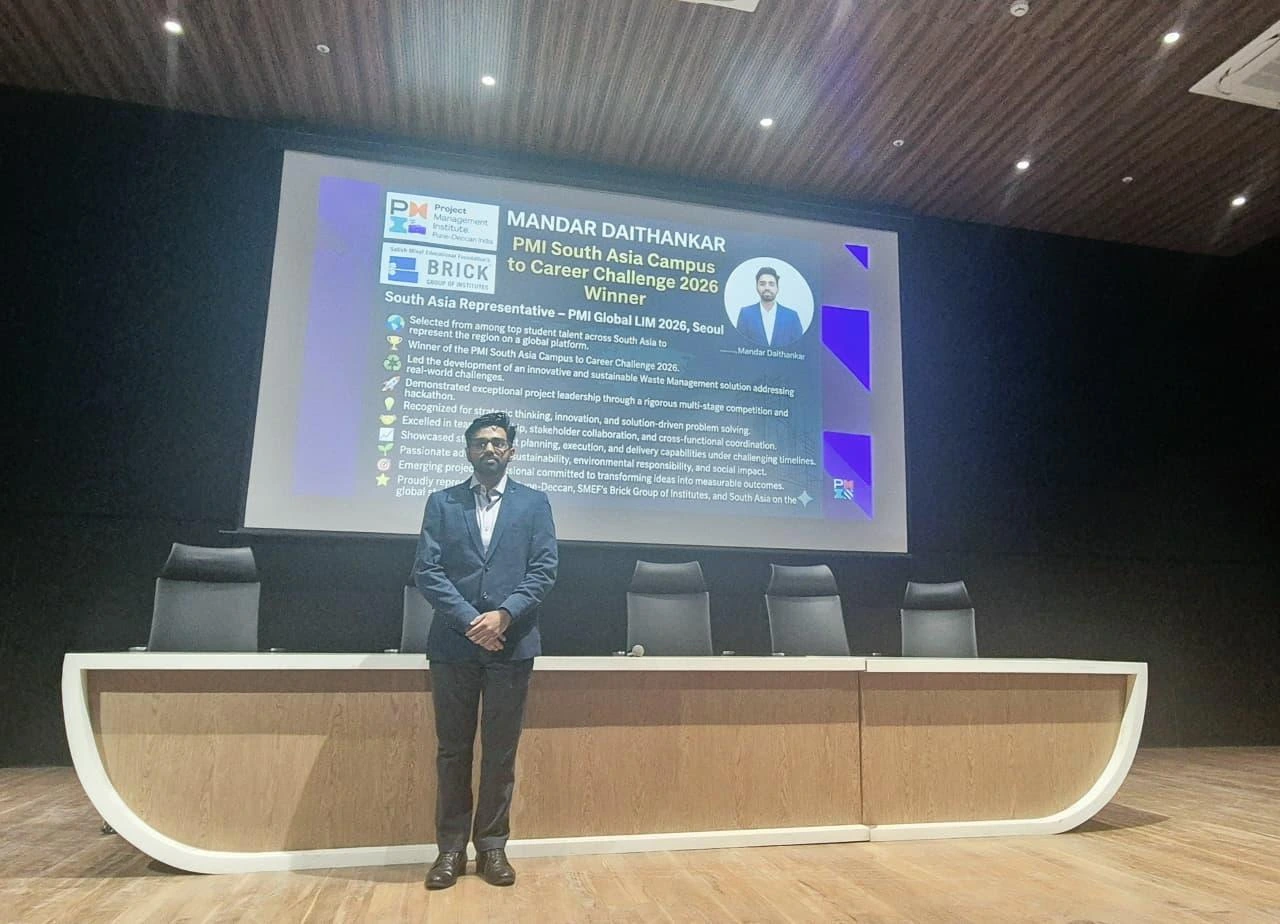
A student-leader presentation in Seoul and academic participation associated with Project Vidarbha 2030.
The current-year account records a student-leader presentation in Seoul, South Korea, and Academia participation in Project Vidarbha 2030 through a panel discussion and related media coverage. These activities extend the portfolio’s story beyond an institutional agreement or a single campus visit.
Learning through a wider audience
A presentation introduces a student’s work to a different professional setting. A regional panel brings academic perspectives into contact with industry and leadership questions. The useful follow-through is to capture what was learned and how that experience can inform subsequent activity within the Chapter.
NICMAR student leaders also attended a monthly seminar. This provides another point of contact between academic communities and the Chapter’s regular practitioner-learning calendar.


Academia participation in Voices of PMI South Asia.
Back to contents ↑GIVE BACK AND BUILD CAPABILITY
Why and how to volunteer
A full part of the professional journey, with responsibilities that matter.
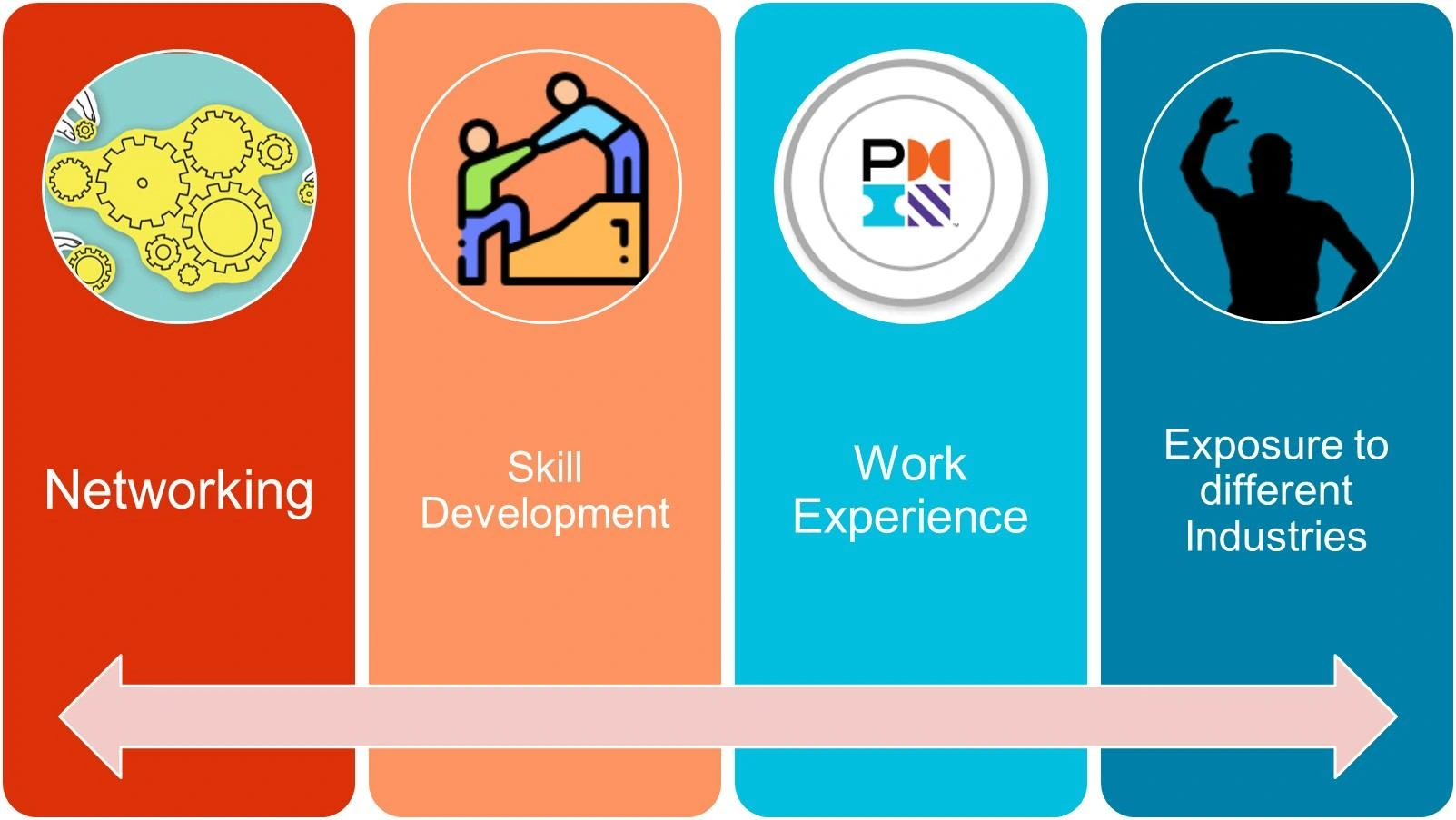
Volunteering puts professional experience to work for a community while giving you a setting in which to learn by doing. PMI’s global guidance highlights four connected benefits: widening professional reach, contributing to the profession, developing skills and building lasting relationships. The useful starting point is a contribution you can make reliably.
What you can contribute locally
 View full size
The Chapter’s network includes more than 150 volunteers. Their work spans events, learning content, membership, publications, academic engagement, corporate outreach, technology, mentoring and social purpose. A role may involve organizing a session, improving a digital service, editing an article or supporting a programme. It should have an understood purpose, scope and time commitment.
How to get started
Use the Chapter volunteer route or contact Volunteer Management with your interests, relevant skills and realistic availability. PMI’s Volunteer Engagement Platform (VEP) is its official recruitment route for published opportunities. Review the role description, expected contribution, location or mode, duration and application conditions before applying.
The Chapter’s structured process includes a discussion of fit, portfolio interaction and formal onboarding. Begin with the role you can deliver well. Volunteer leadership develops through contribution and collaboration; participation does not automatically lead to an appointment or elected position.
Learning and recognition
PMI offers volunteer-development resources through its Leadership Institute. Locally, programme responsibility provides opportunities to practice communication, planning, stakeholder coordination and follow-through. Reflecting on those experiences can make them useful beyond the immediate assignment.
 View full size
Eligible volunteering may support Giving Back to the Profession PDUs under PMI’s current rules. Check the requirements for your credential and retain a record of the activity and time spent. PDU eligibility should follow the nature of the work rather than being assumed for every volunteer task.
Beyond local Chapter roles, PMI lists individual-contributor and team opportunities, including contributions to professional knowledge and social impact. Explore the opportunity that fits your skills and circumstances rather than taking on more than you can sustain.
Apply or express volunteer interest
Contact Volunteer Management | volunteer@pmipunechapter.org
Explore PMI volunteer opportunities
Back to contents ↑MEMBER AND COMMUNITY FACILITIES
Collaboration space for focused work
A Chapter facility for meetings, learning and professional collaboration.
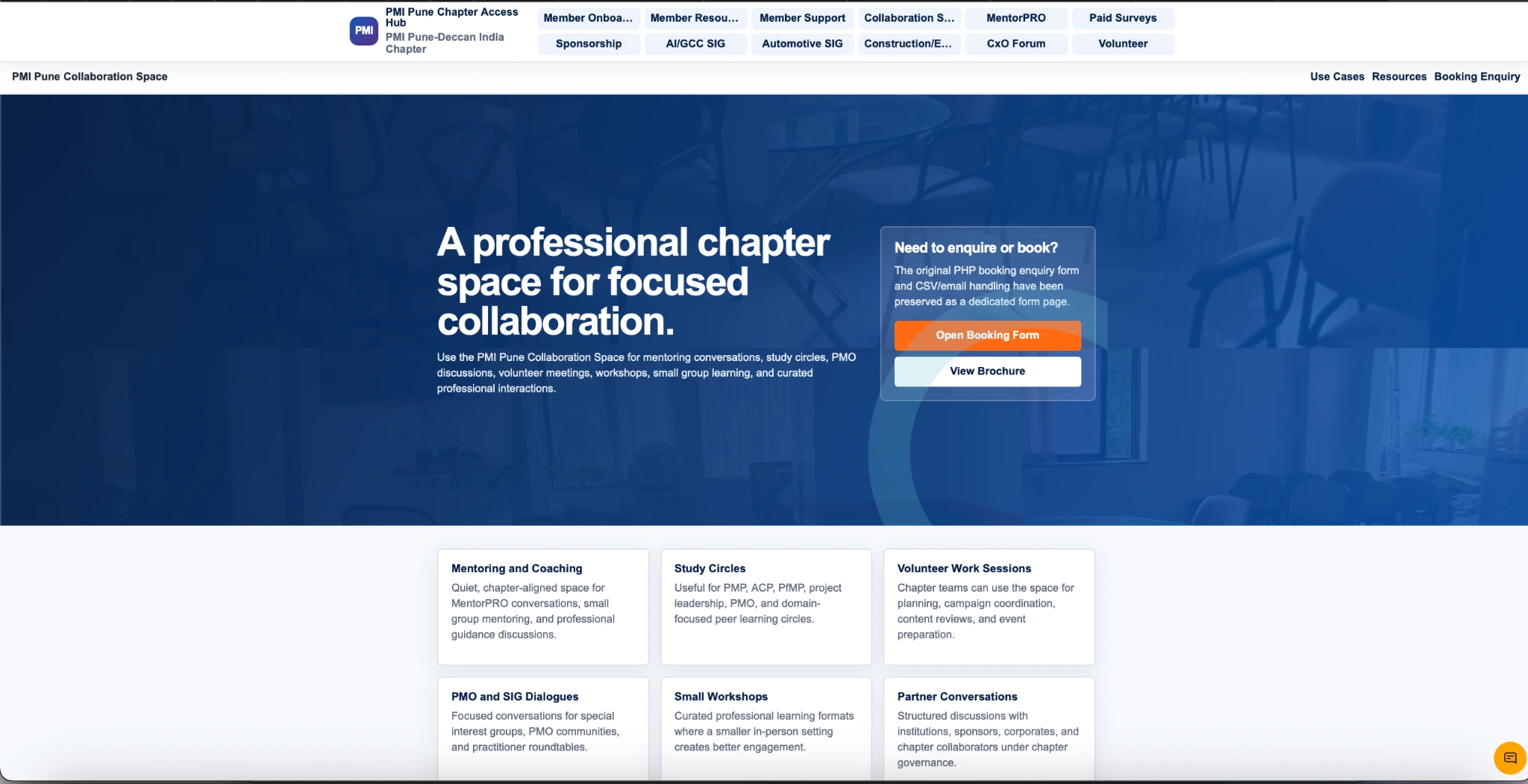
The Chapter’s collaboration-space service.
The Chapter has introduced its Co-Working and Meeting Space Initiative for members, corporate partners, academic institutions and the wider professional community. The initiative offers access at a minimal charge for members and non-members. Exact charges, availability and booking conditions should be confirmed for the intended use.
How the space can support participation
A suitable meeting setting can help a small team work through an agenda, prepare a learning activity or hold a focused professional discussion. The value of the facility depends on a clear purpose and an agreed booking. Members should use the published service information to understand whether the room and facilities fit their needs.
Enquire with enough detail
When enquiring, provide the proposed date, time, group size, purpose and any equipment or connectivity needs. Confirm the room capacity, facilities, charges, access arrangements and cancellation conditions before making commitments to other participants. Do not assume equipment or services that have not been confirmed by the Chapter office.
Proceeds support Chapter development programs, student outreach and professional-community events. This connects the service with the Chapter’s wider work while giving members another practical way to use the professional community.
Enquire about collaboration space
Back to contents ↑PAID MEMBER FAMILY
Welcome to our new members
A month-by-month record of the people joining the Chapter community.
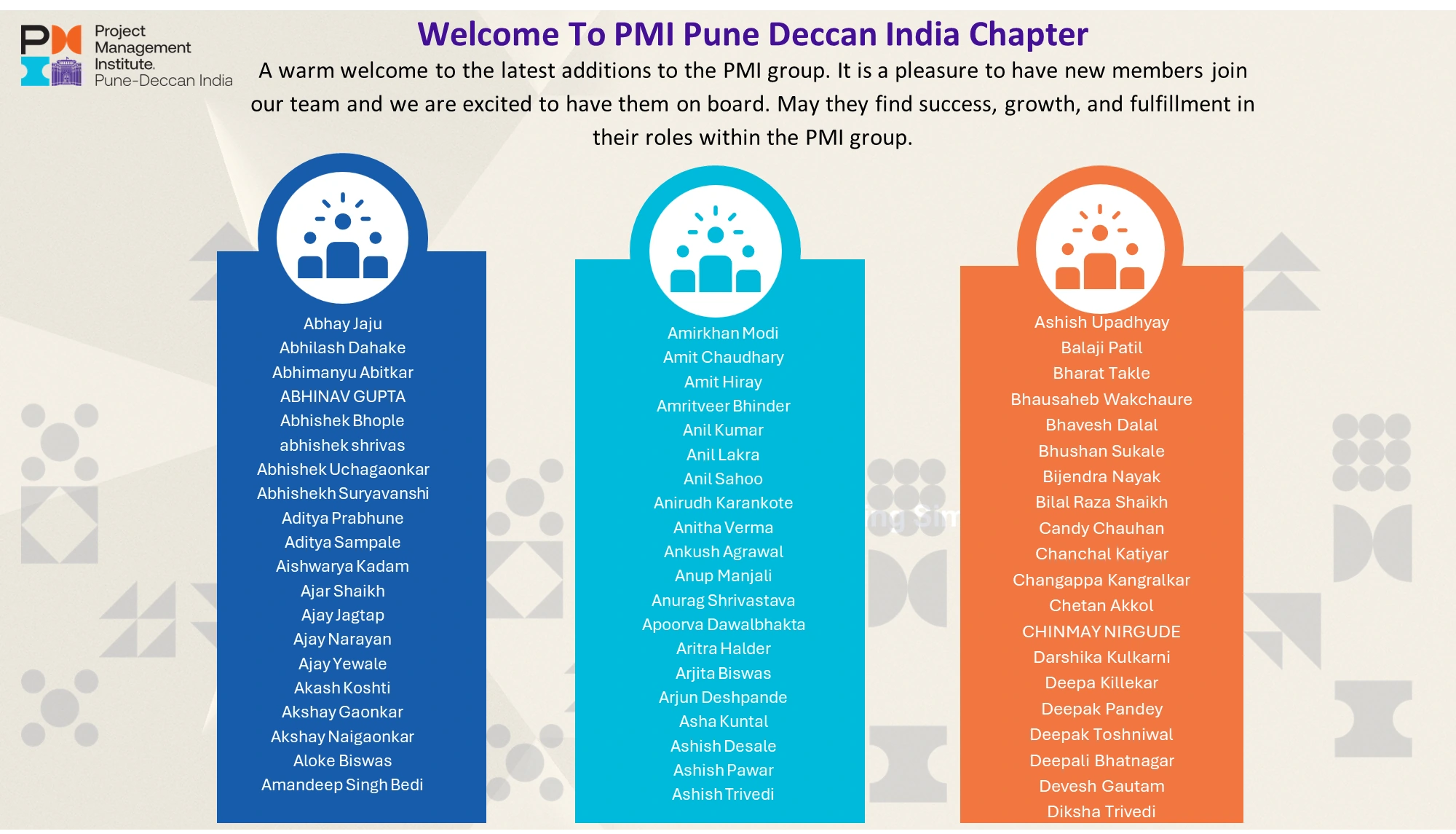
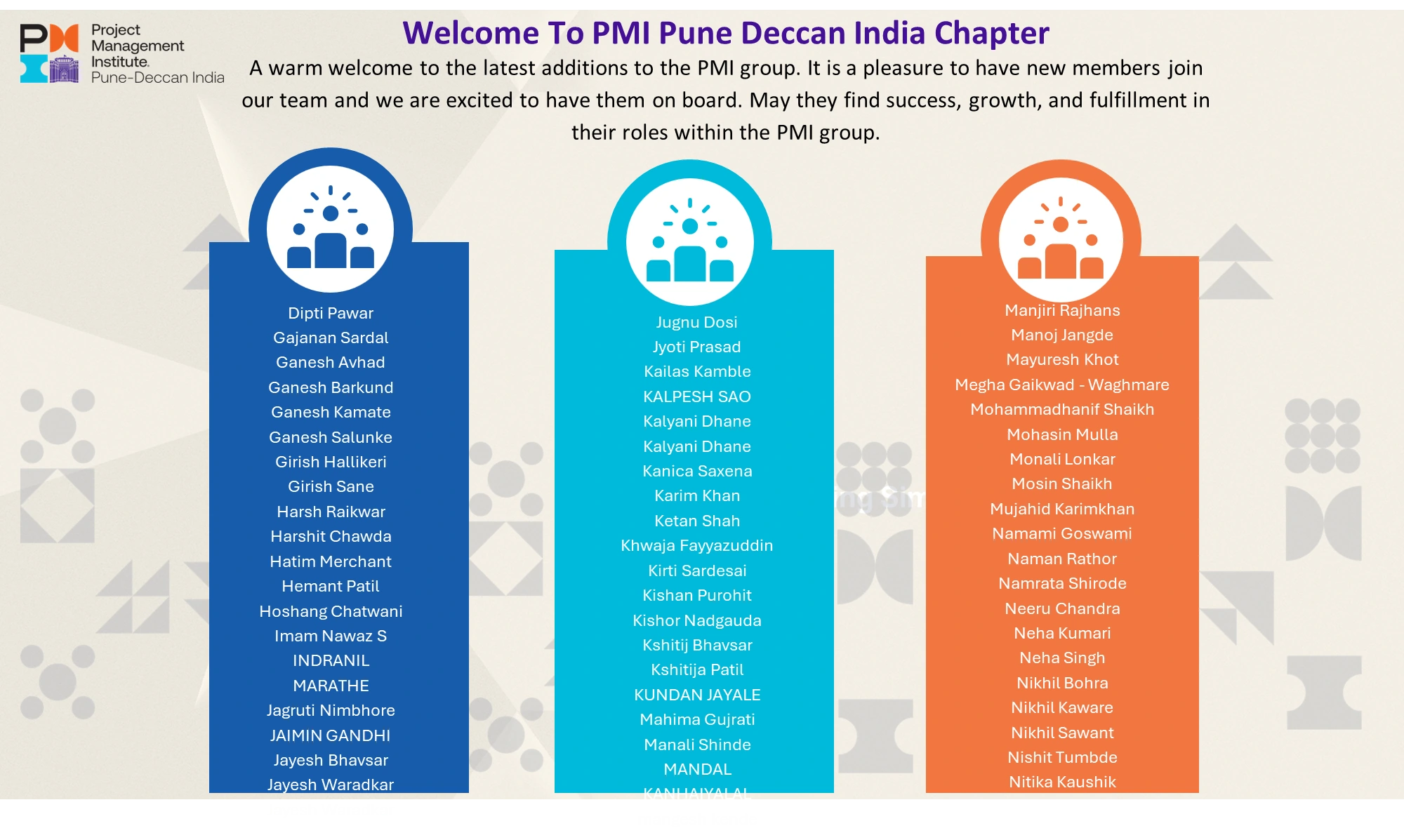
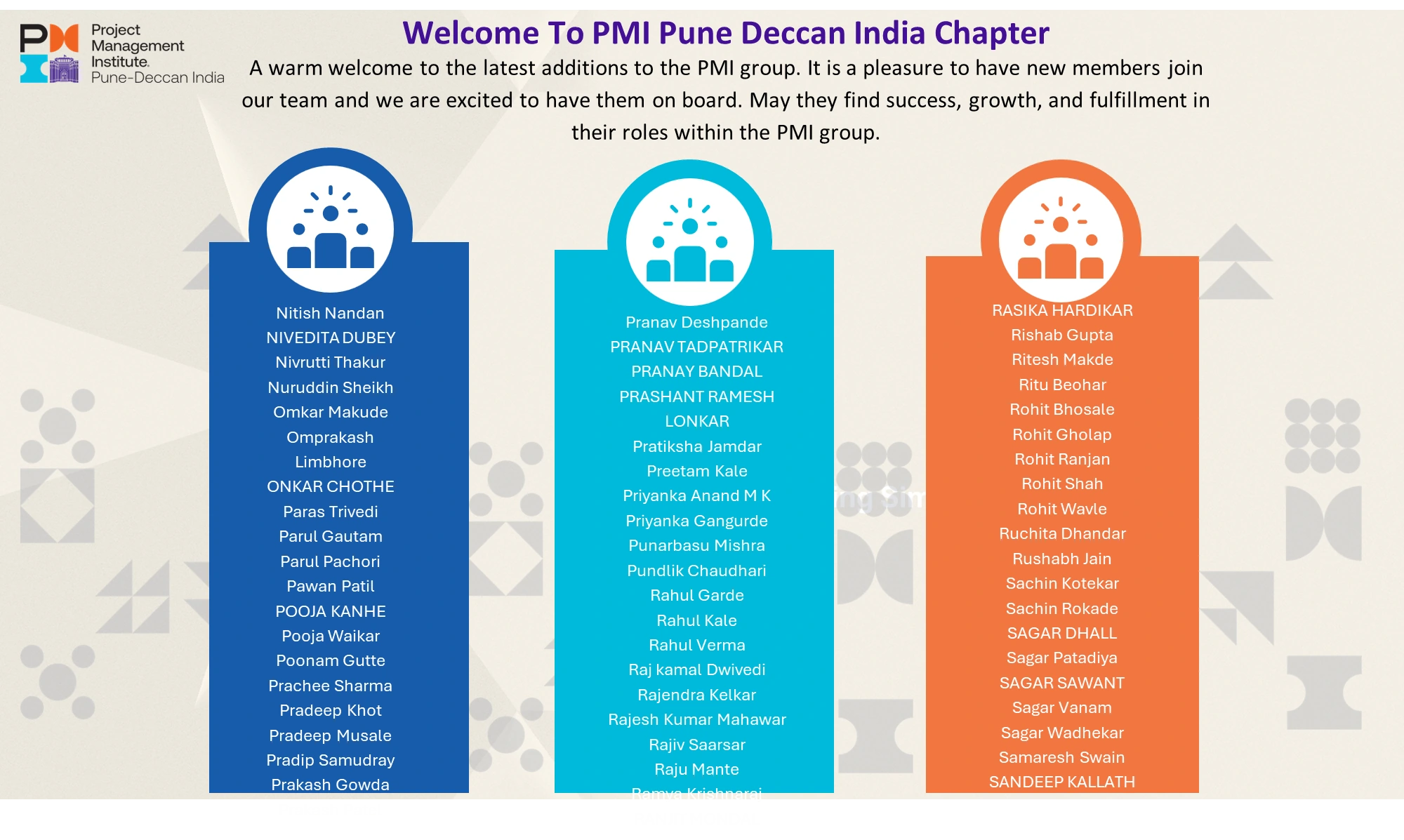
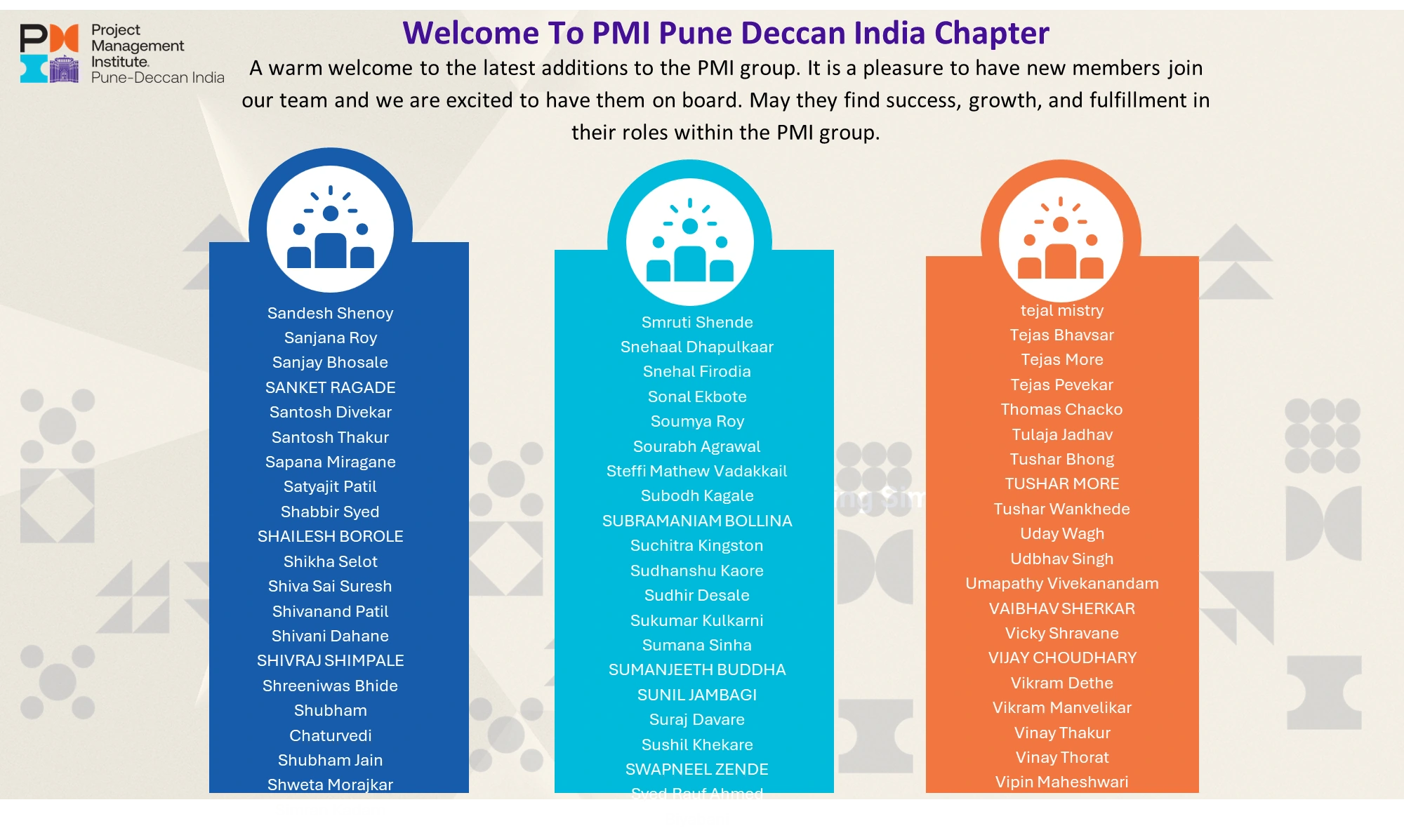
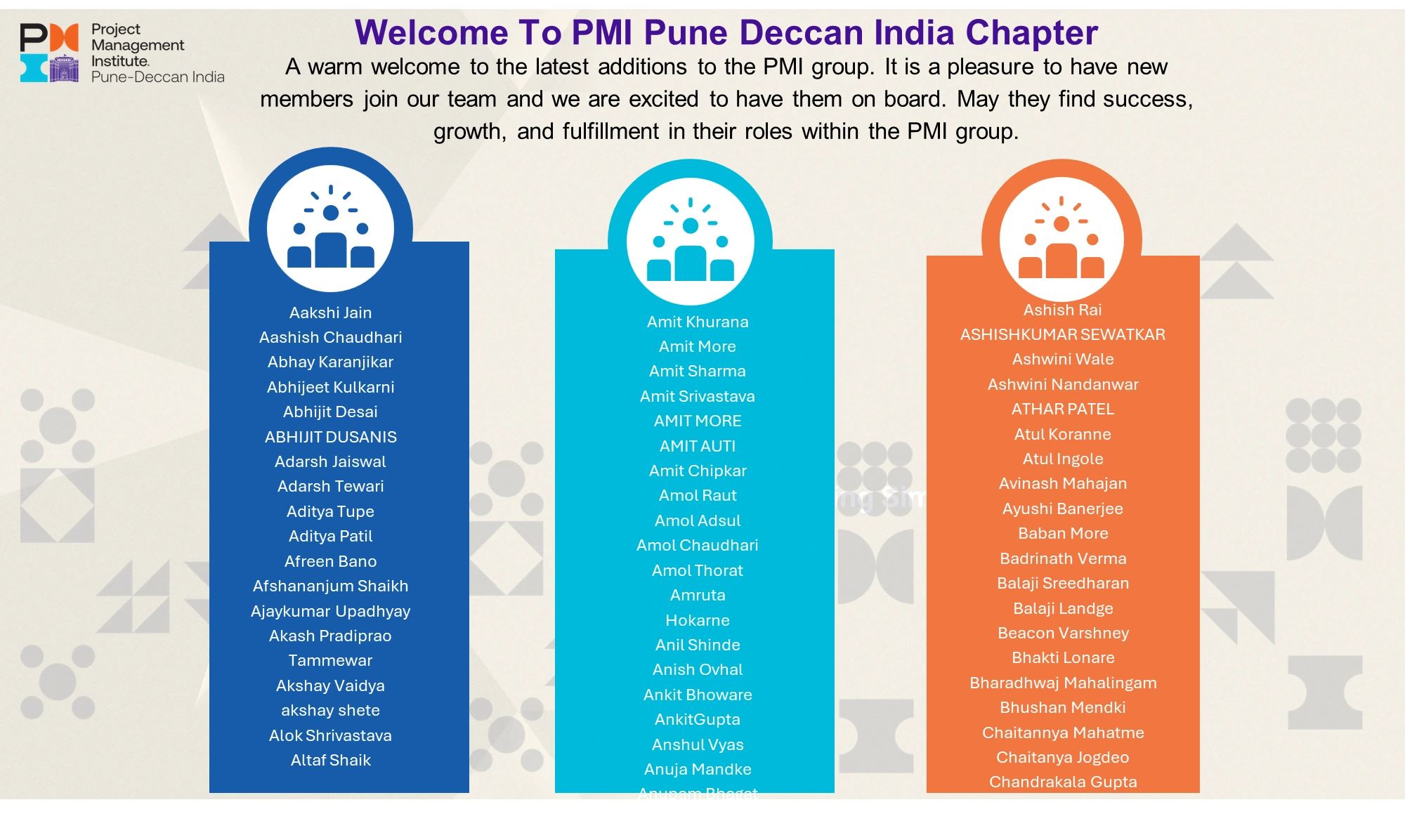
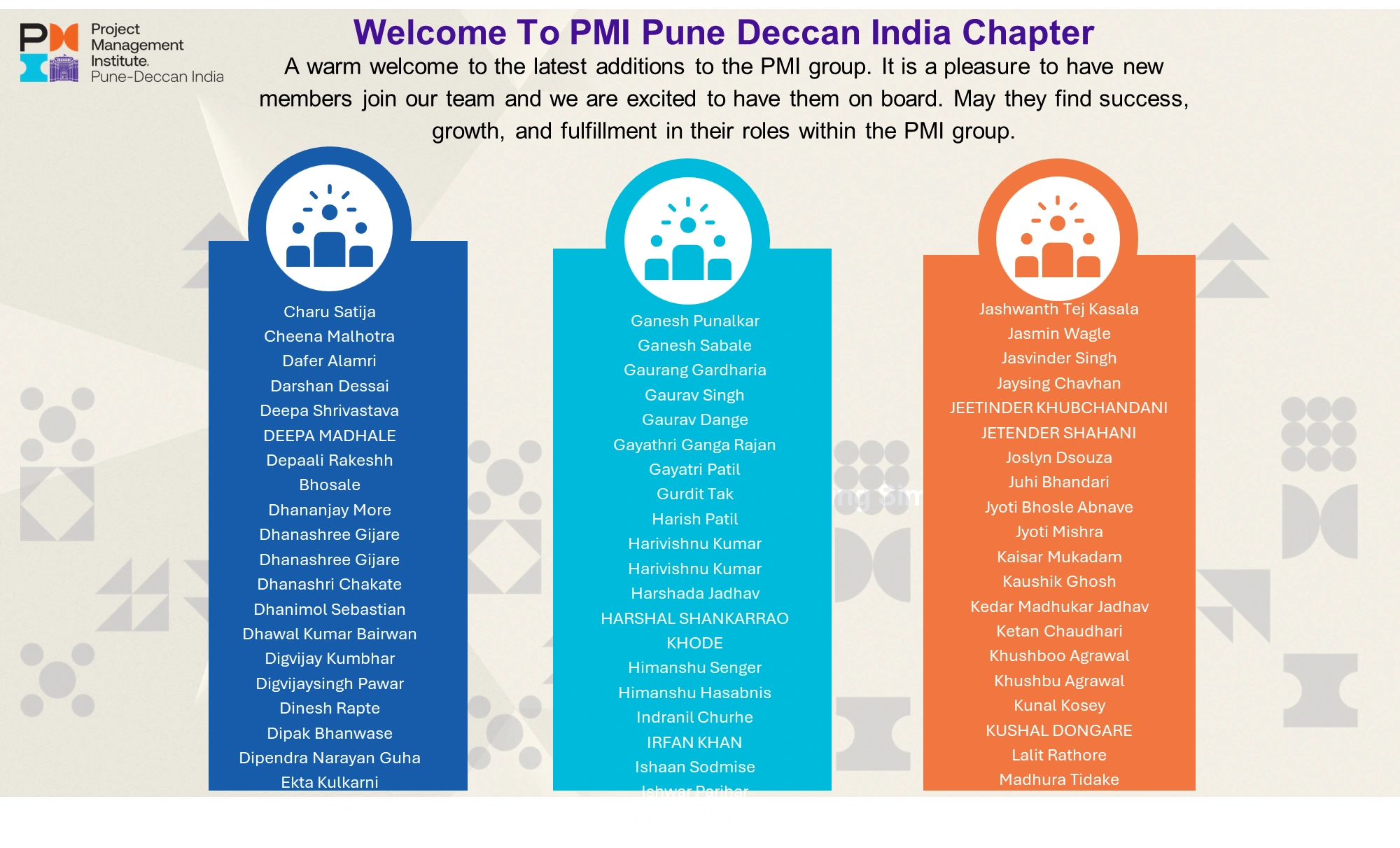
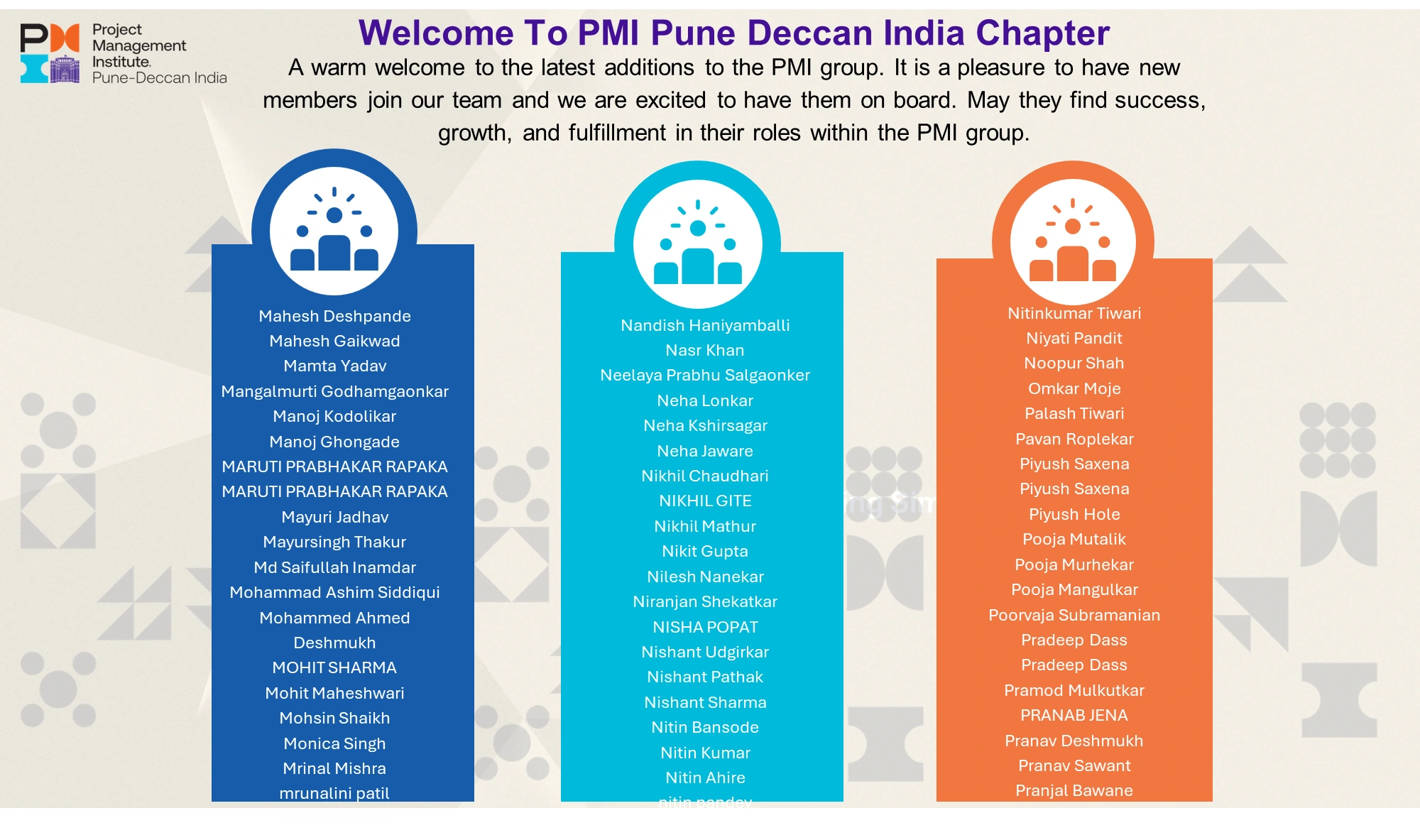
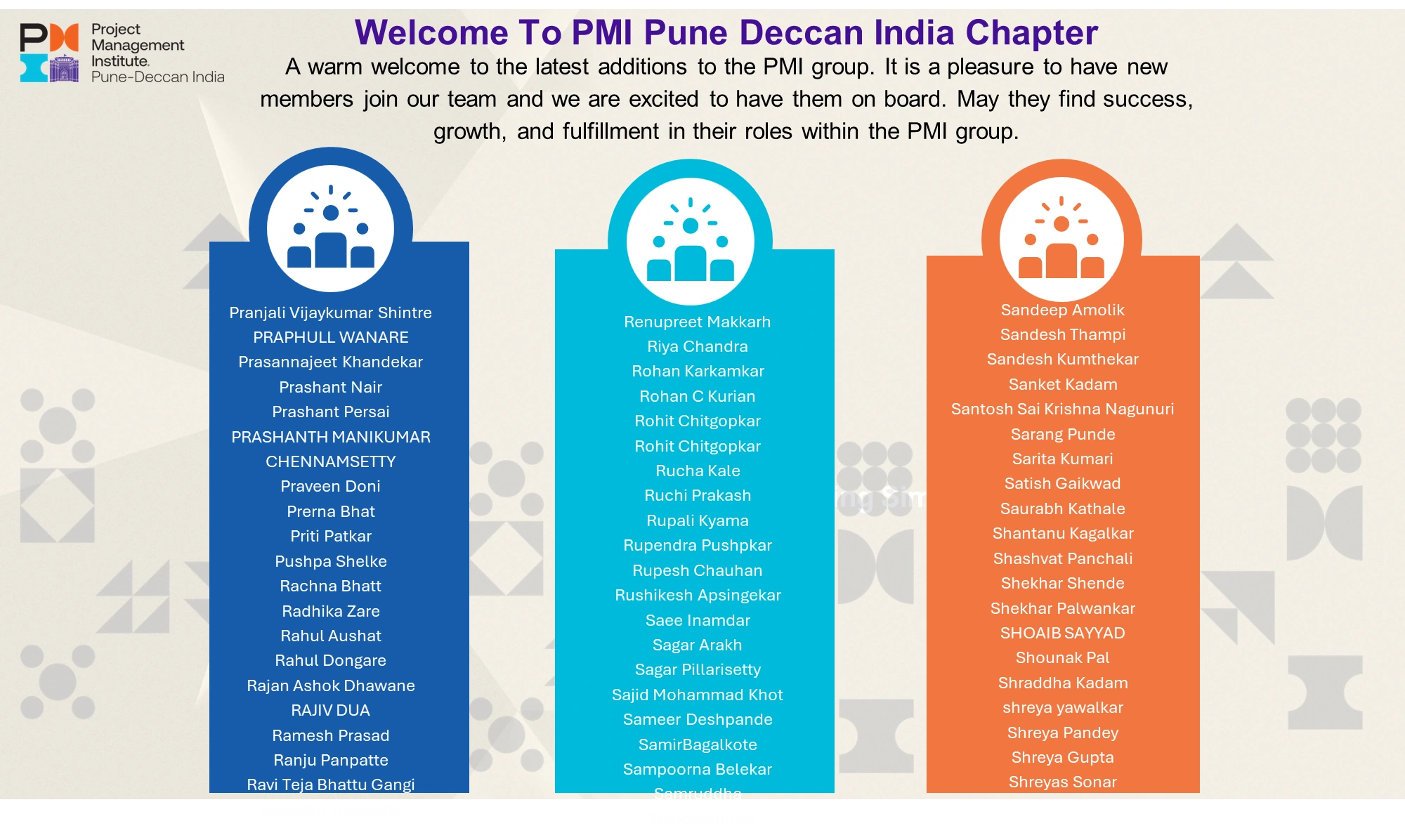
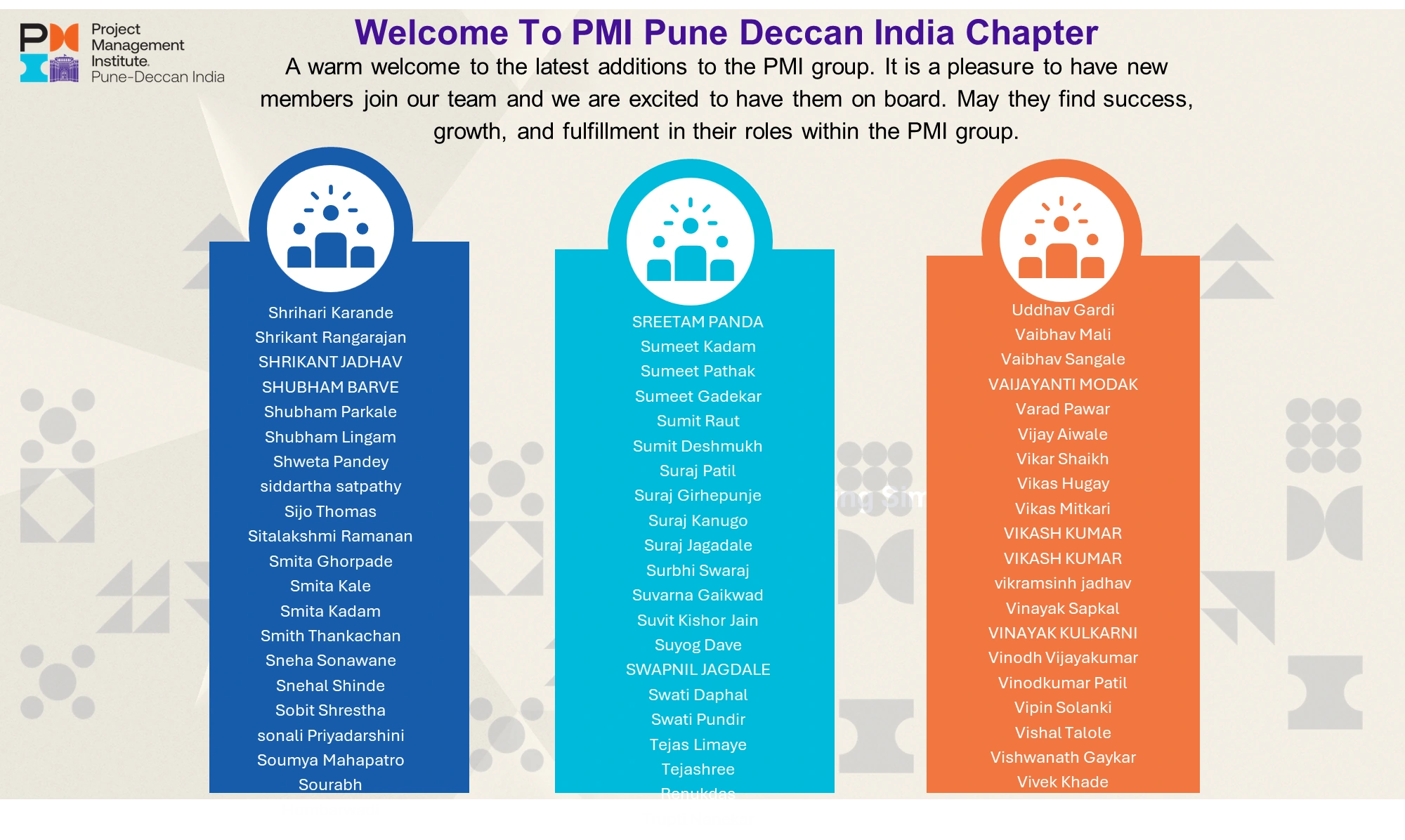
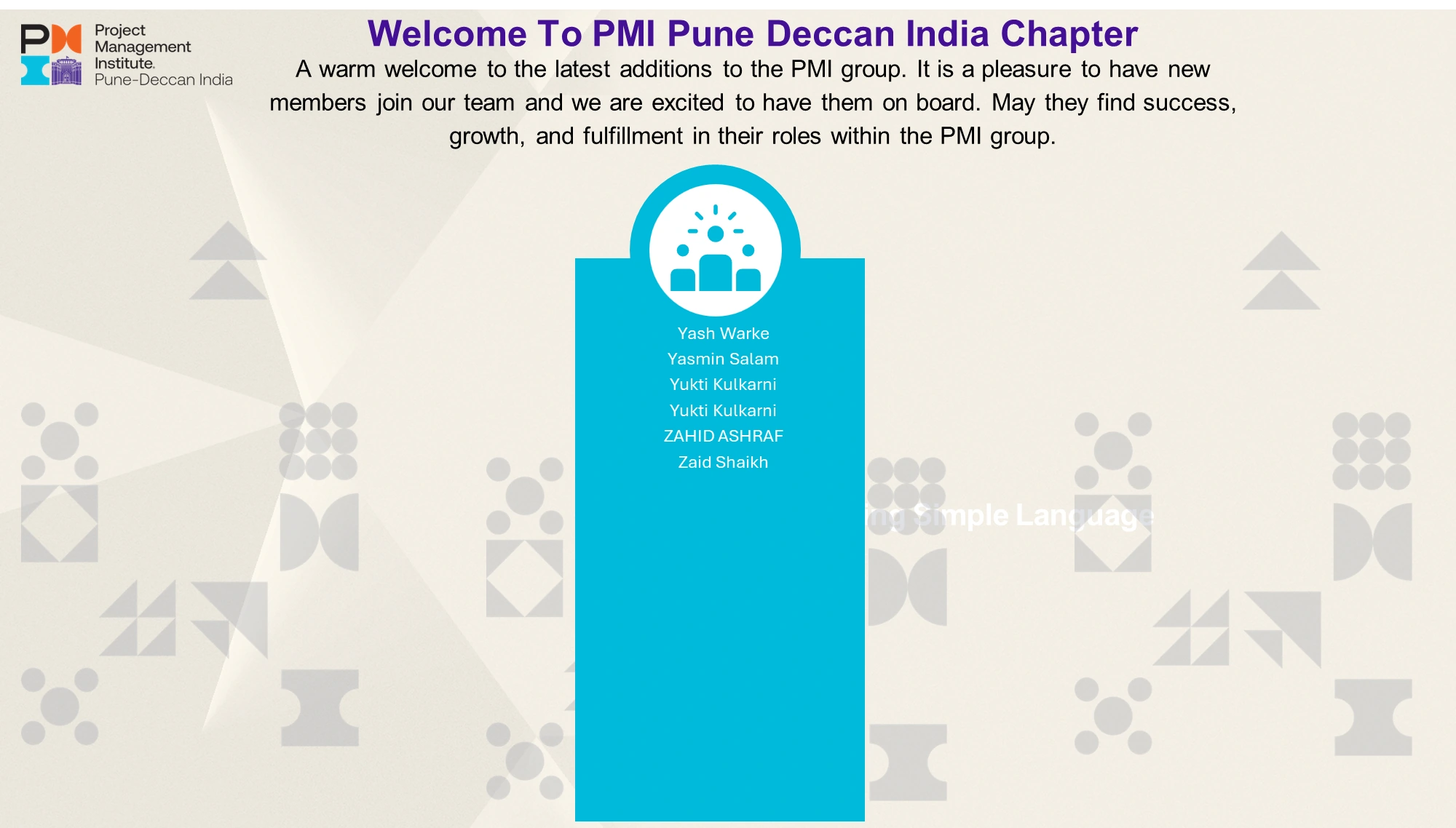
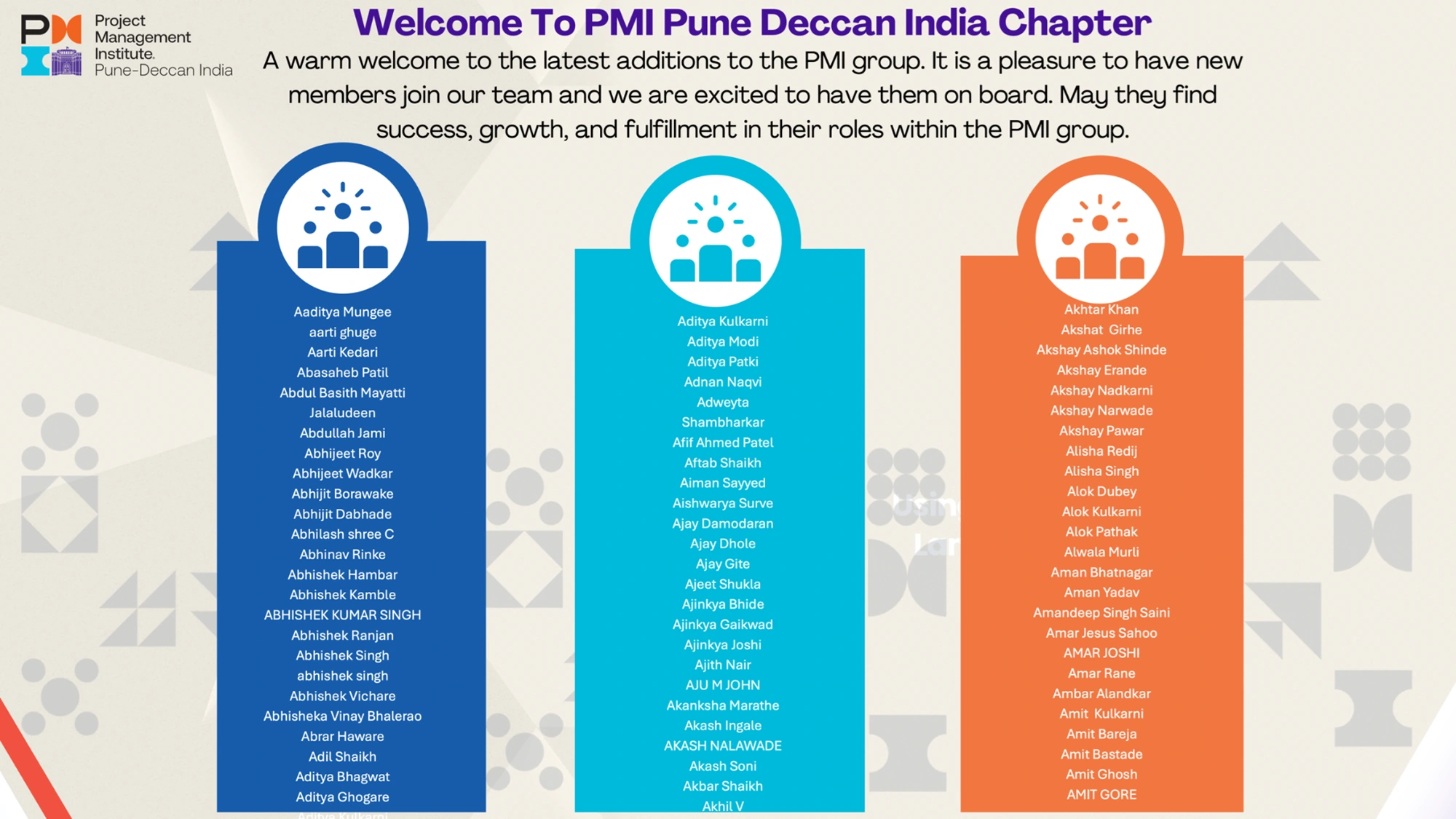
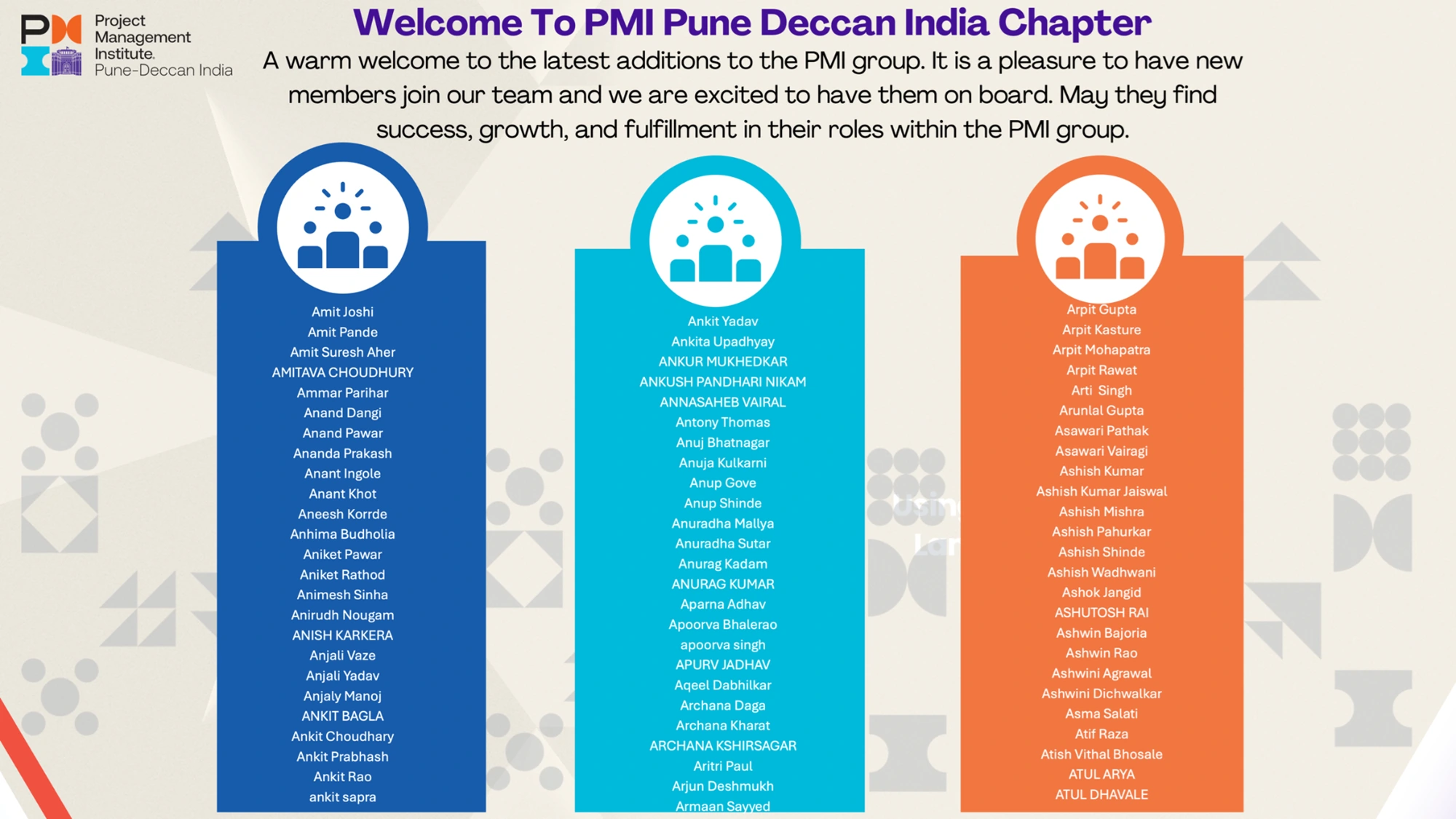
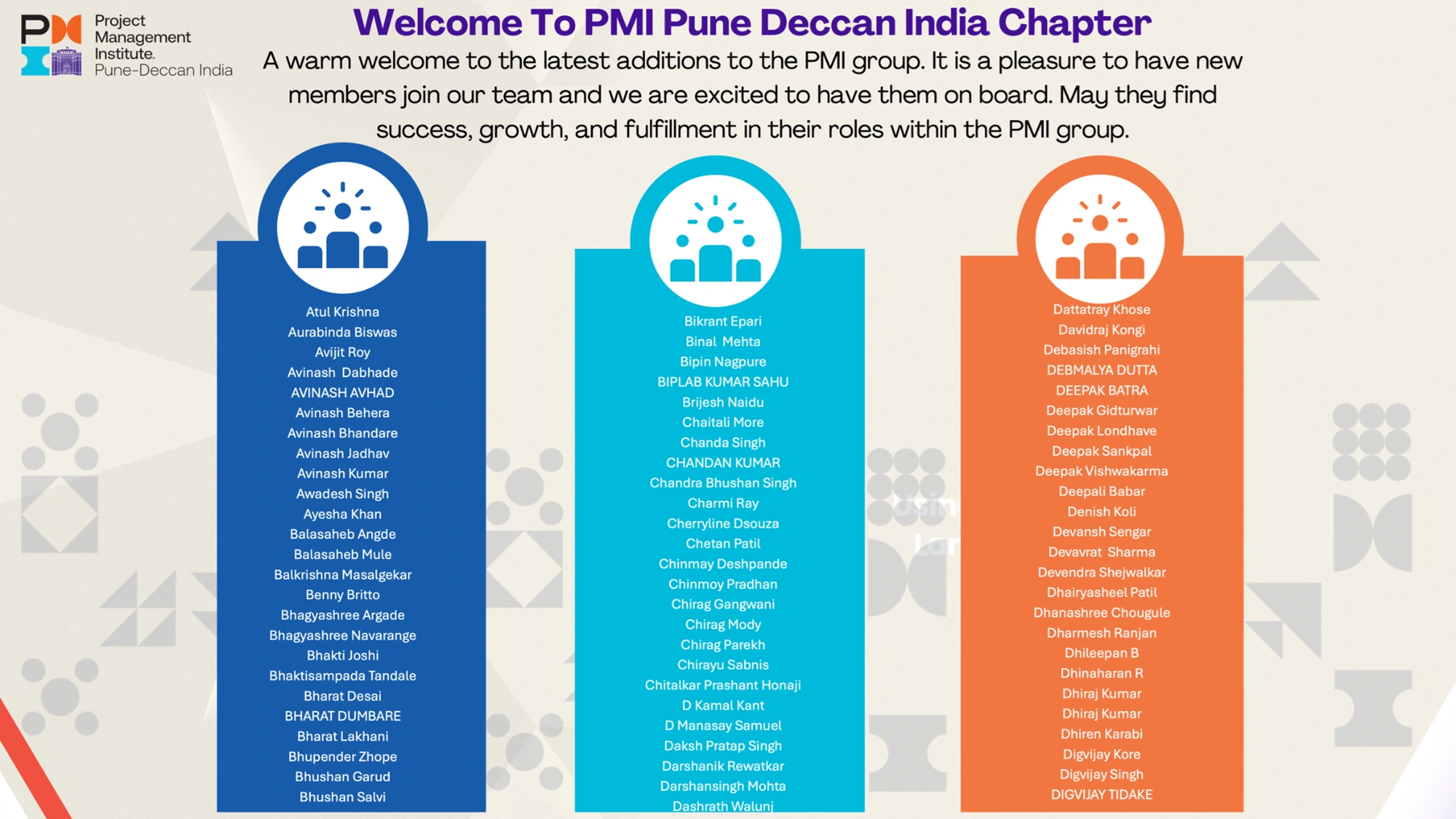
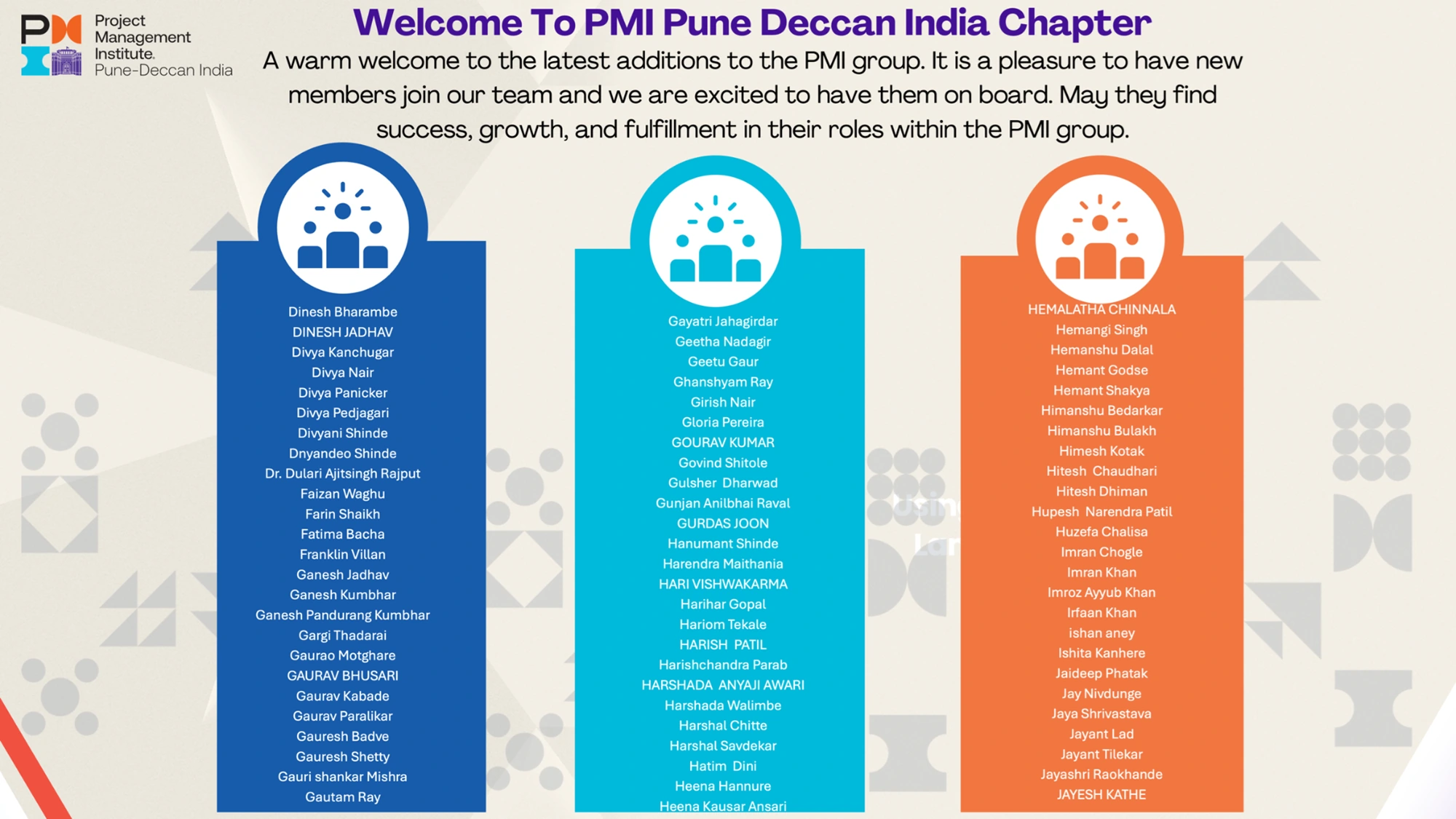
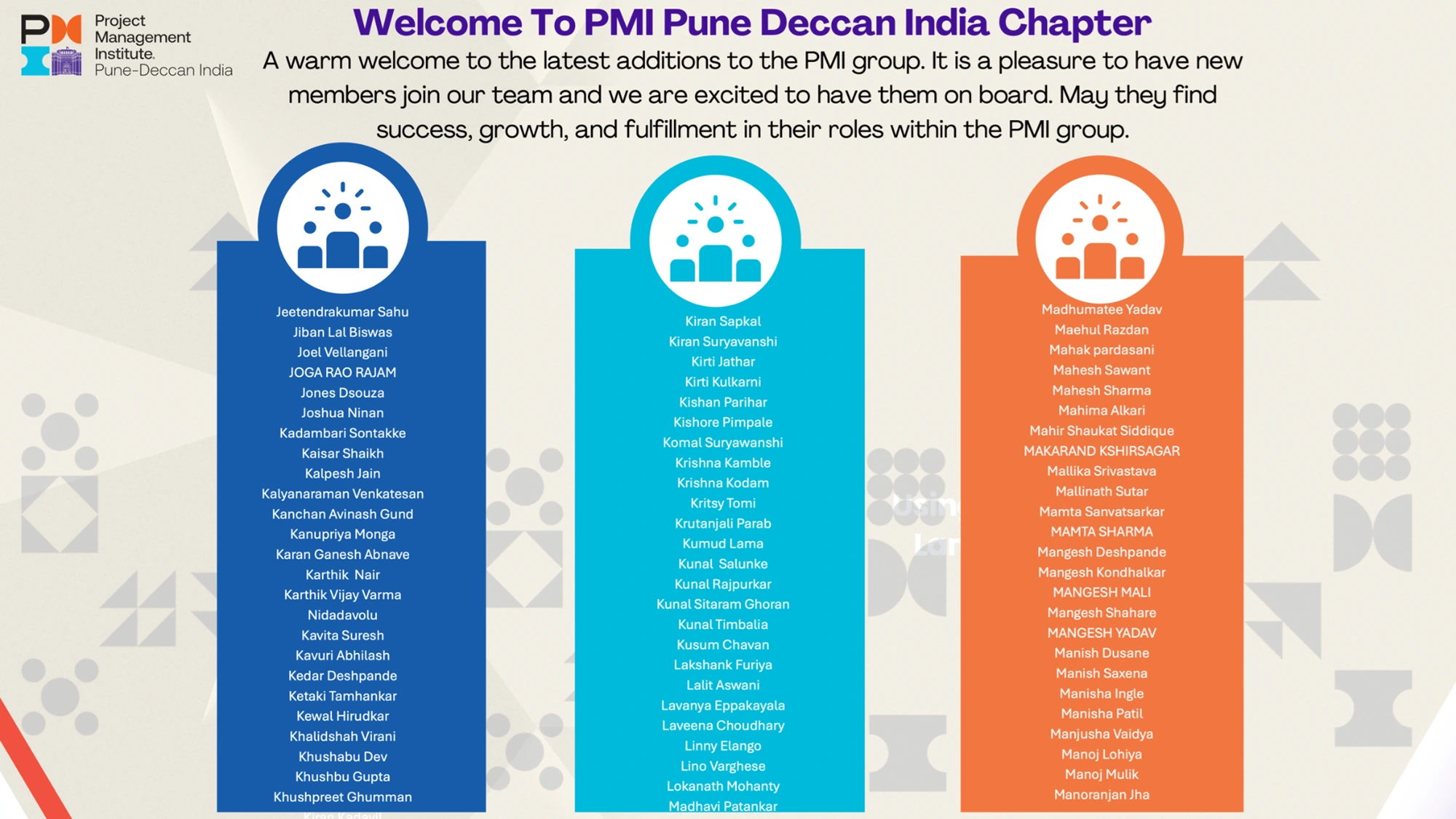
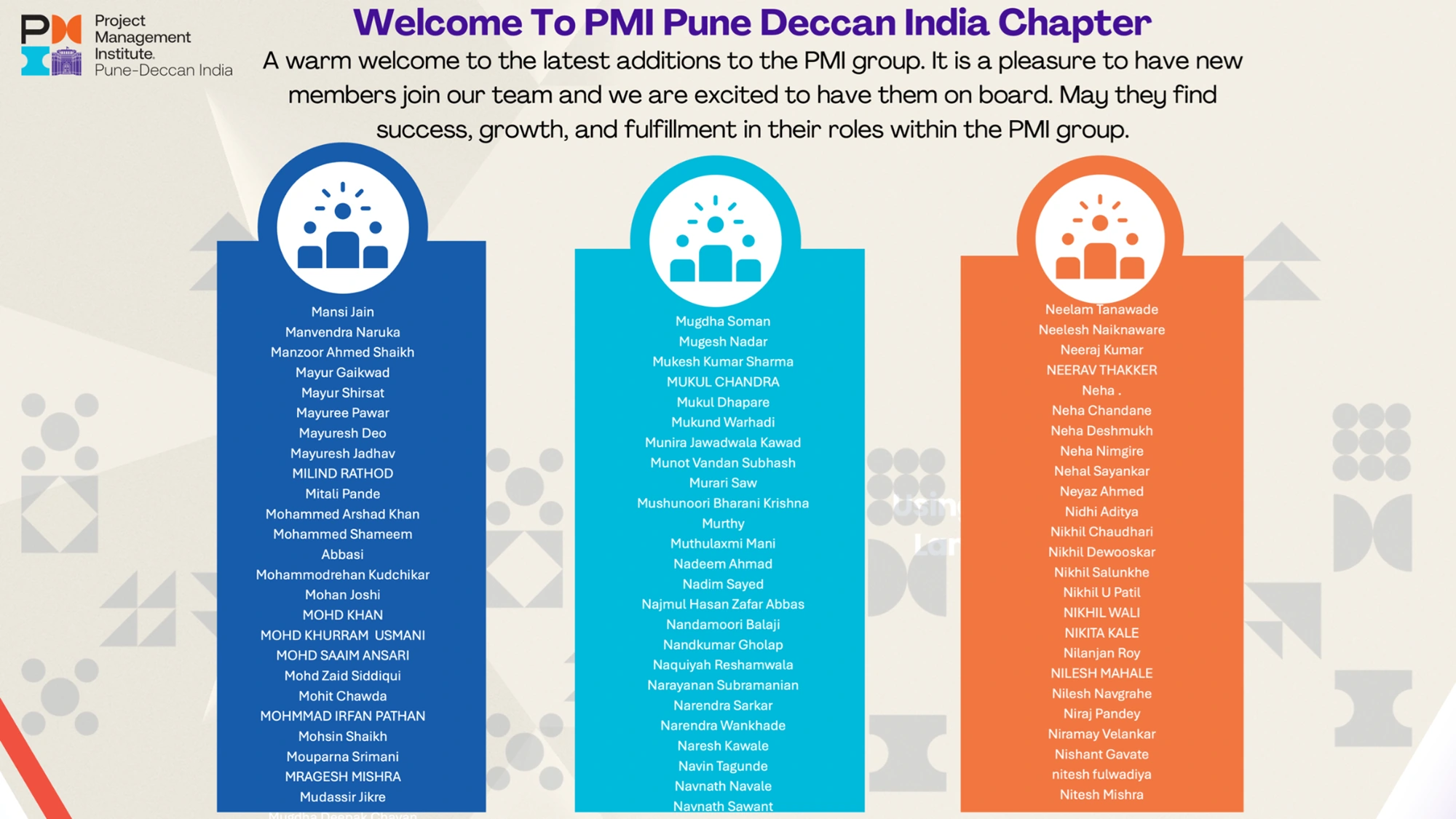
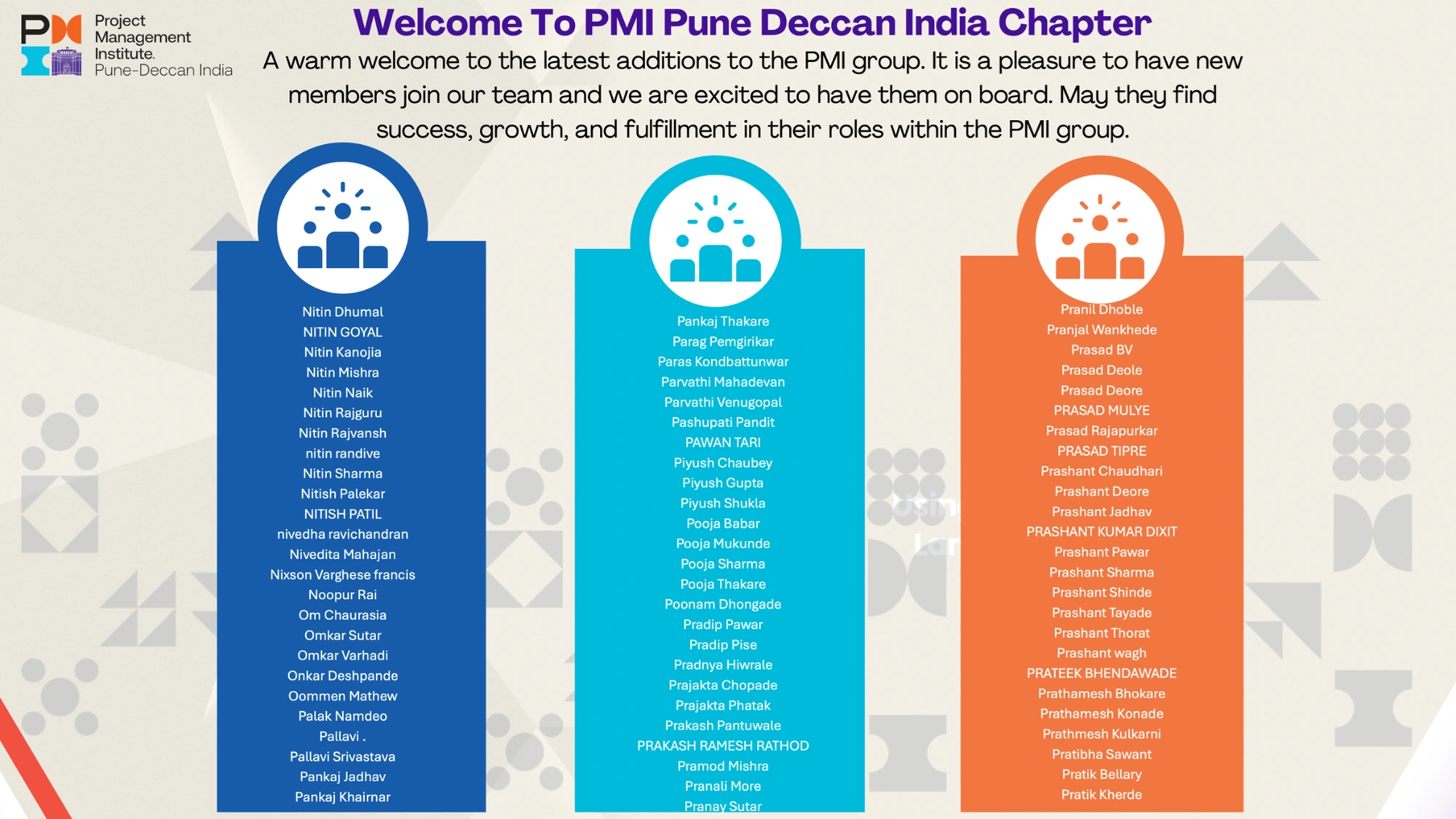
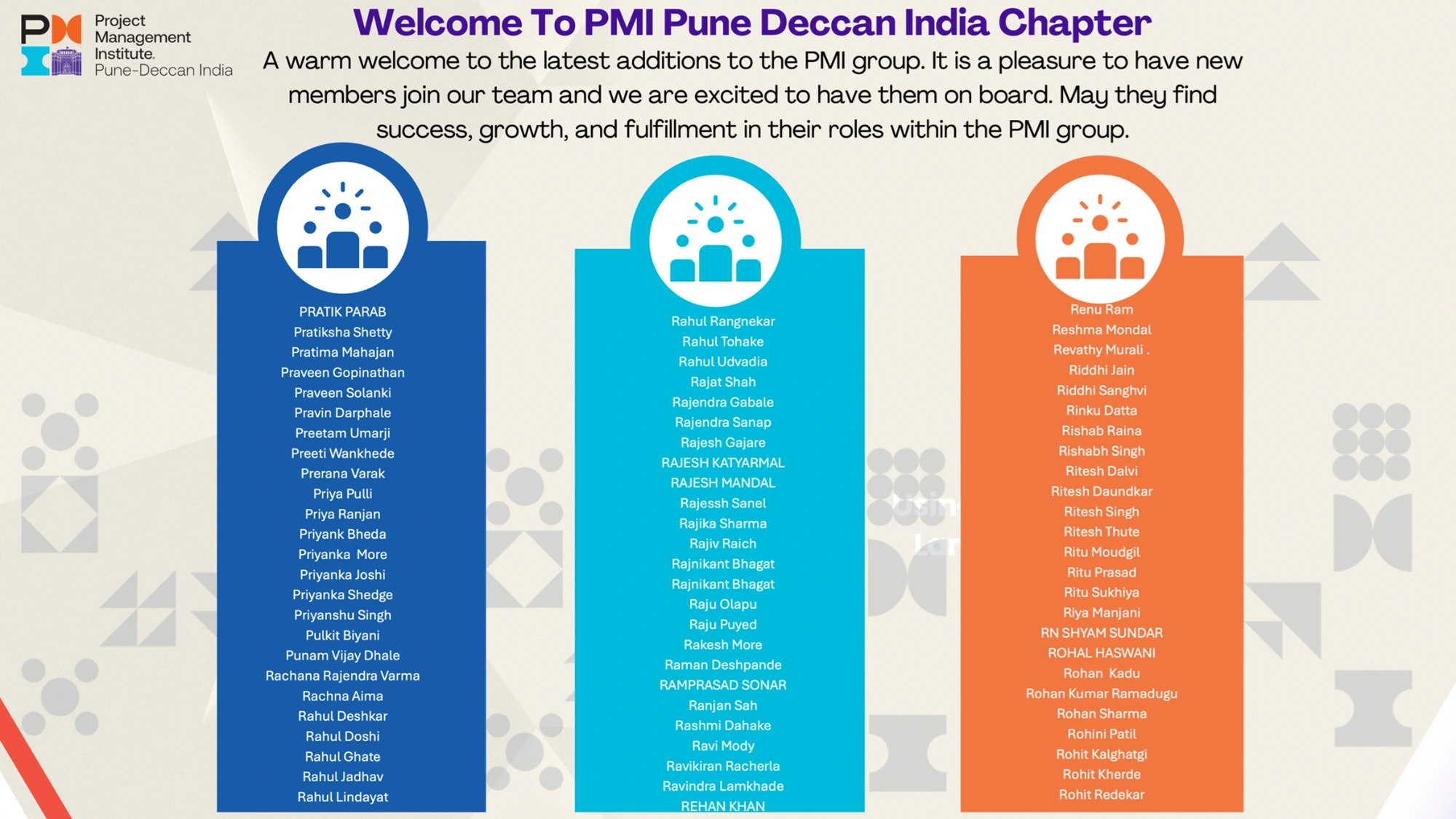
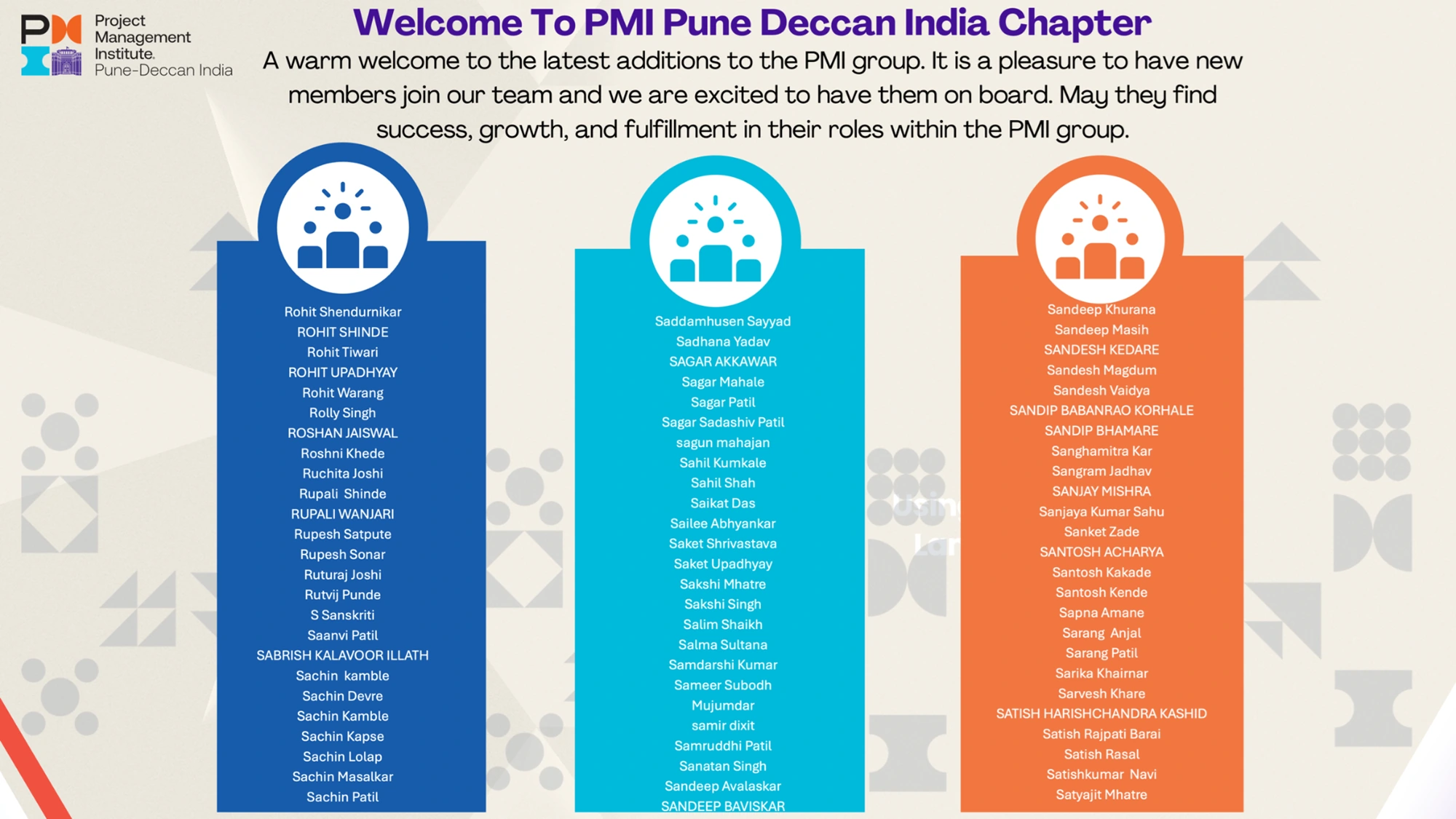
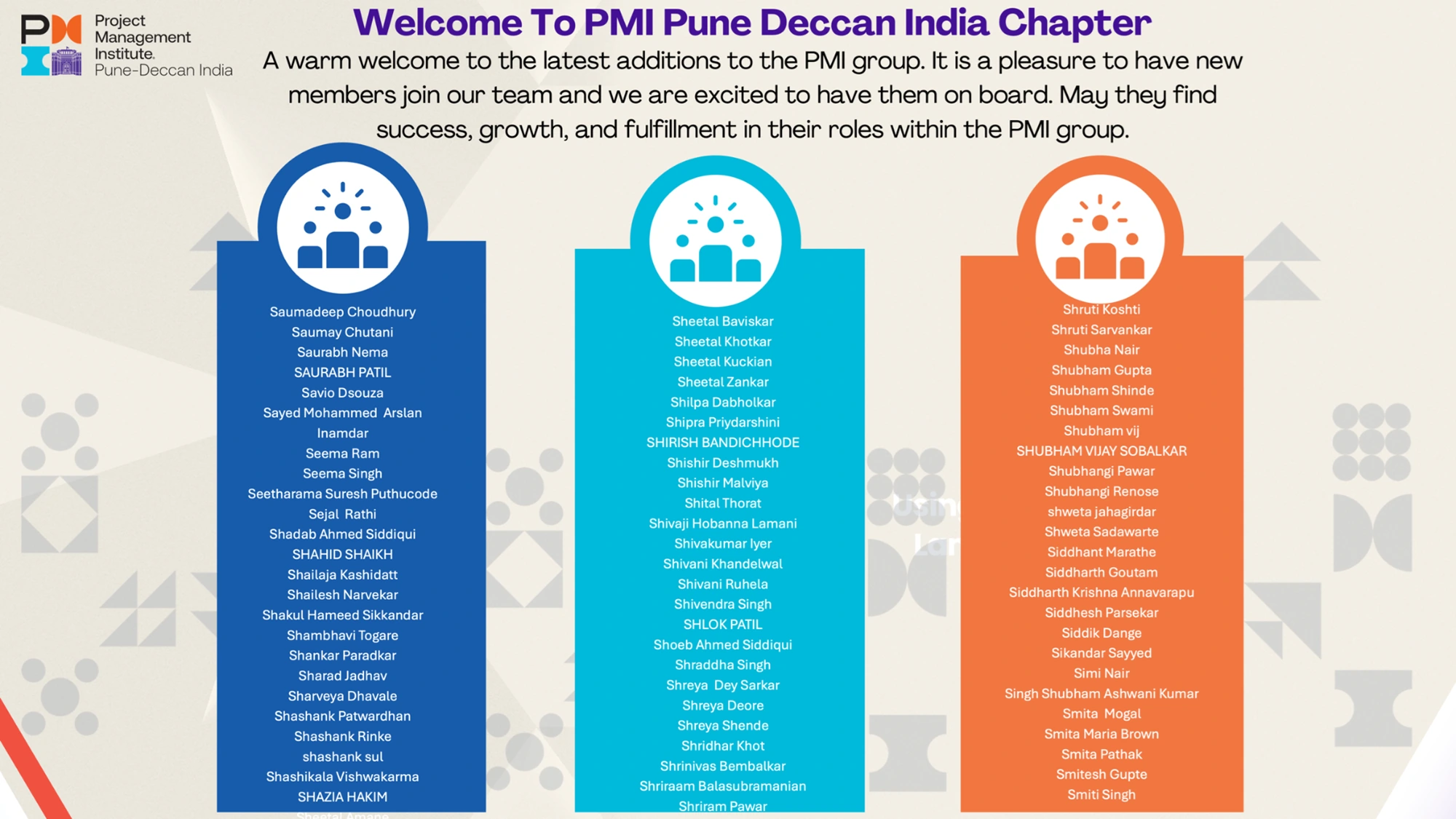
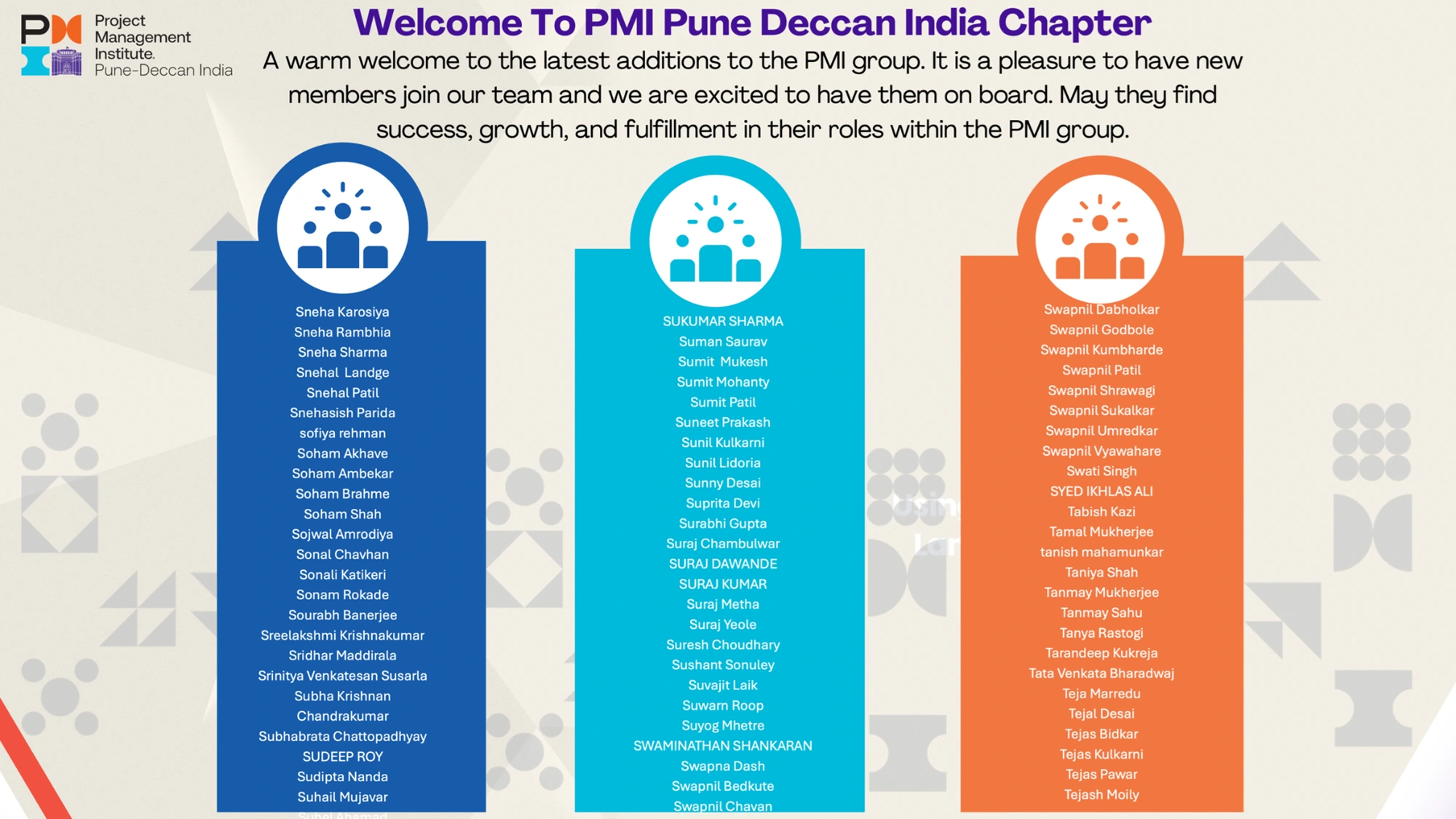
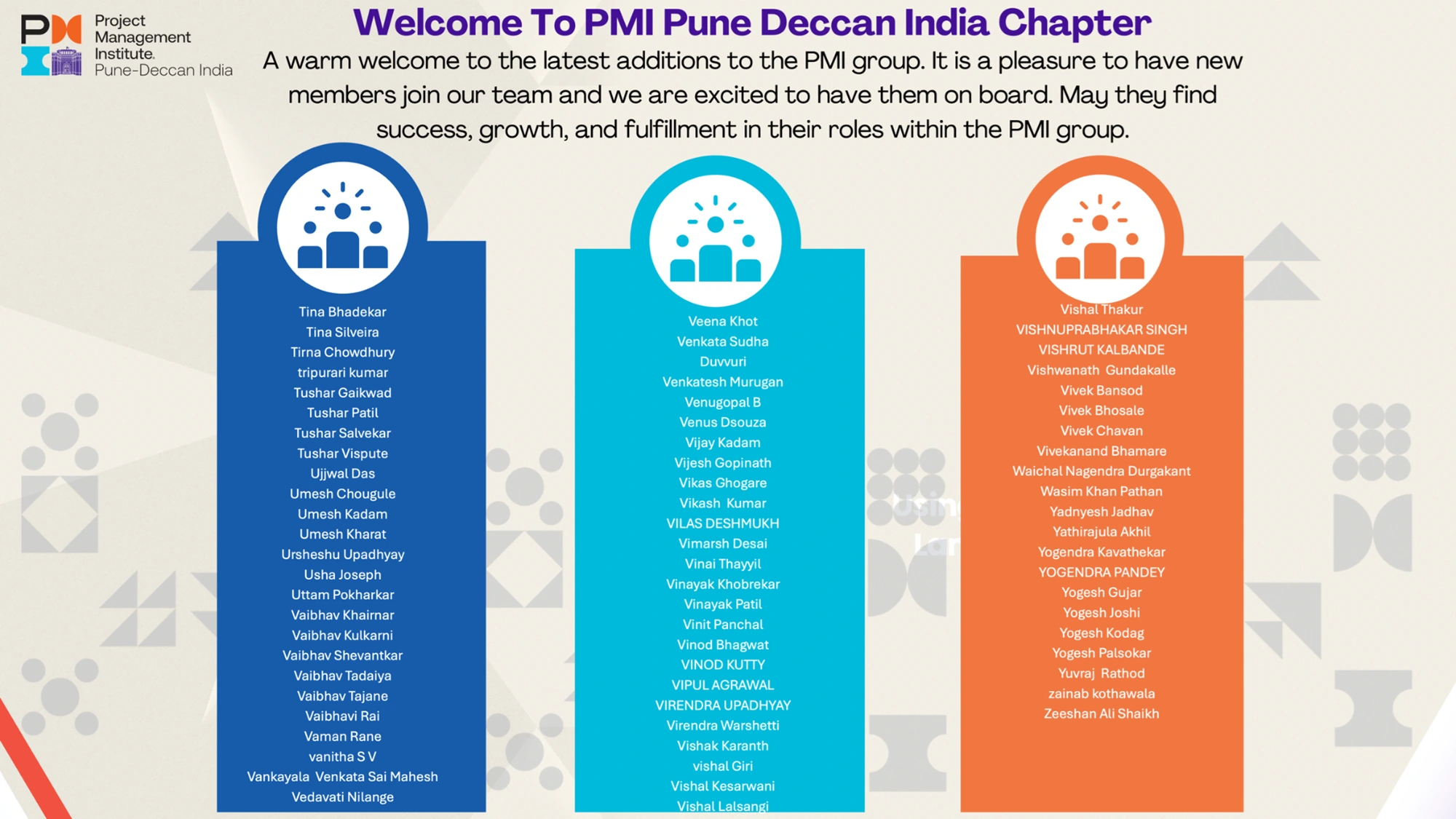
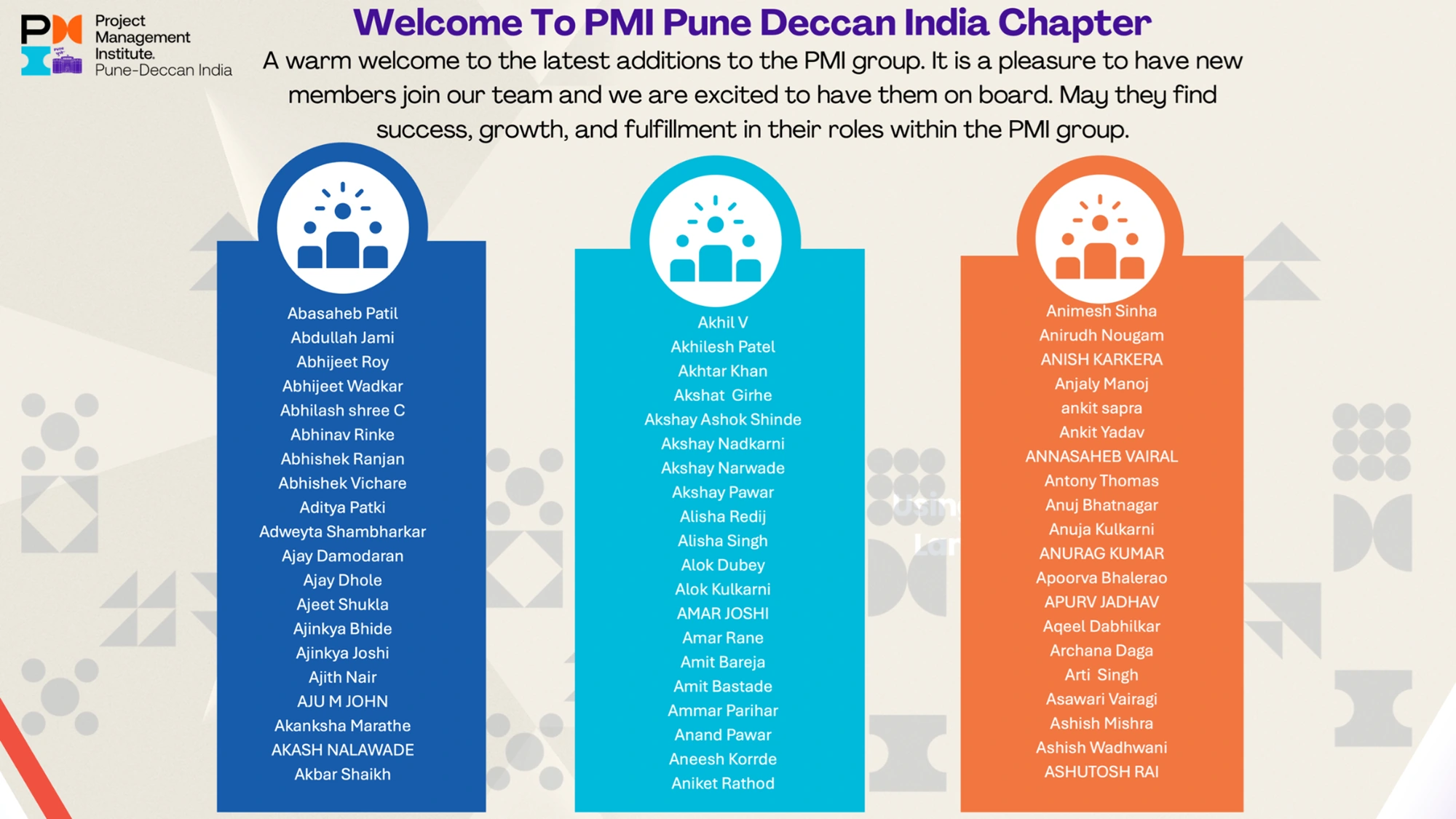
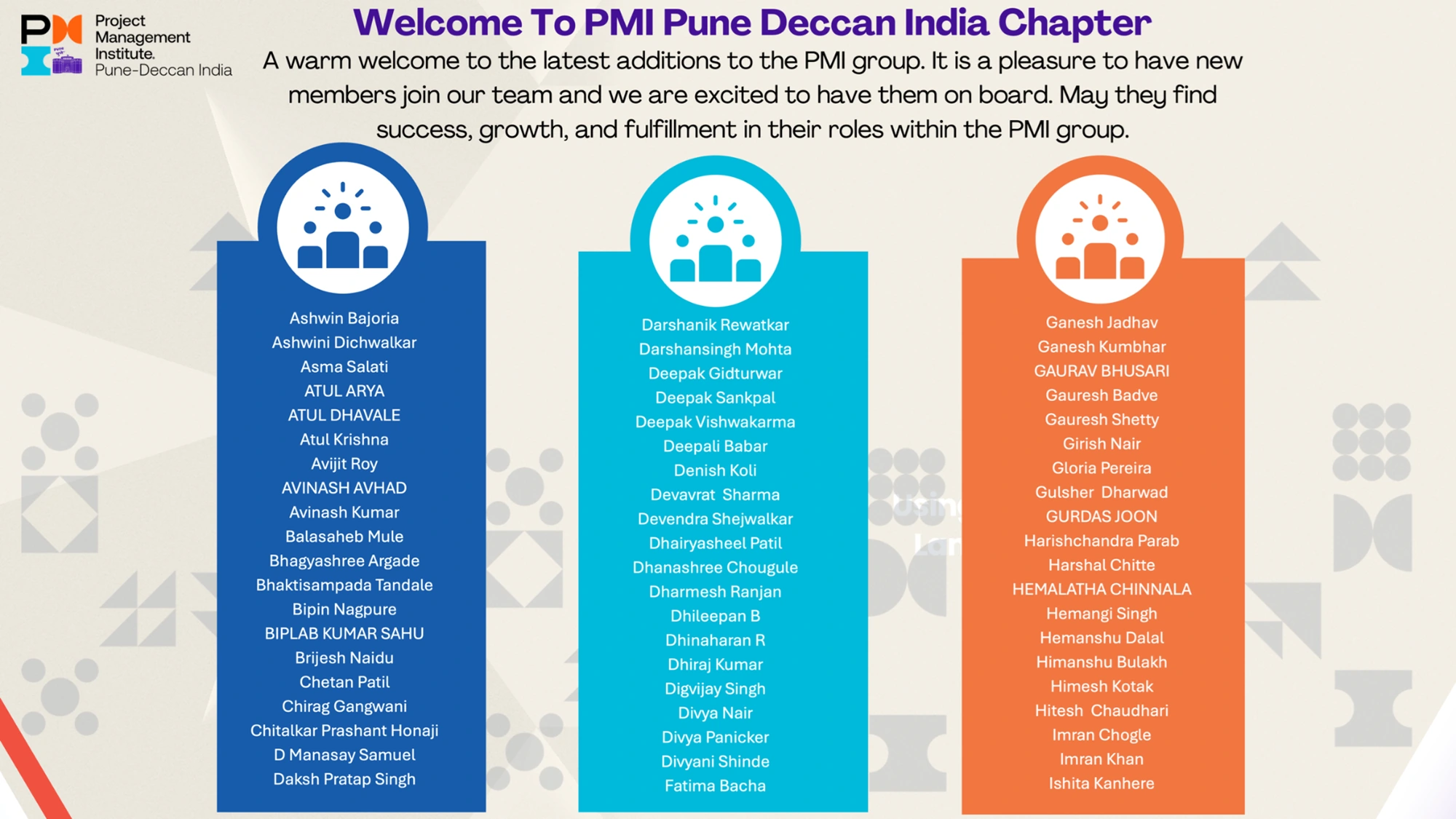
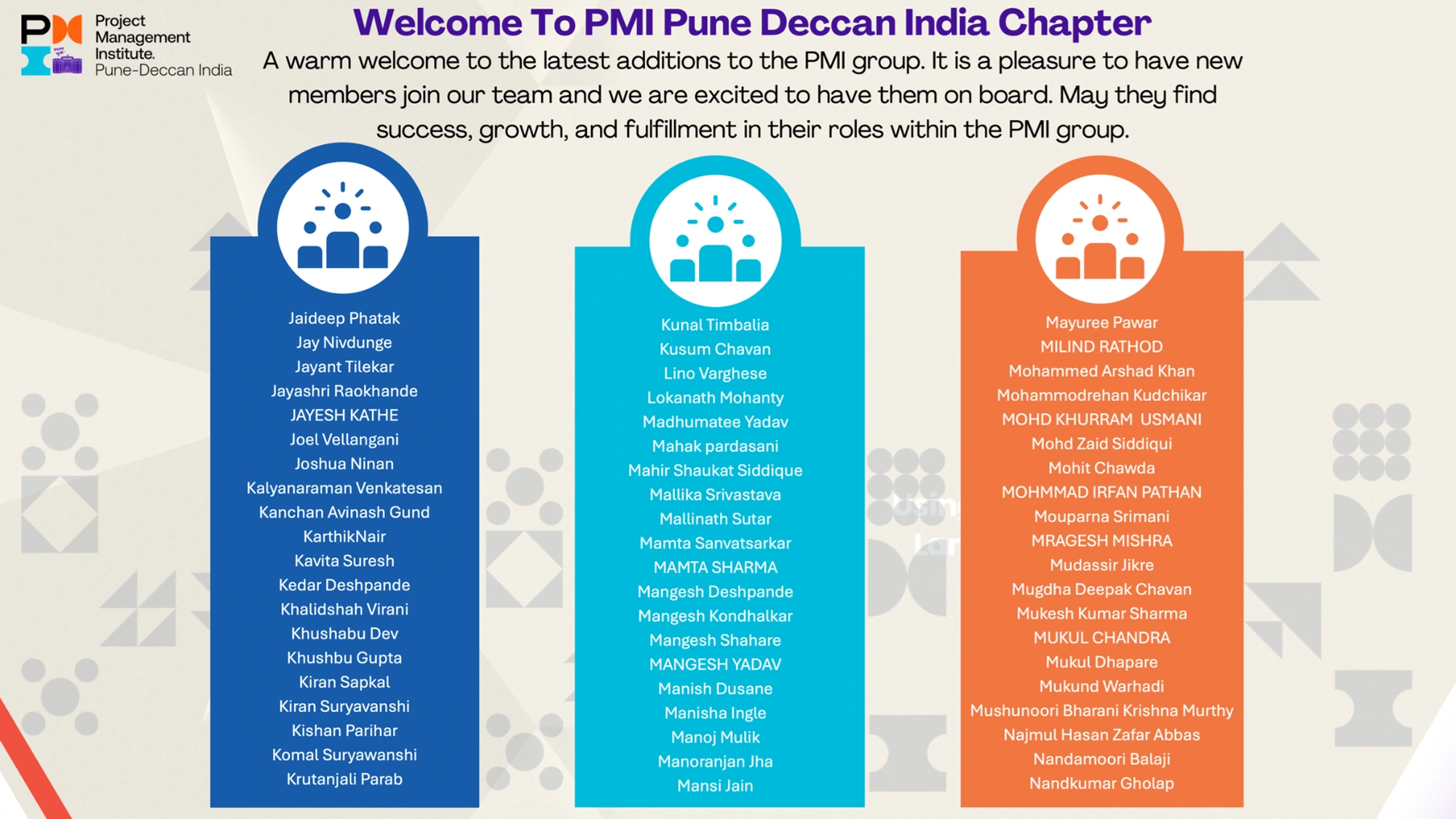
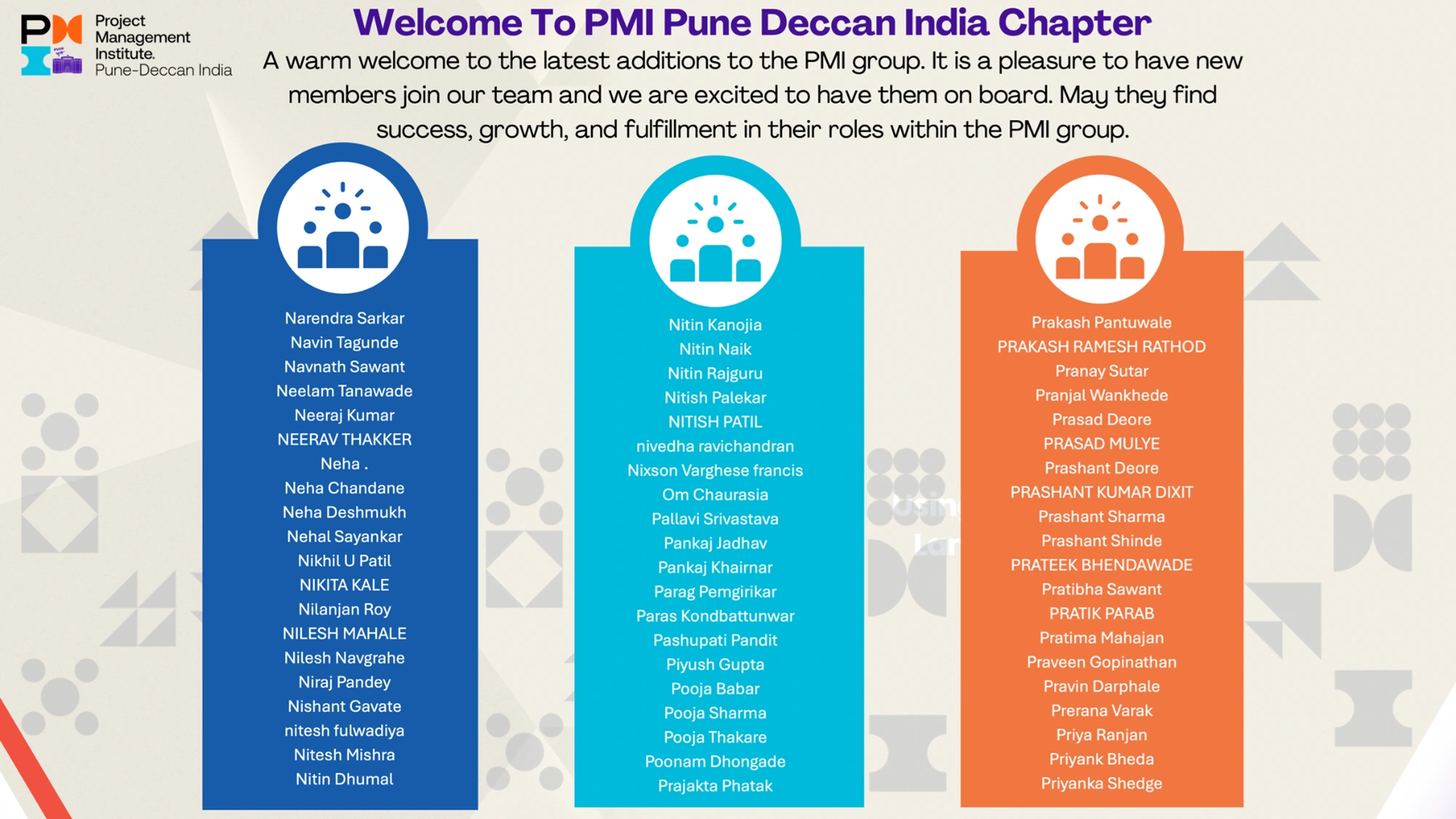
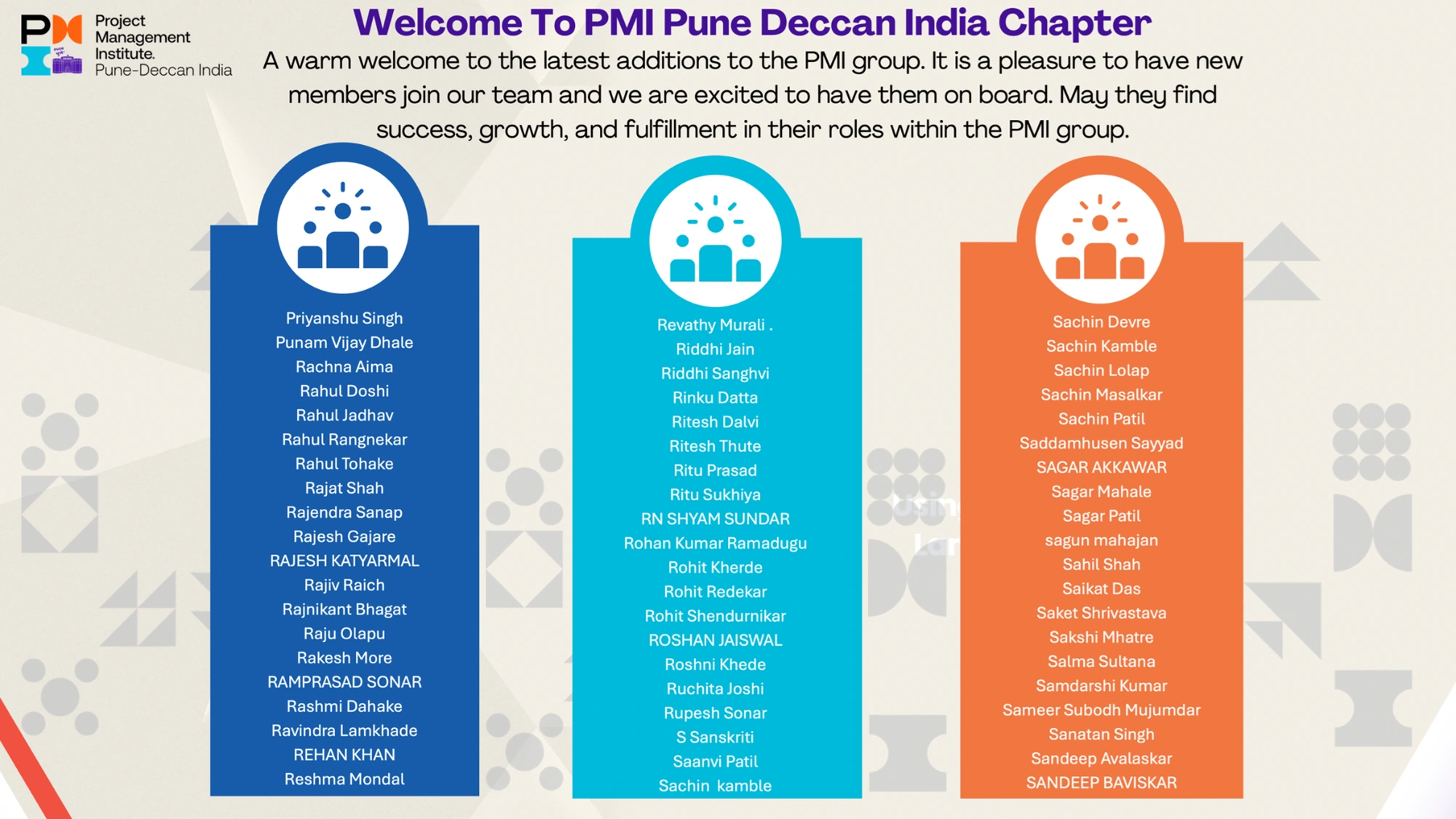
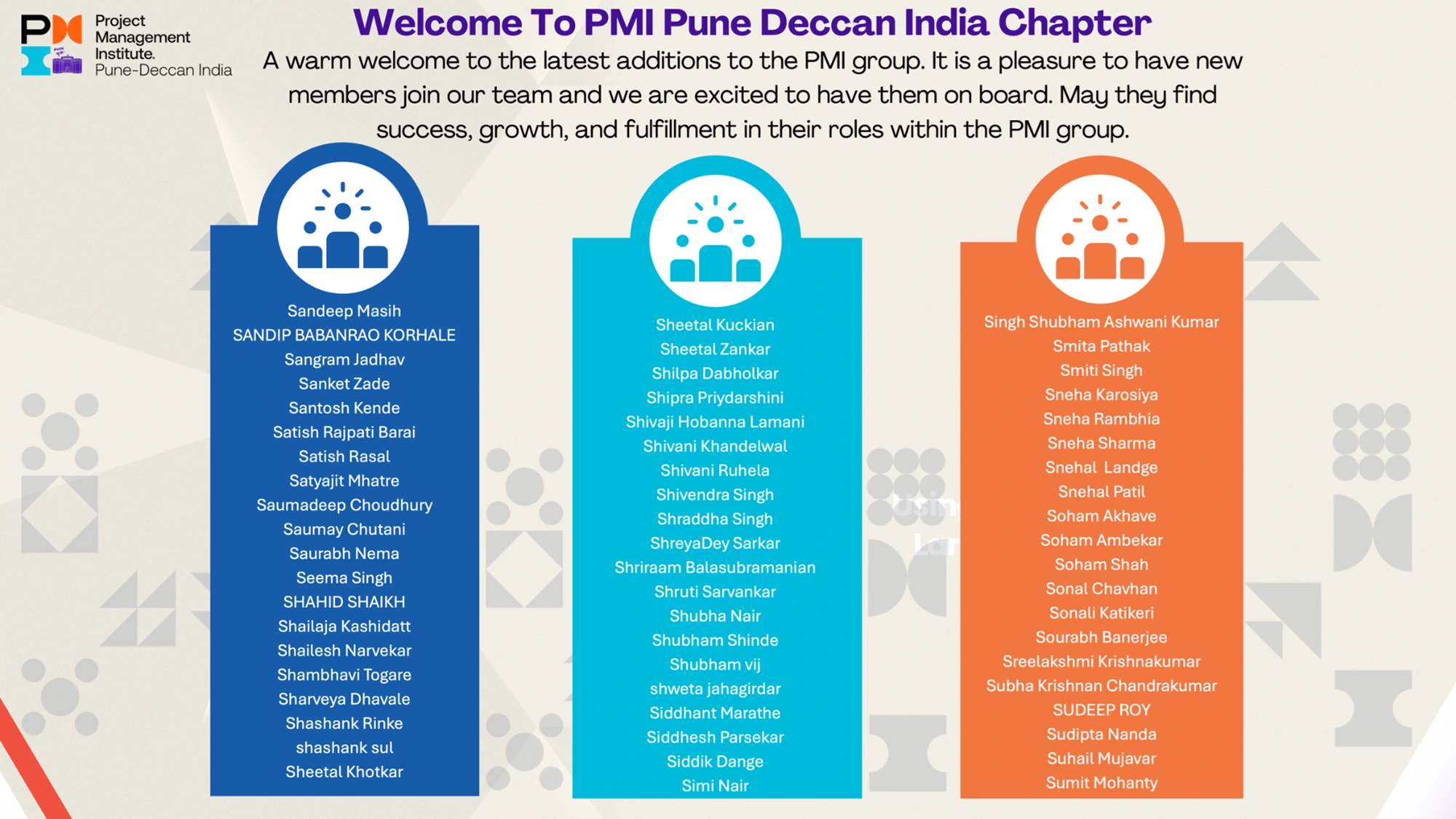
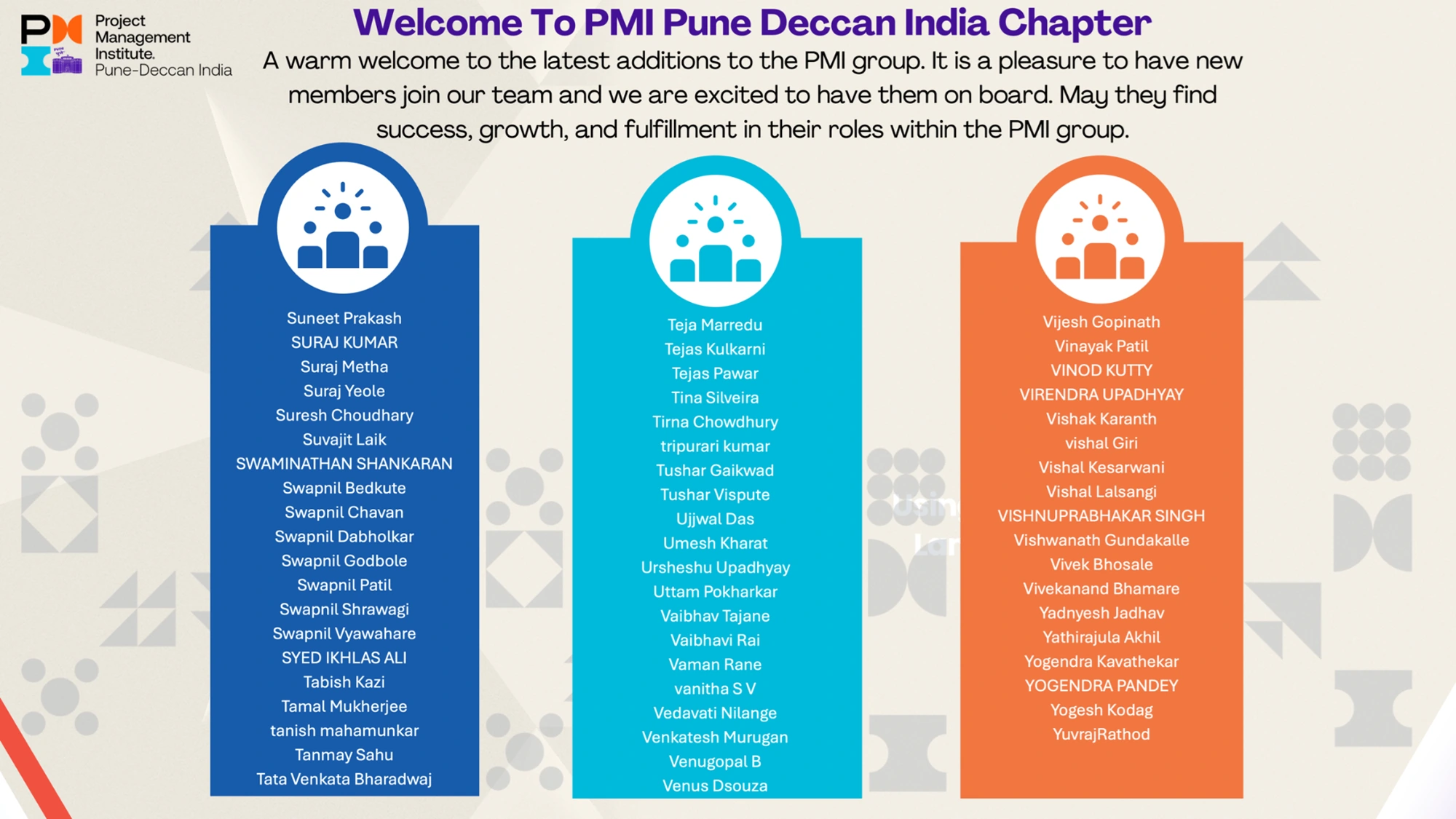
We welcome the members who joined the paid Chapter family during the reporting period. Monthly seminars provide an opportunity to introduce and felicitate members on stage. This section gives those welcomes a permanent place in Member’s Dialog and helps fellow members recognize new faces.
New members are celebrated in the month-by-month welcome panels below.
Select a recognition panel to view it at full size. Use Zoom in to read smaller text.
September 2026
August 2026
July 2026
 View full size
 View full size
 View full size
 View full size
 View full size
 View full size
 View full size
 View full size
 View full size
 View full size
 View full size
 View full size
June 2026
Your first month with the Chapter
Begin with Member Onboarding in the Hub, identify a learning session and explore the specialist community relevant to your interests. If you are unsure where to begin, use Member Support. Introducing yourself at a seminar can help you find peers, while a small contribution can be a way to build a more sustained connection.
Back to contents ↑CELEBRATING PROFESSIONAL MILESTONES
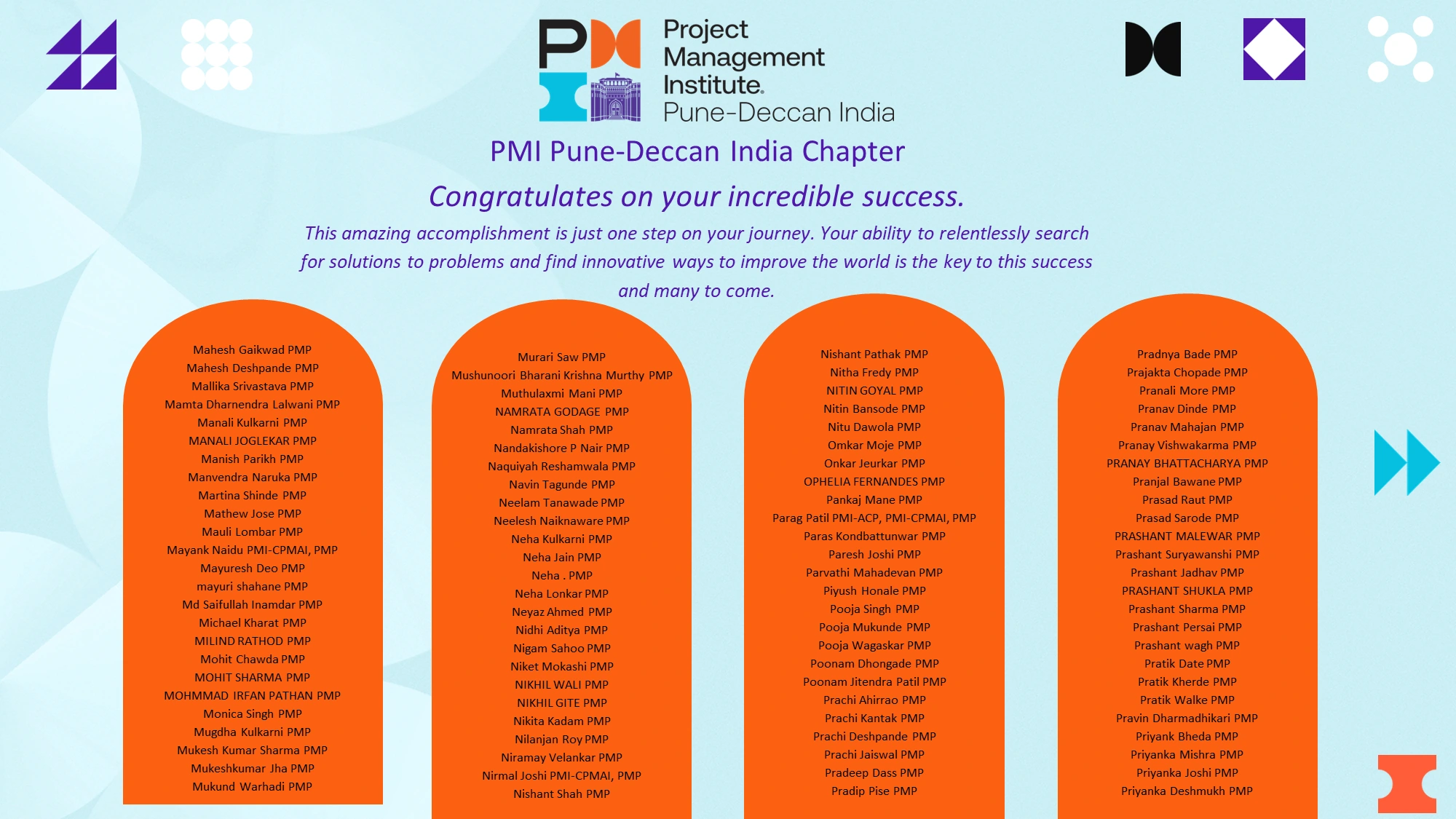
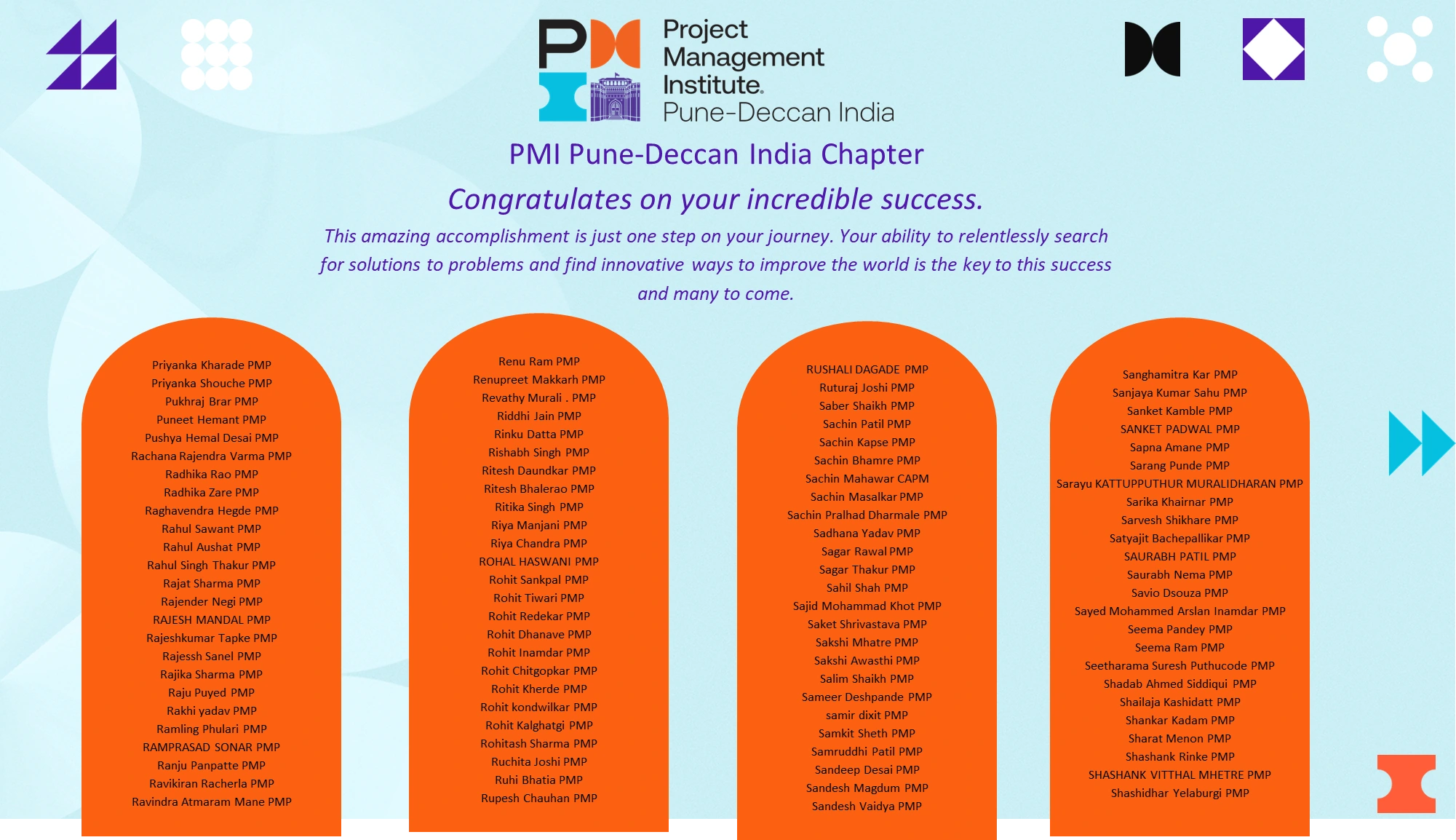
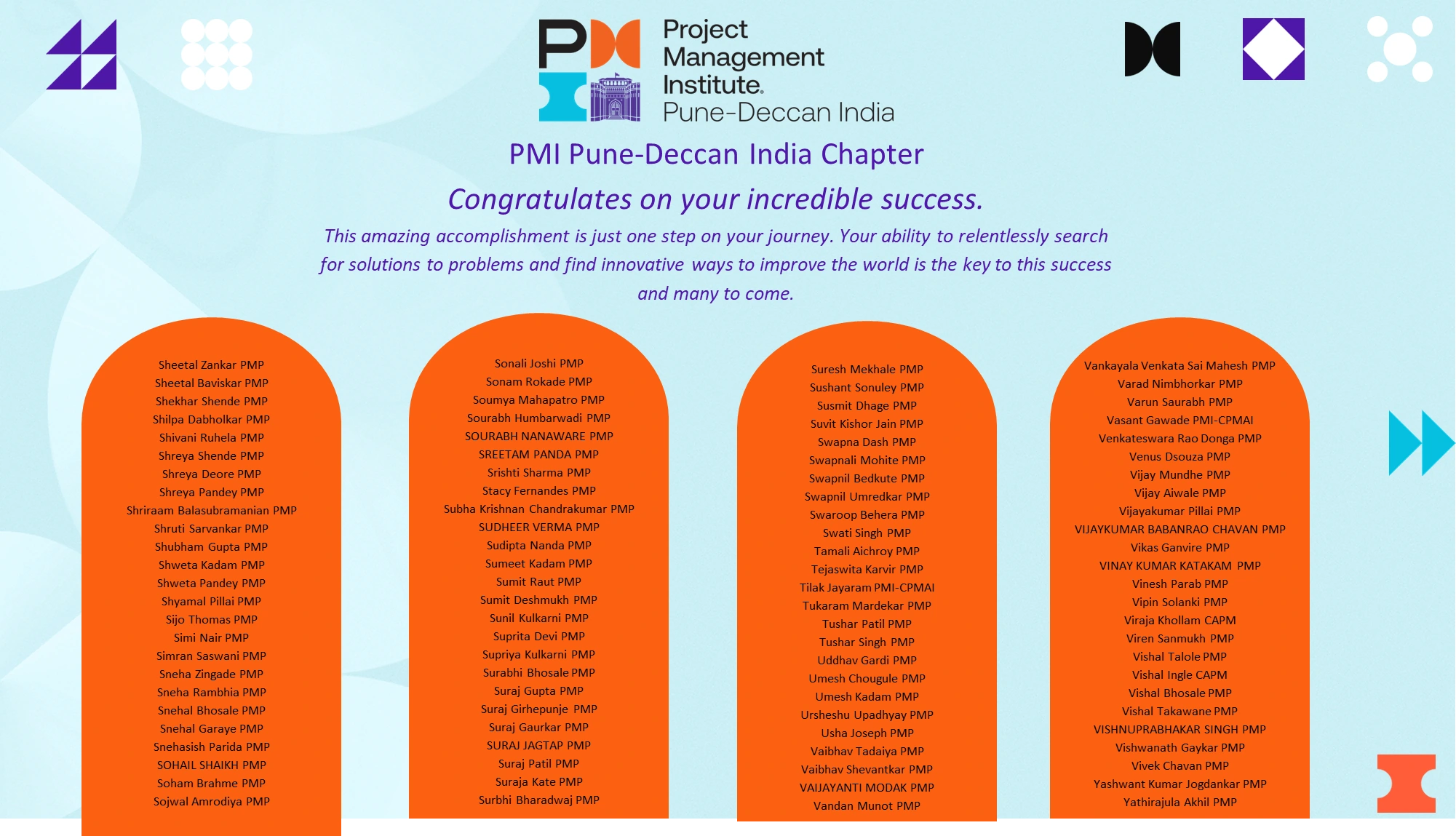
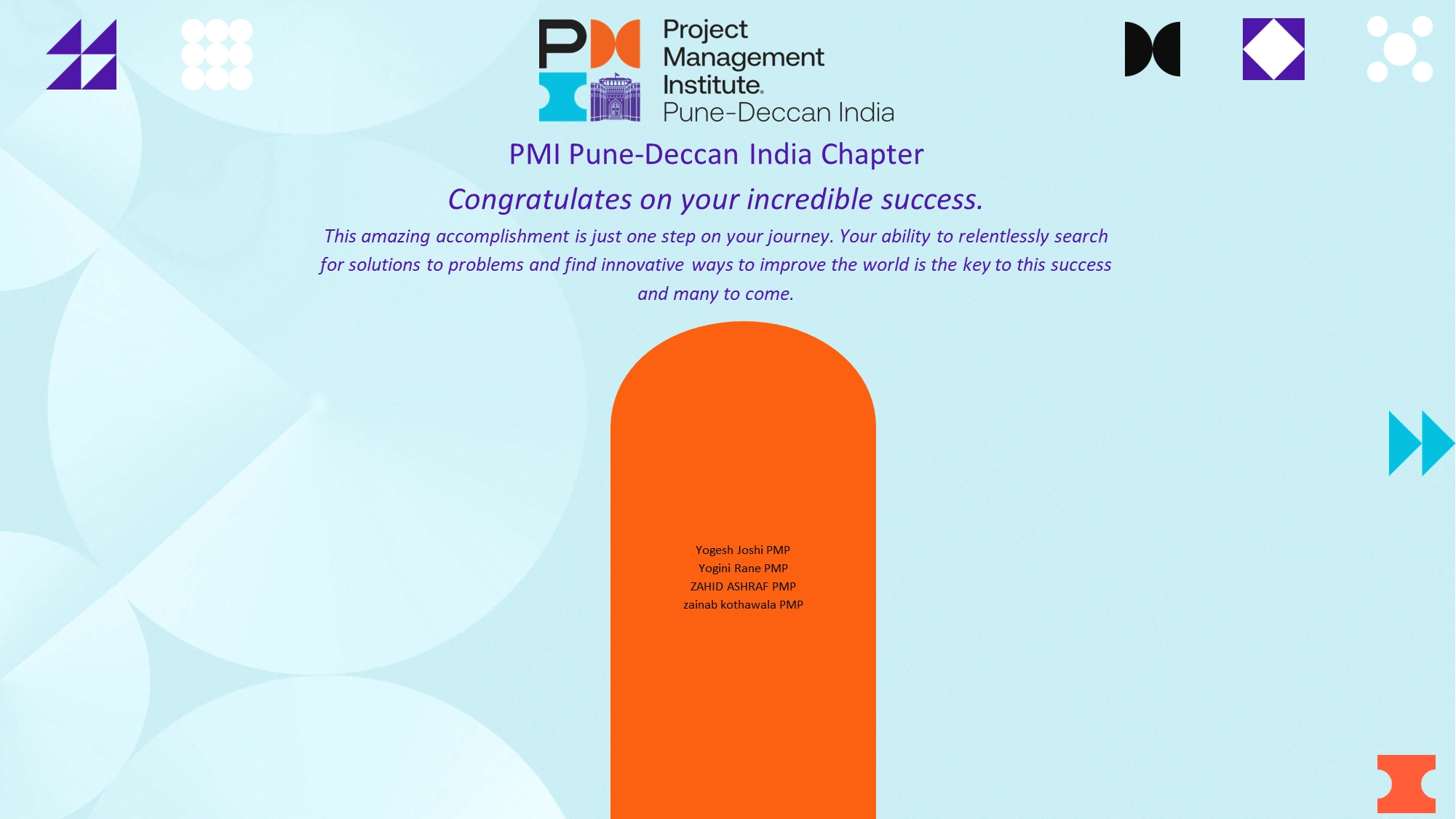
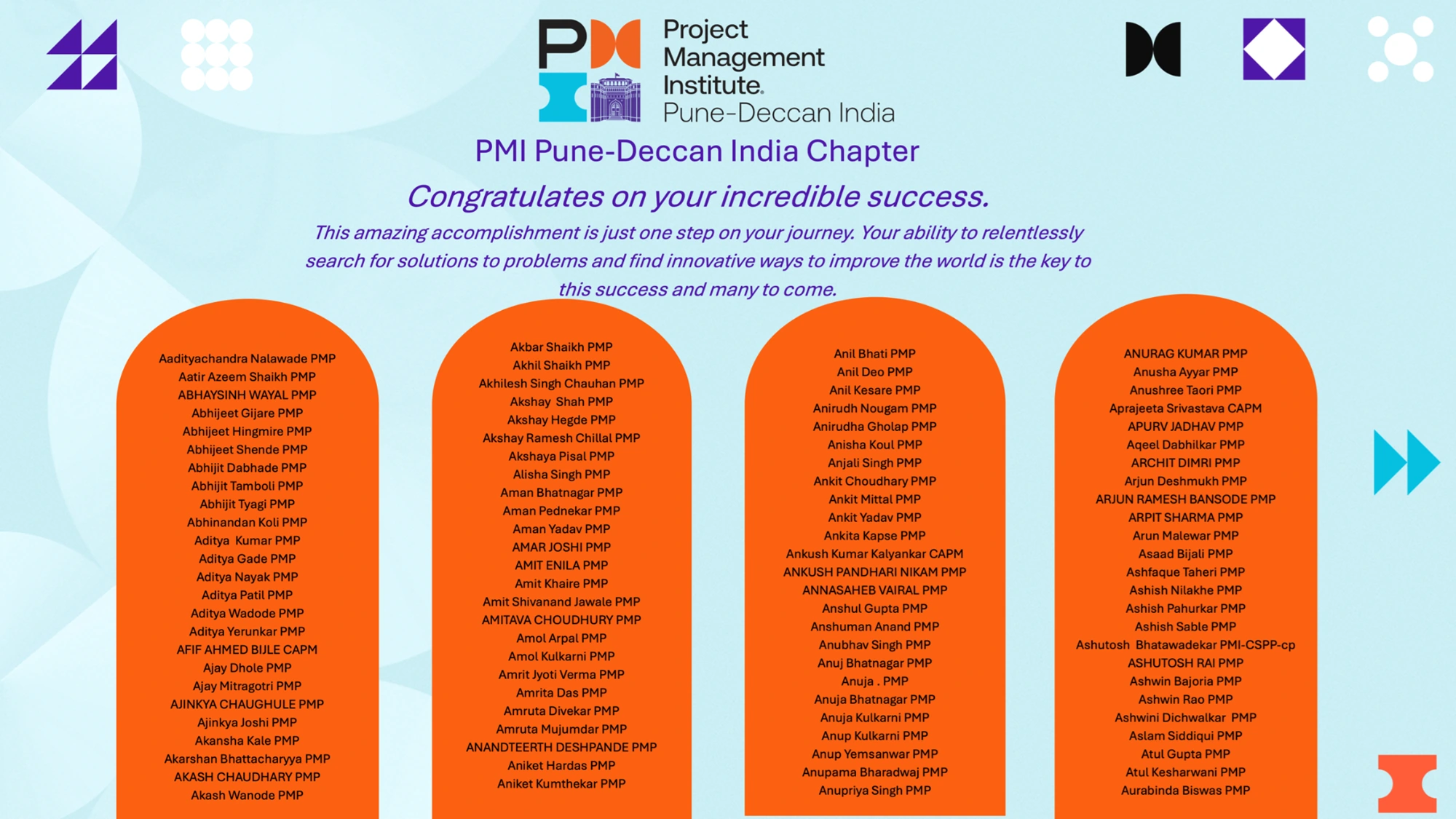
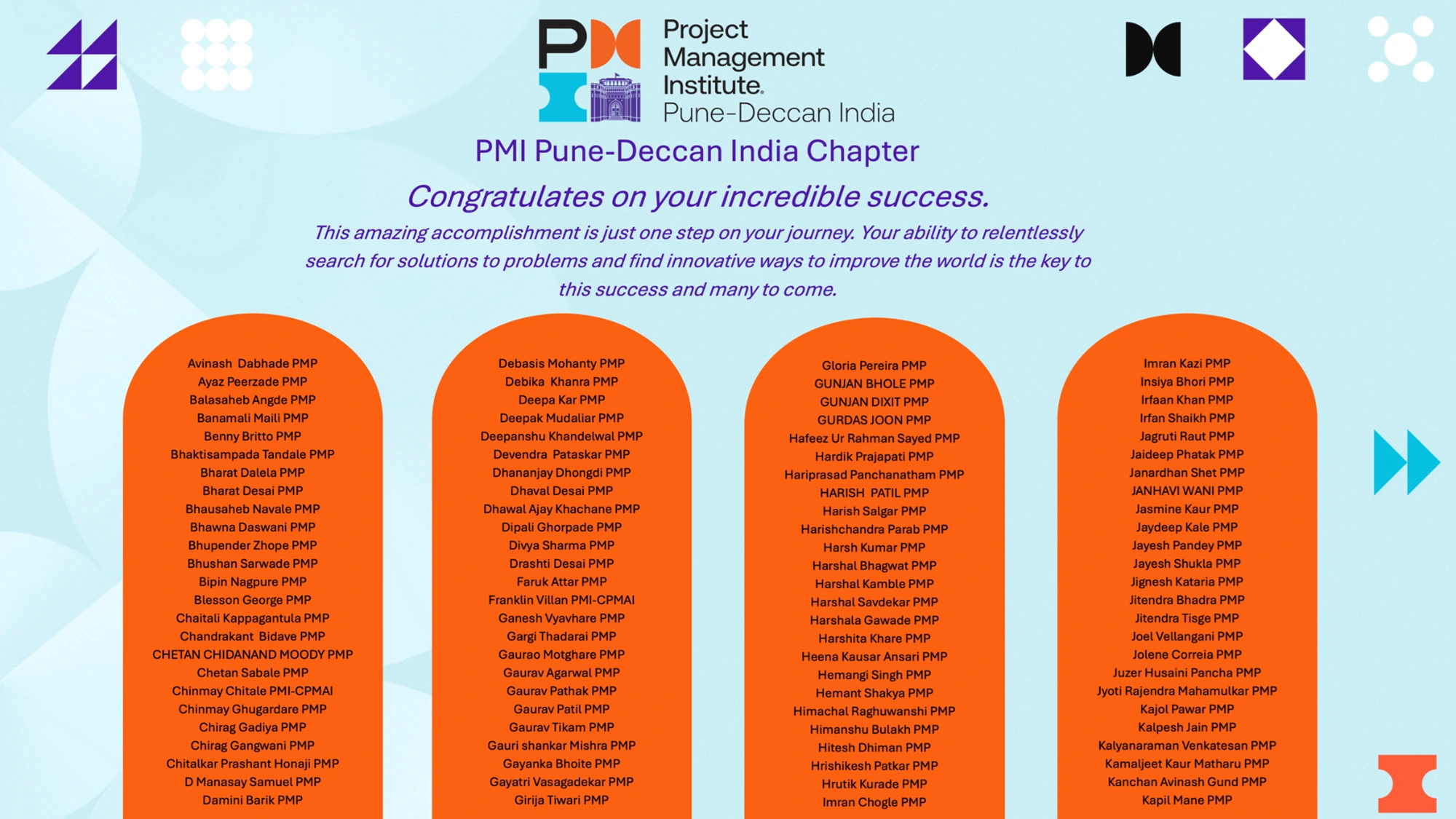
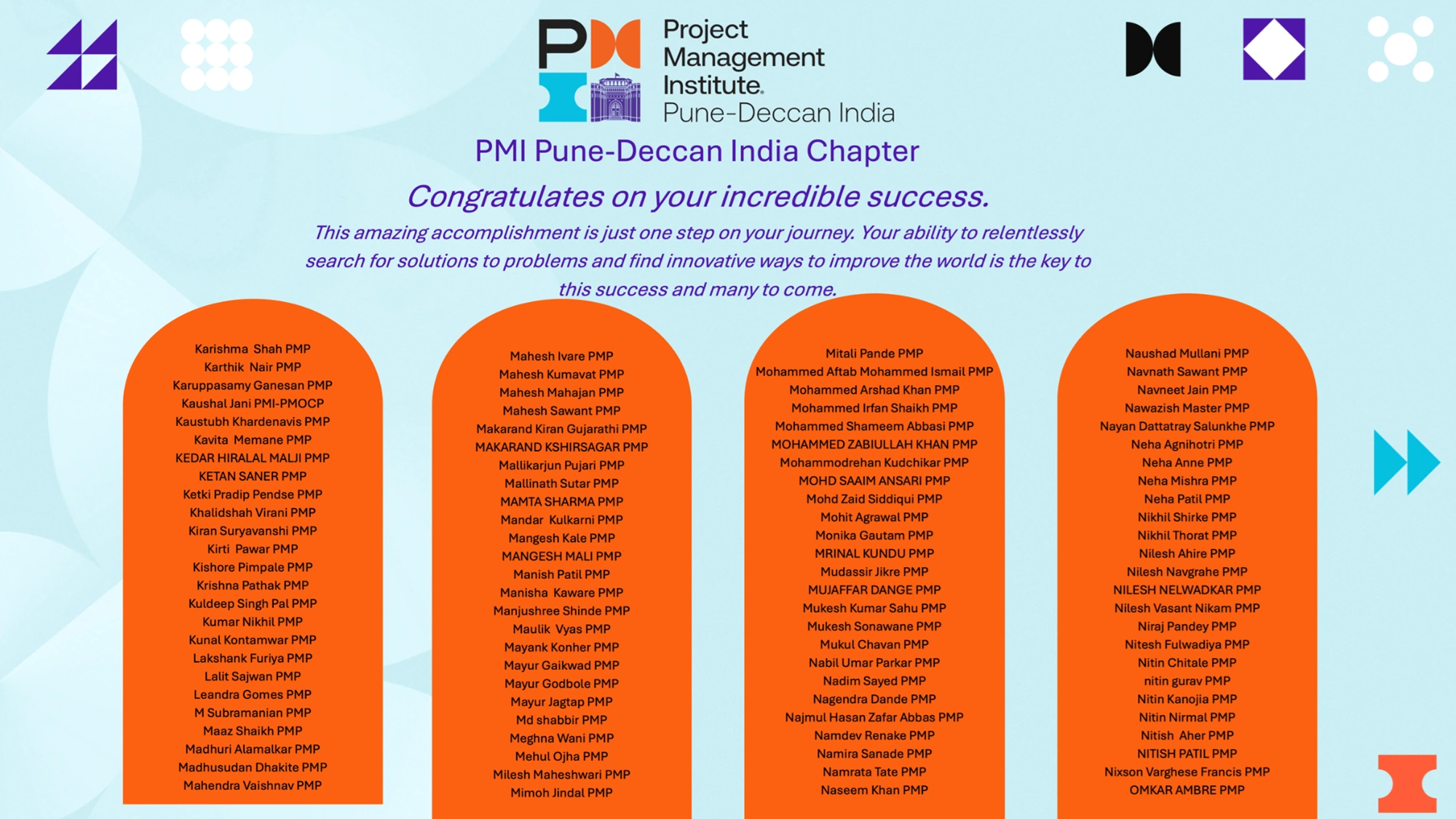
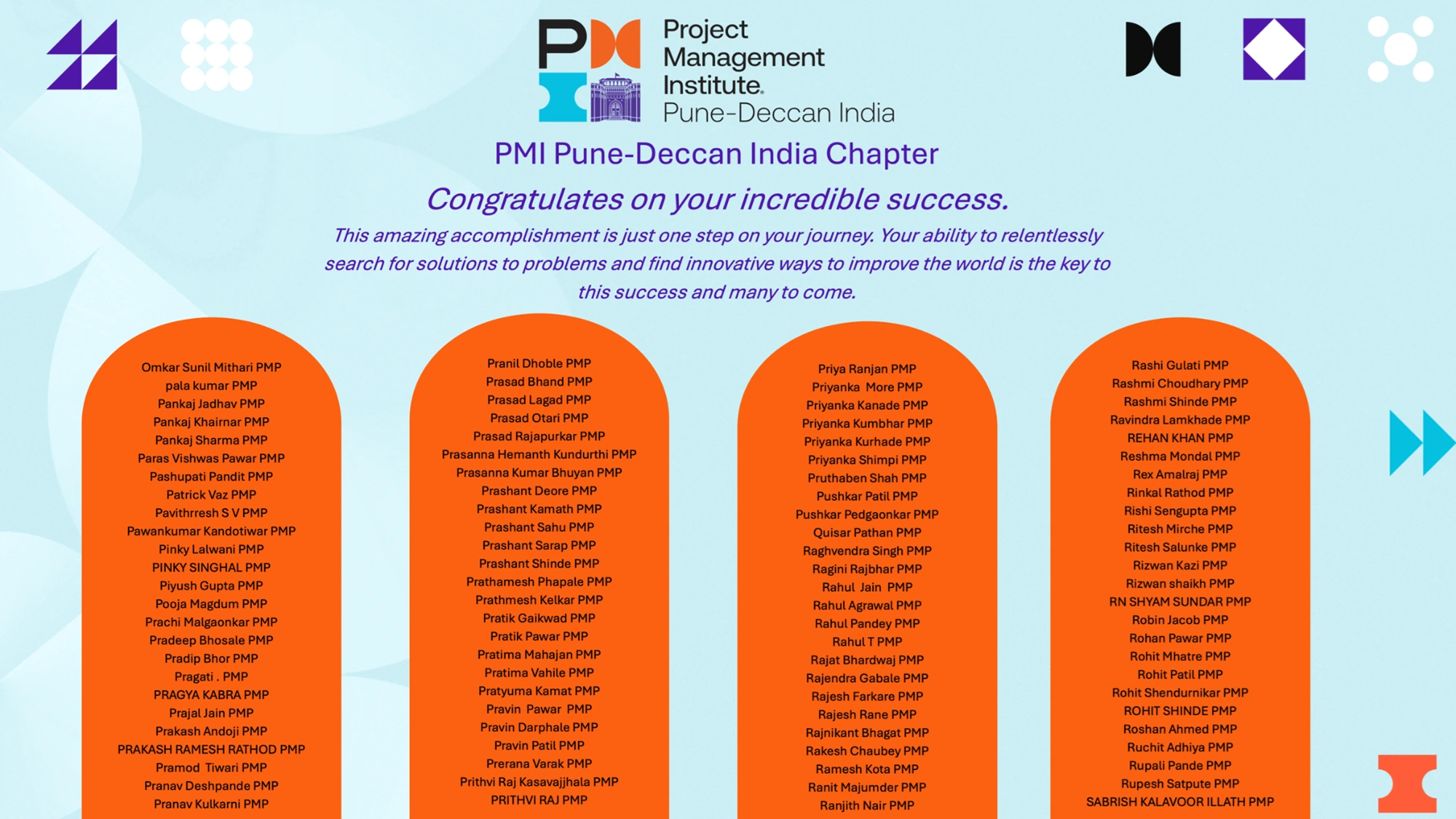
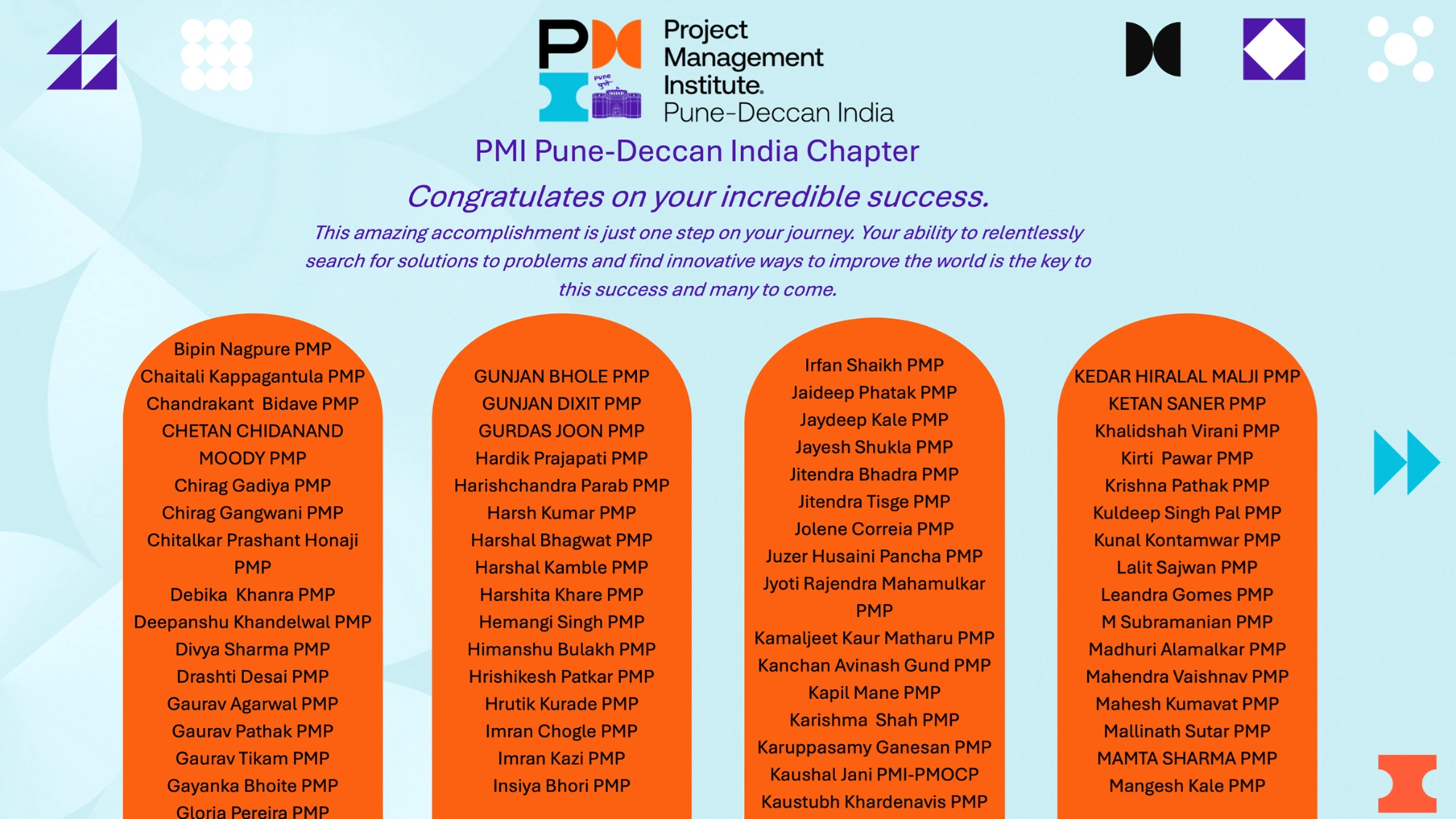
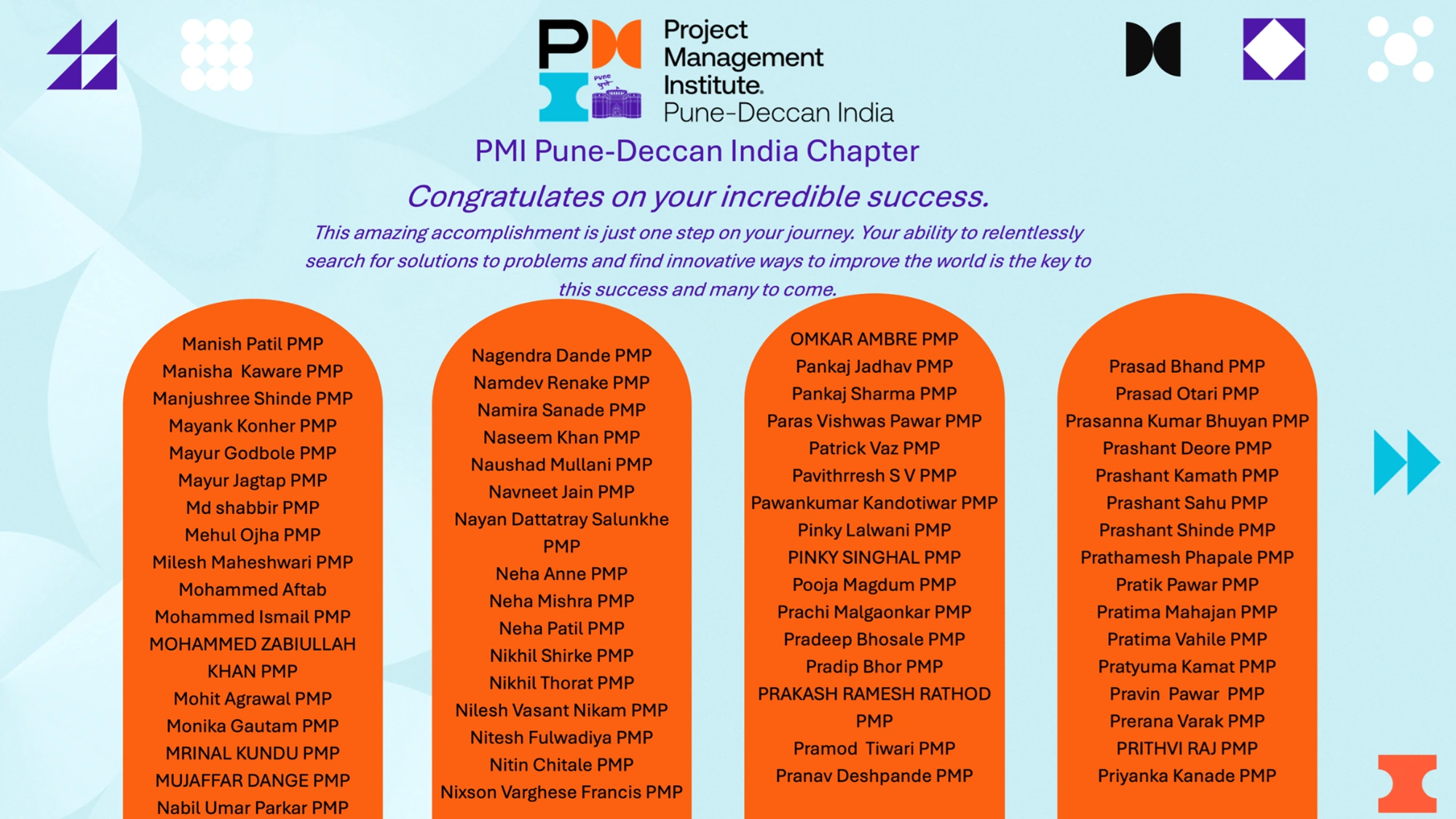
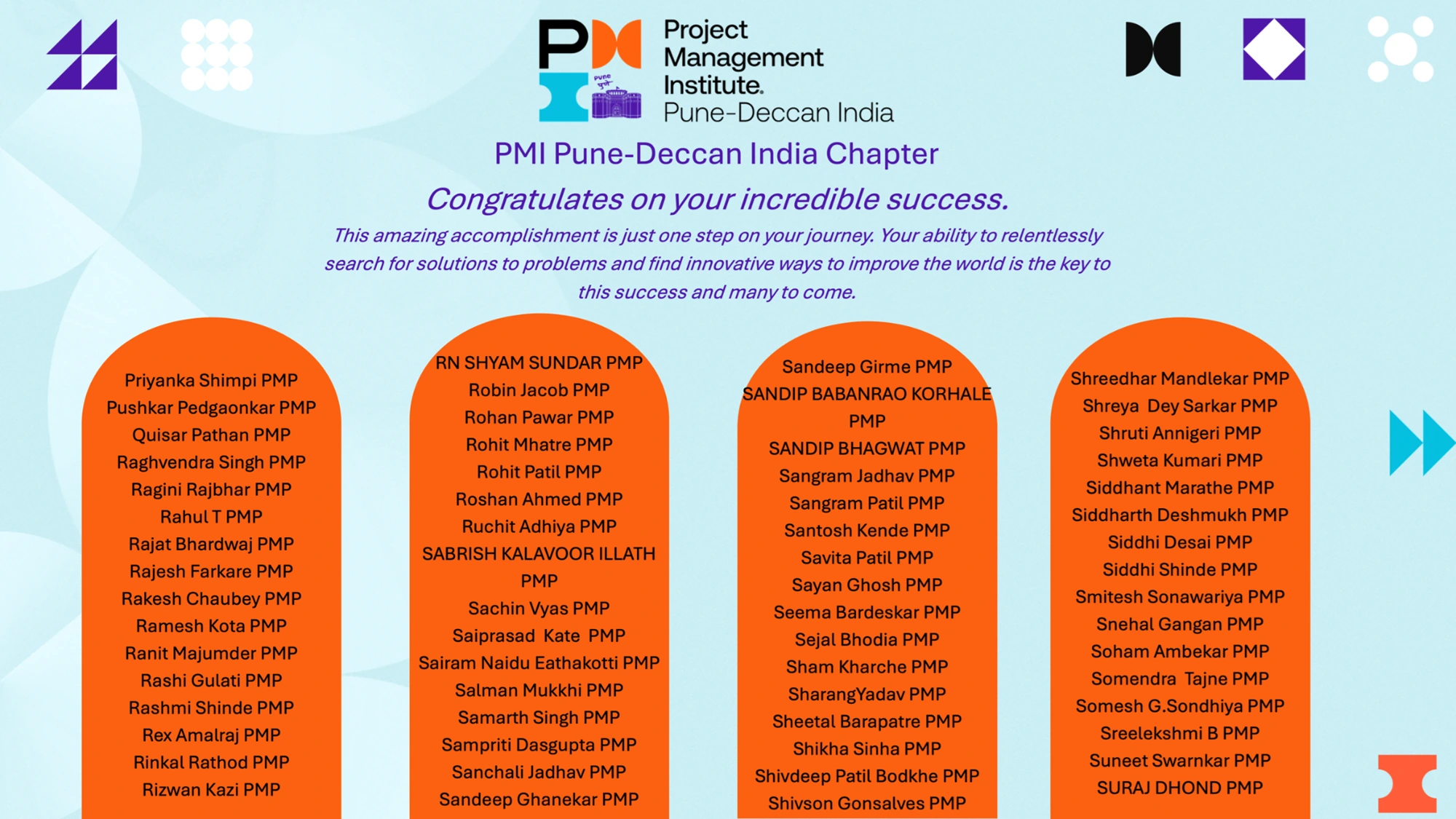
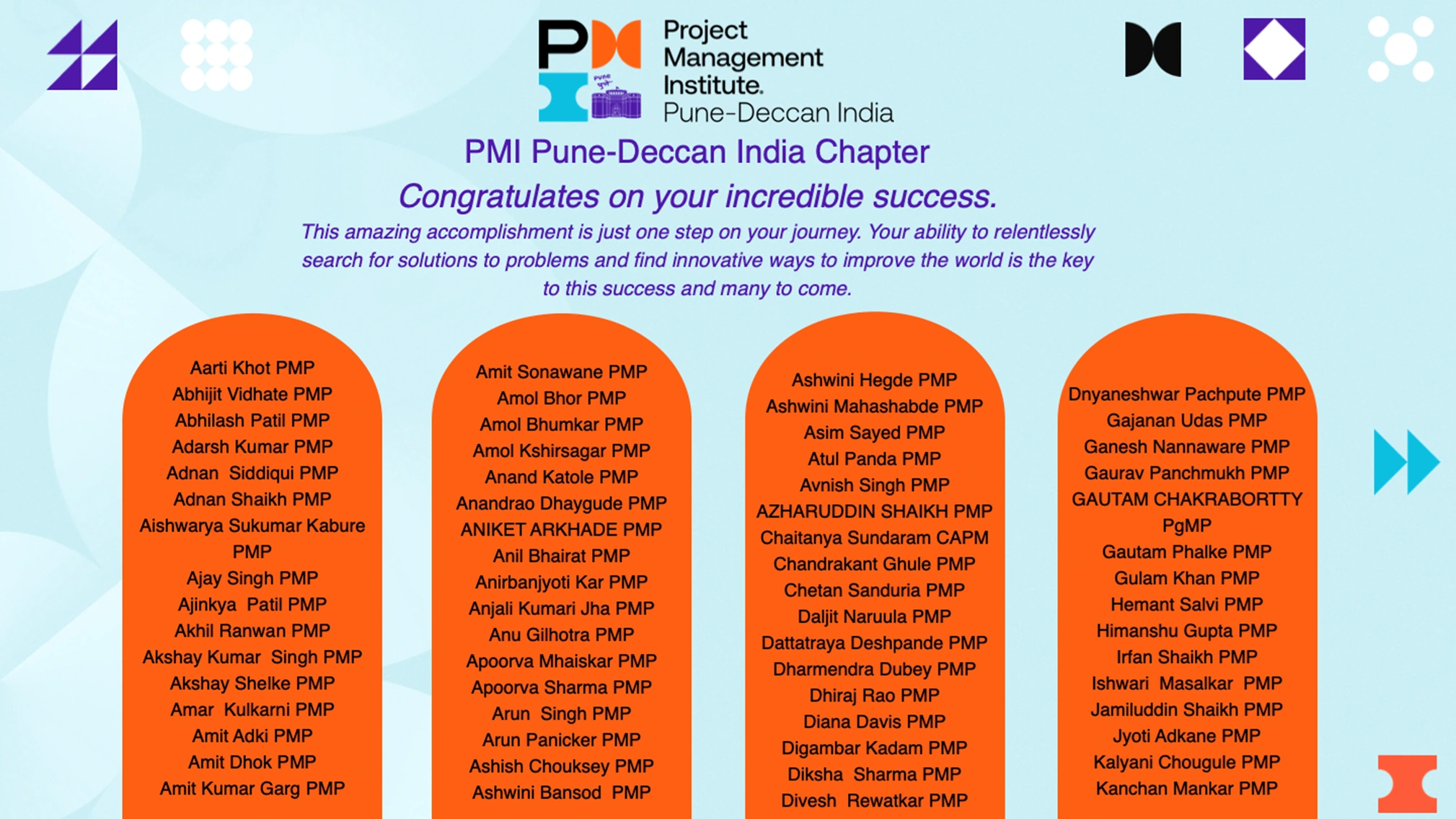
Congratulations to our certification achievers
Recognizing the effort behind a new professional credential.
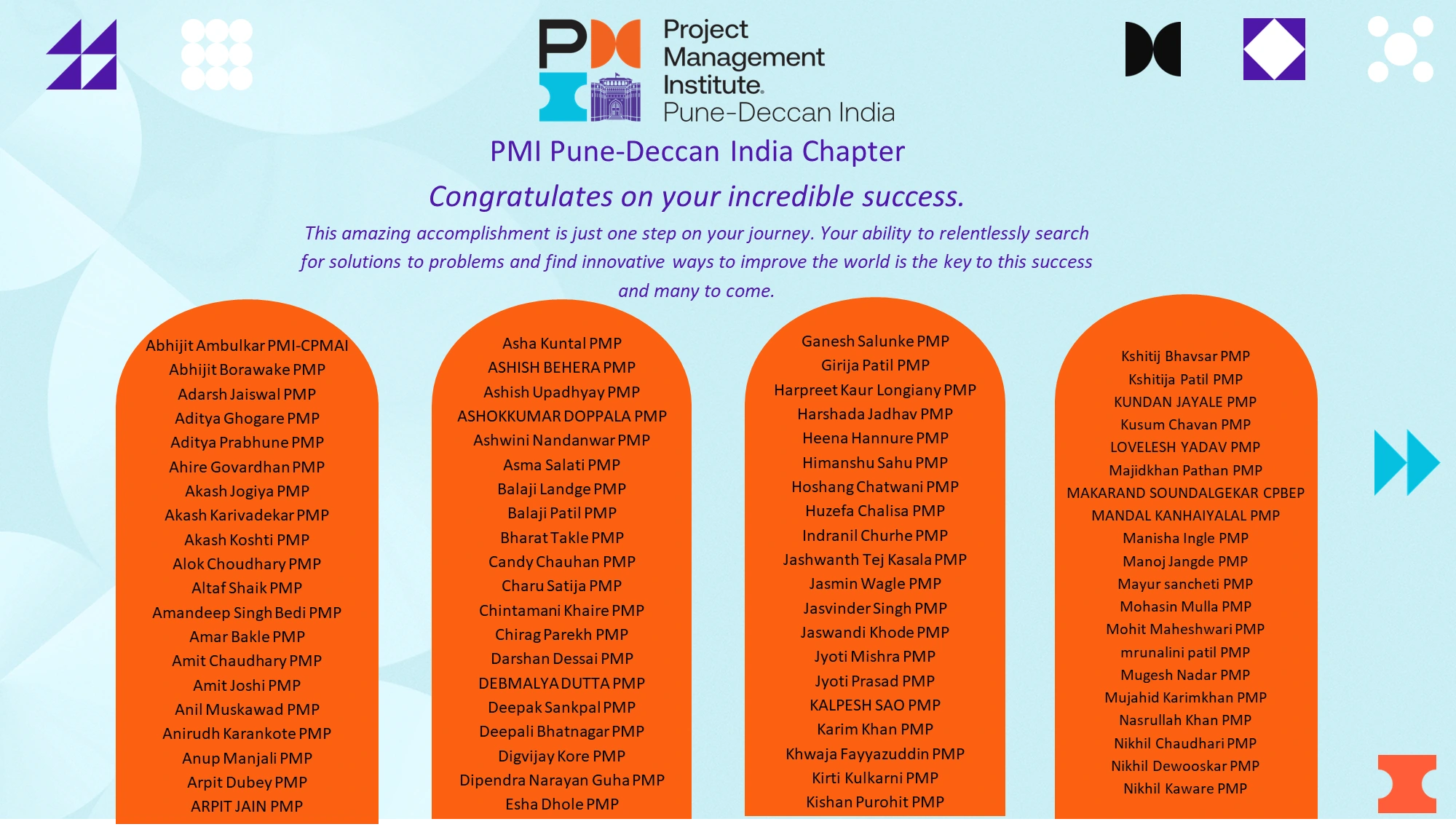
A certification reflects a member’s commitment to professional development. We congratulate the members whose achievements were recognized during the reporting period and celebrate the learning and preparation behind those milestones. The Chapter’s monthly seminars provide a setting for their felicitation on stage.
Select a recognition panel to view it at full size. Use Zoom in to read smaller text.
 View full size
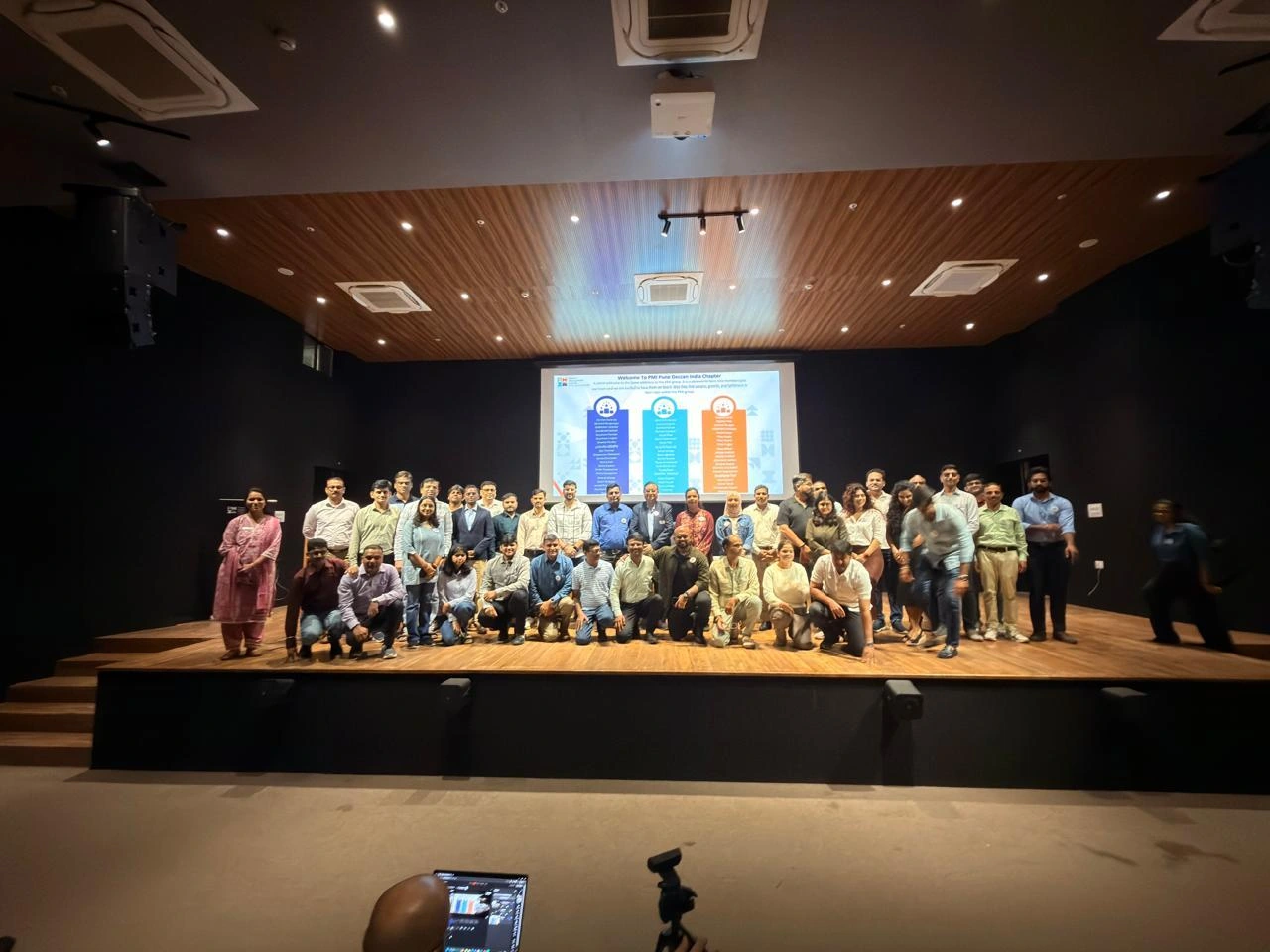
Members recognized at the August seminar.
September 2026
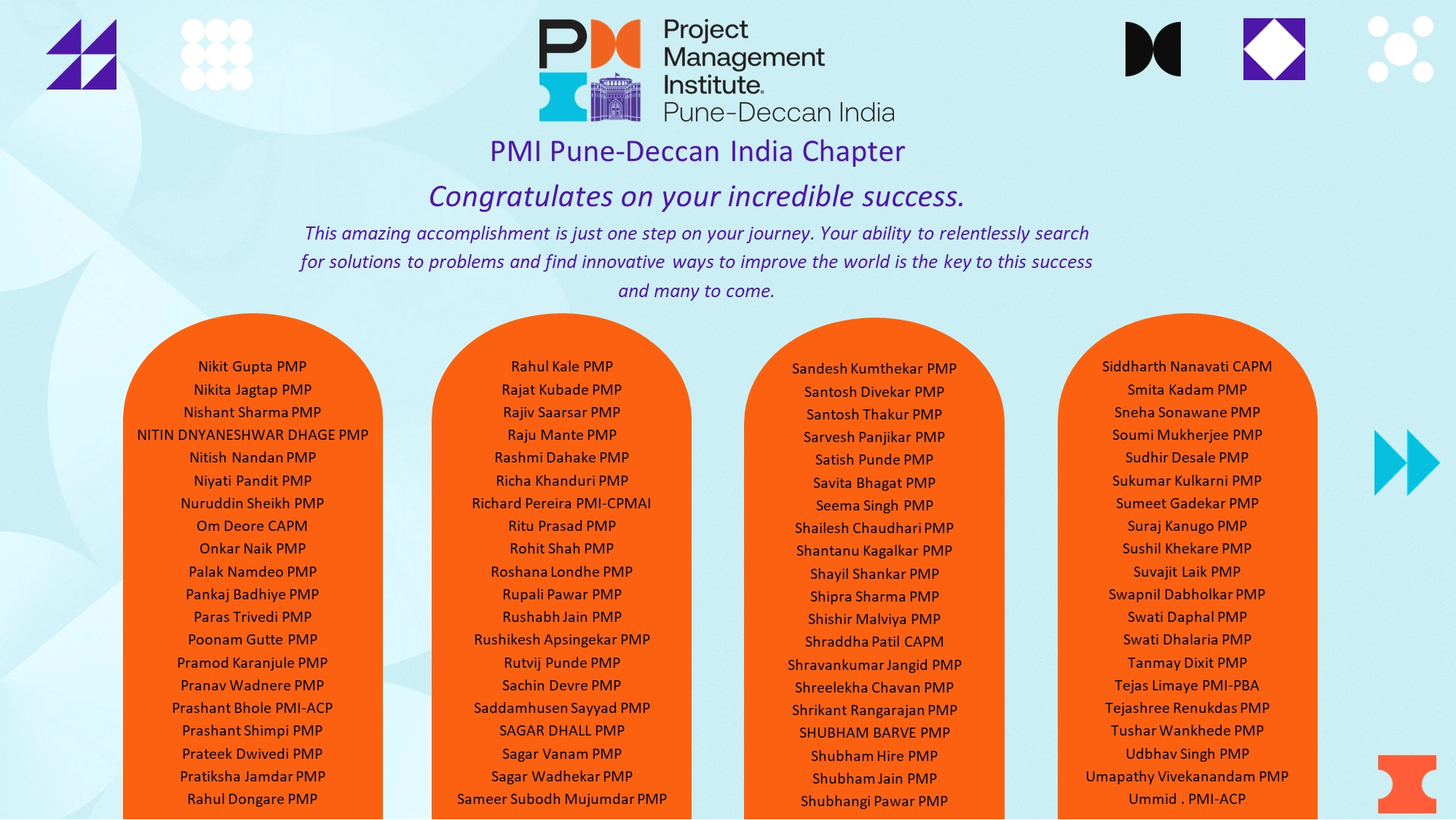
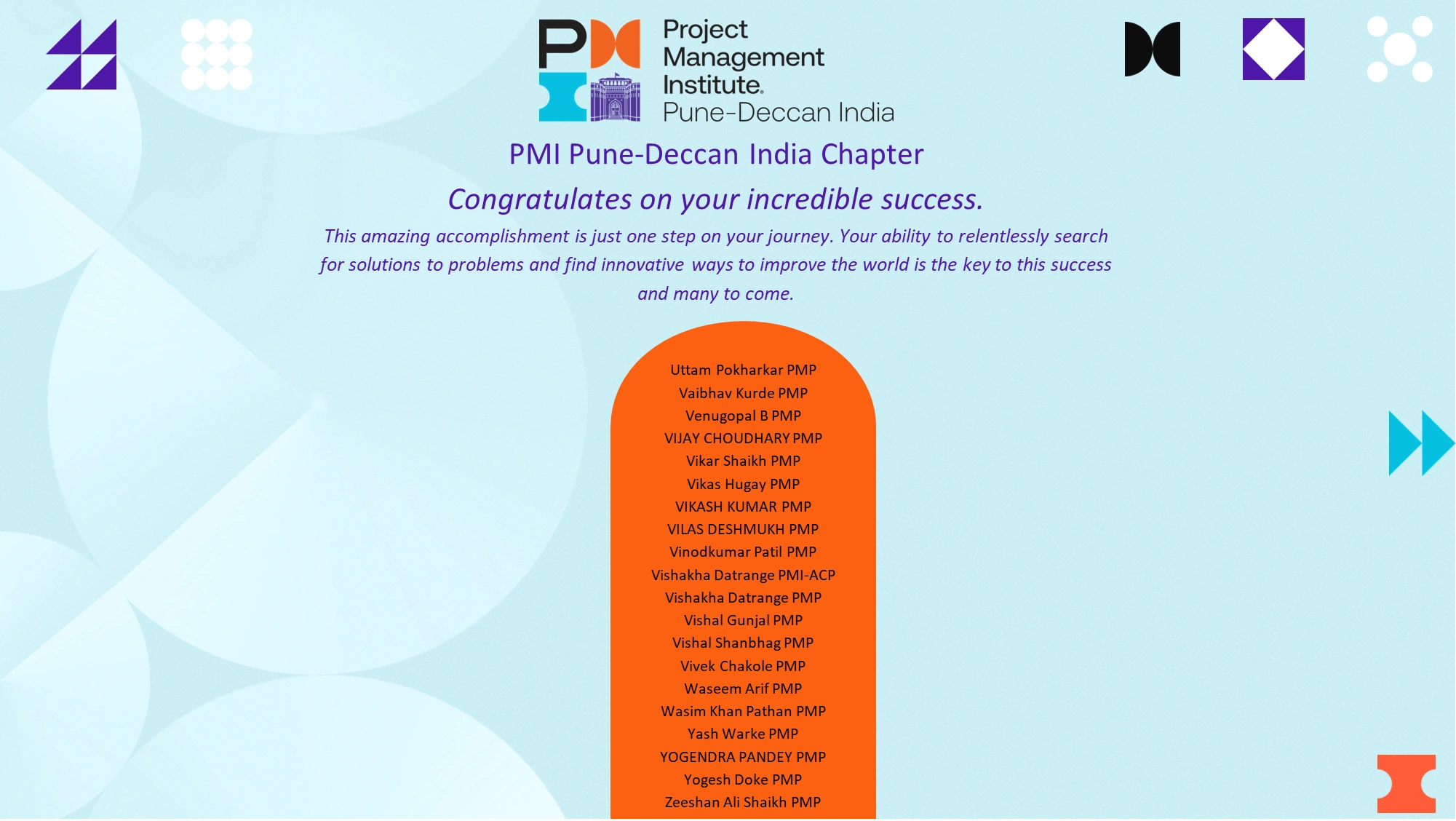
August 2026
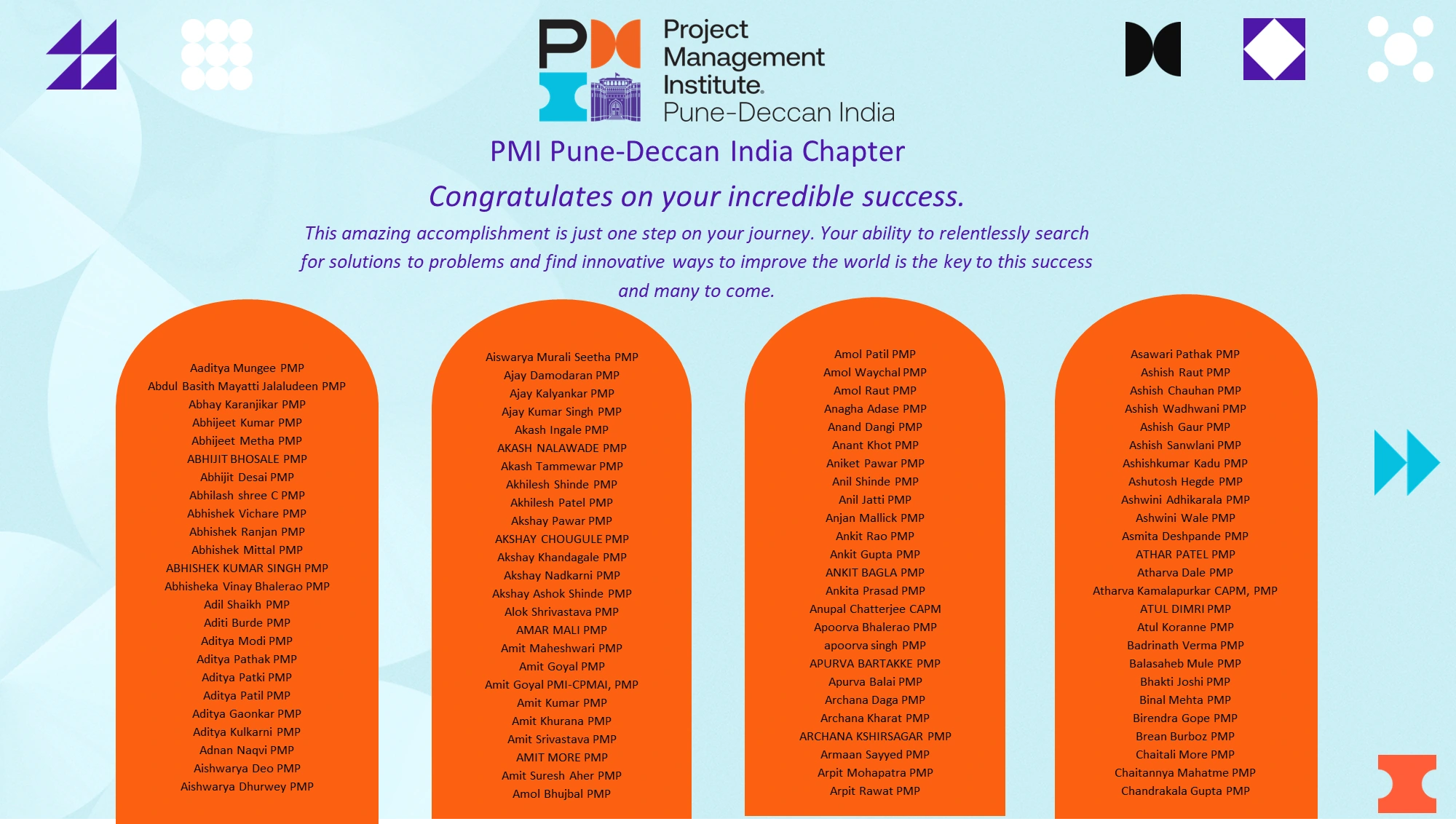
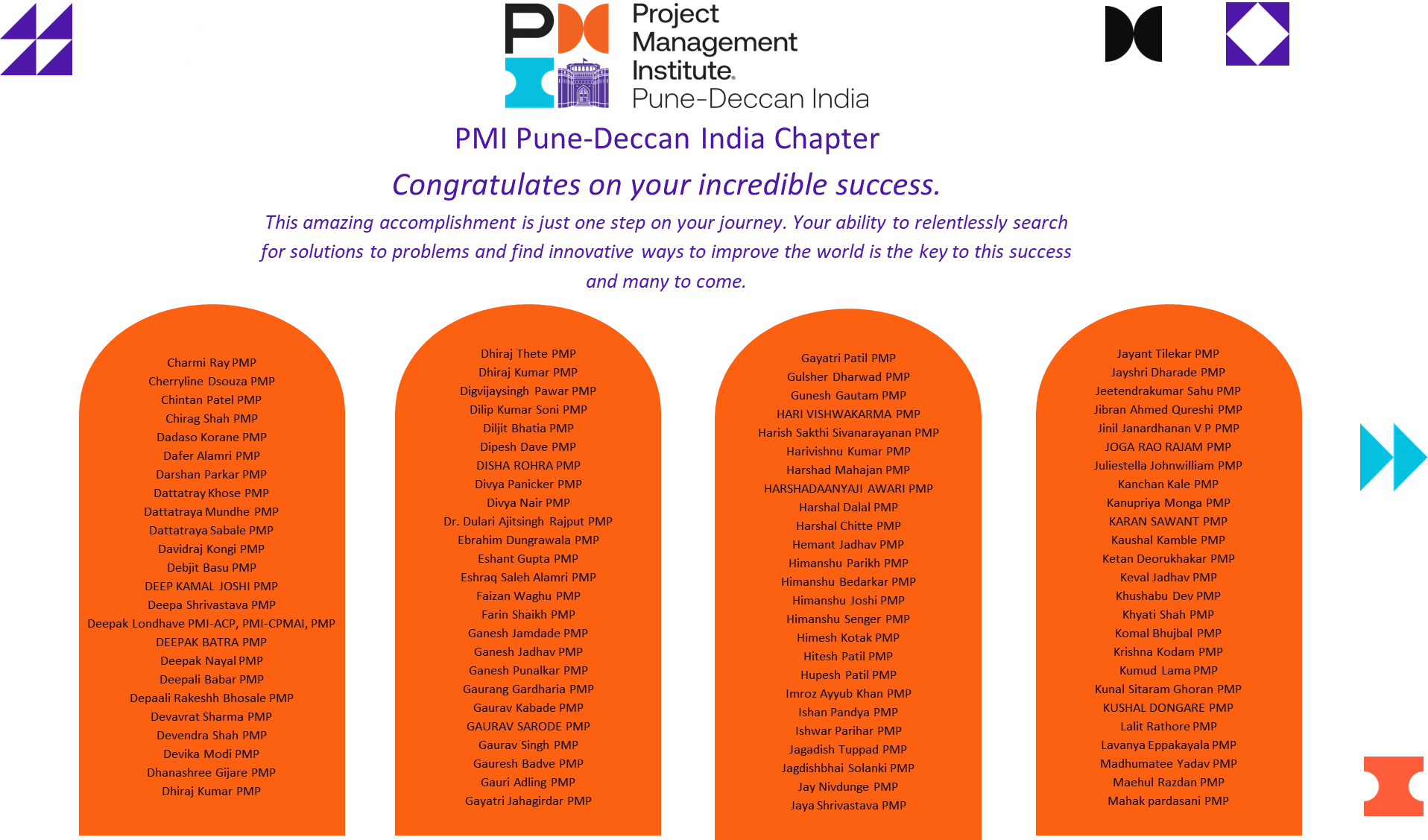
July 2026
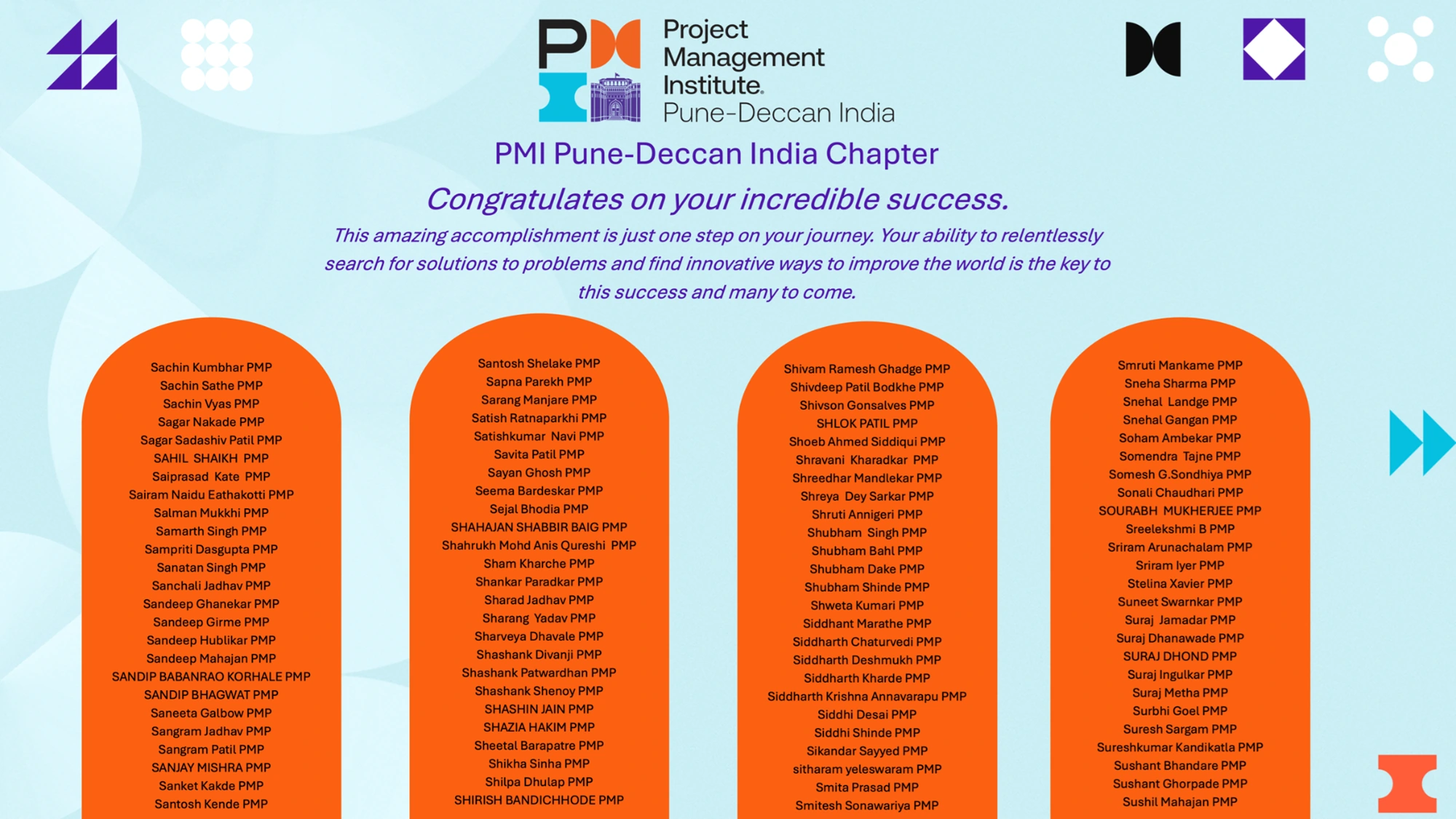
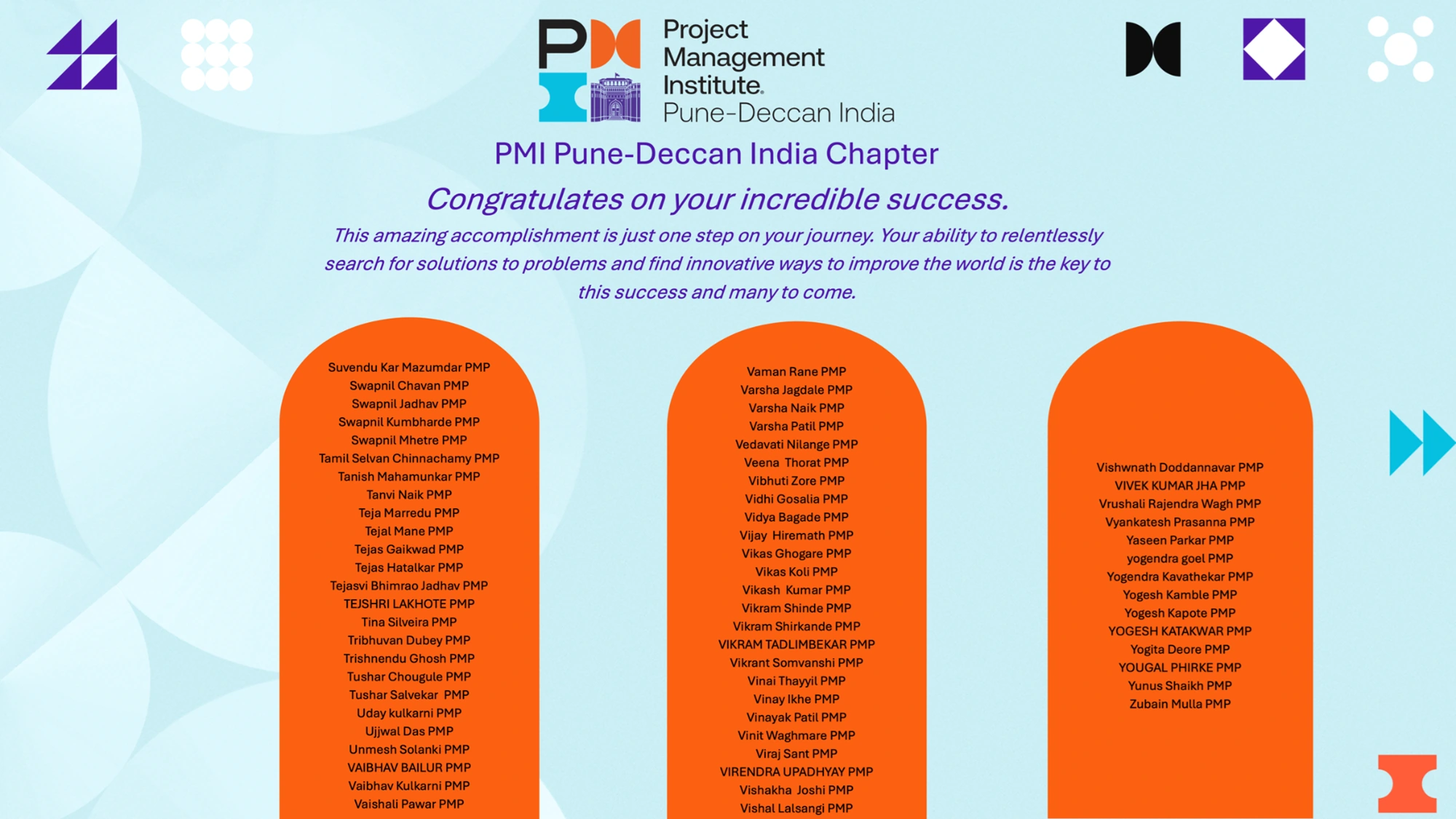
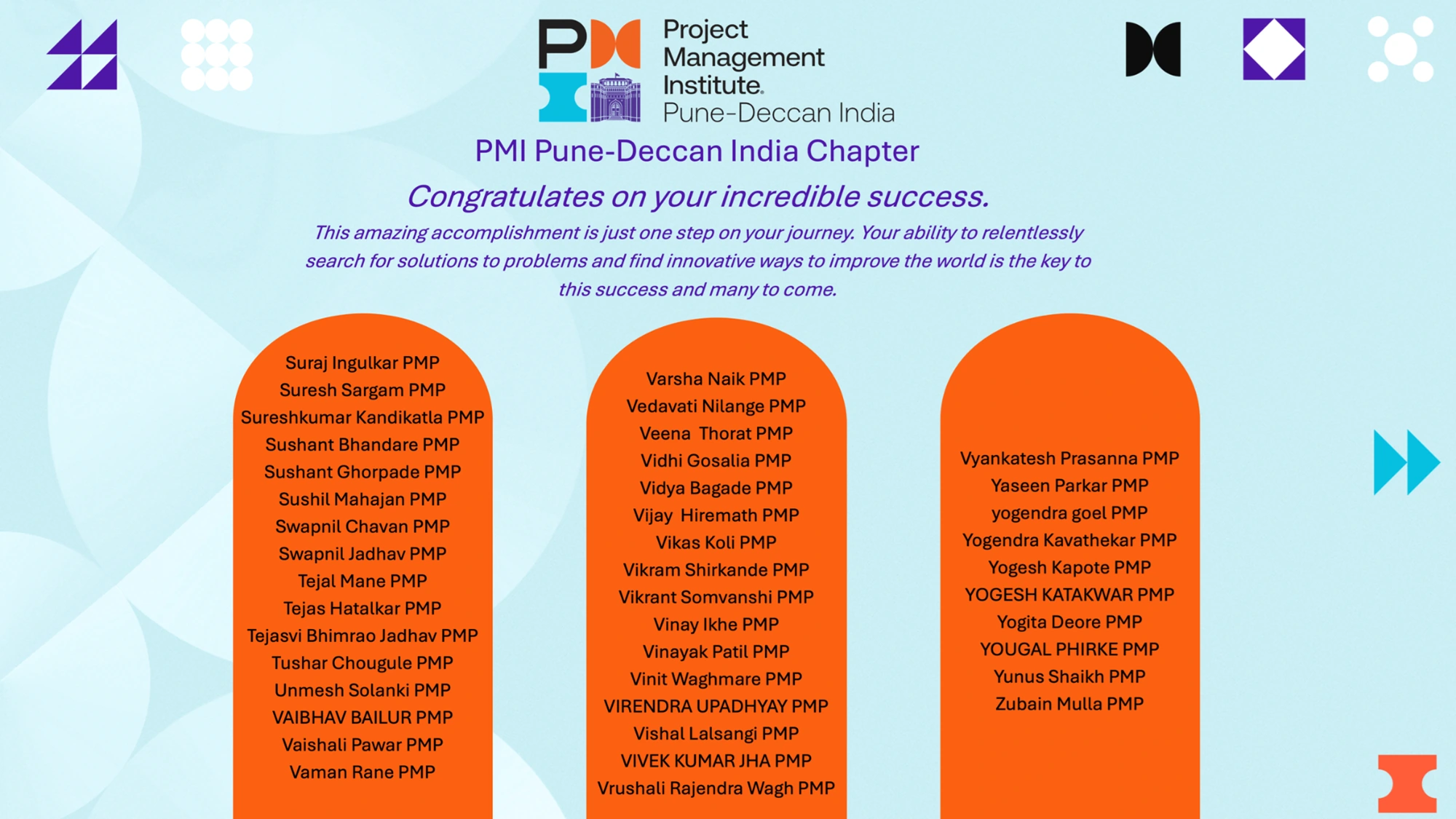
June 2026
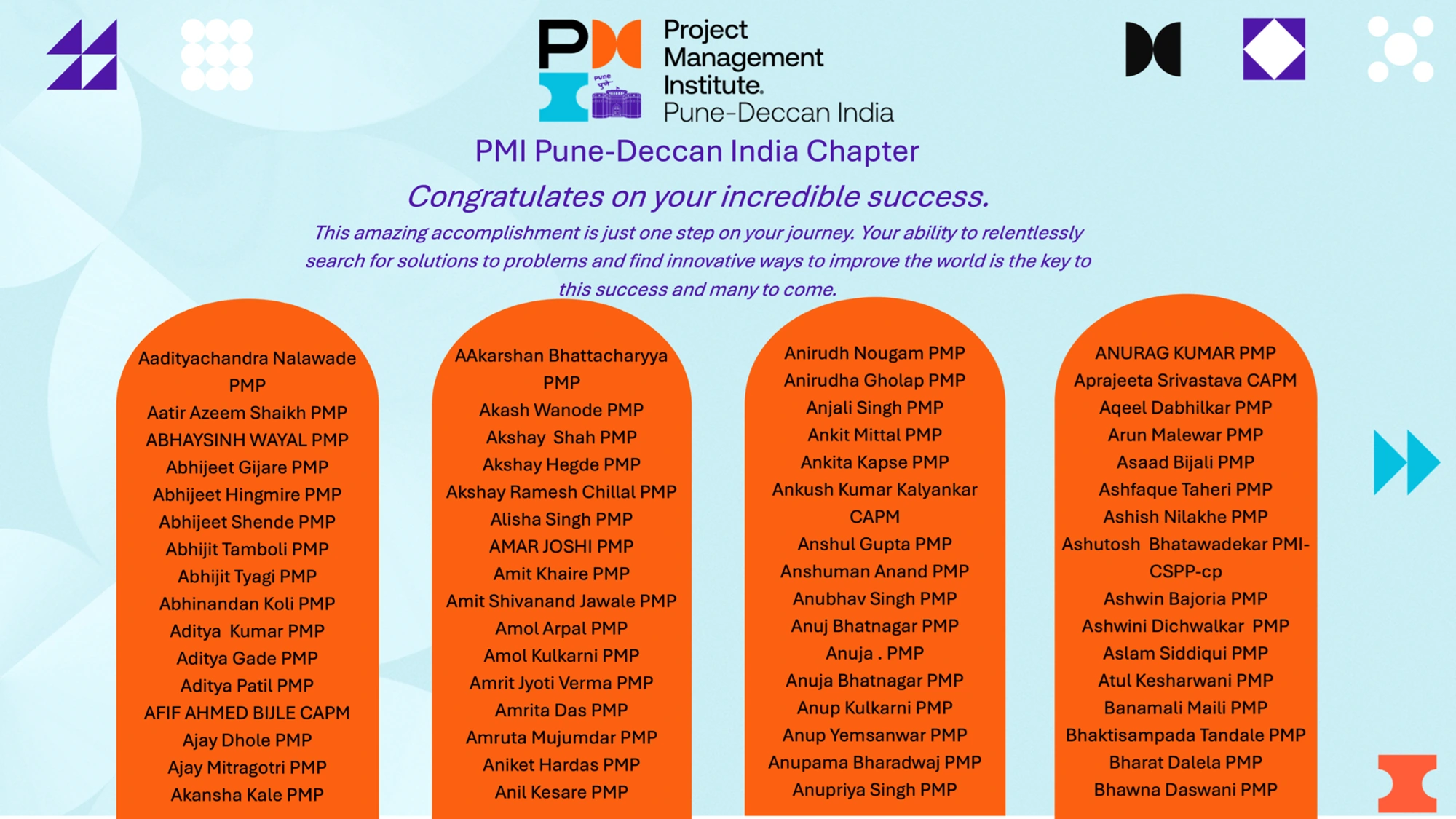
May 2026
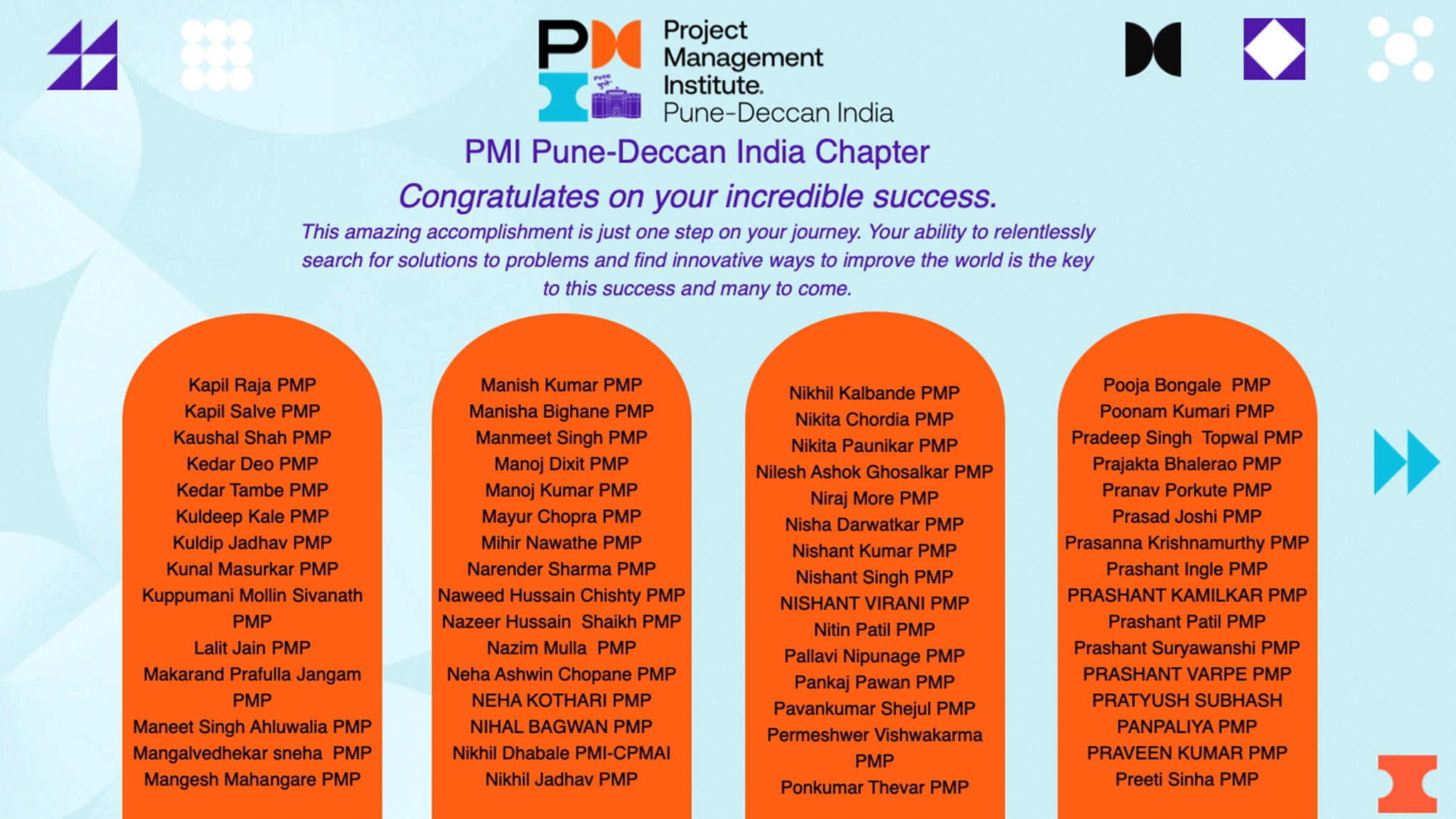
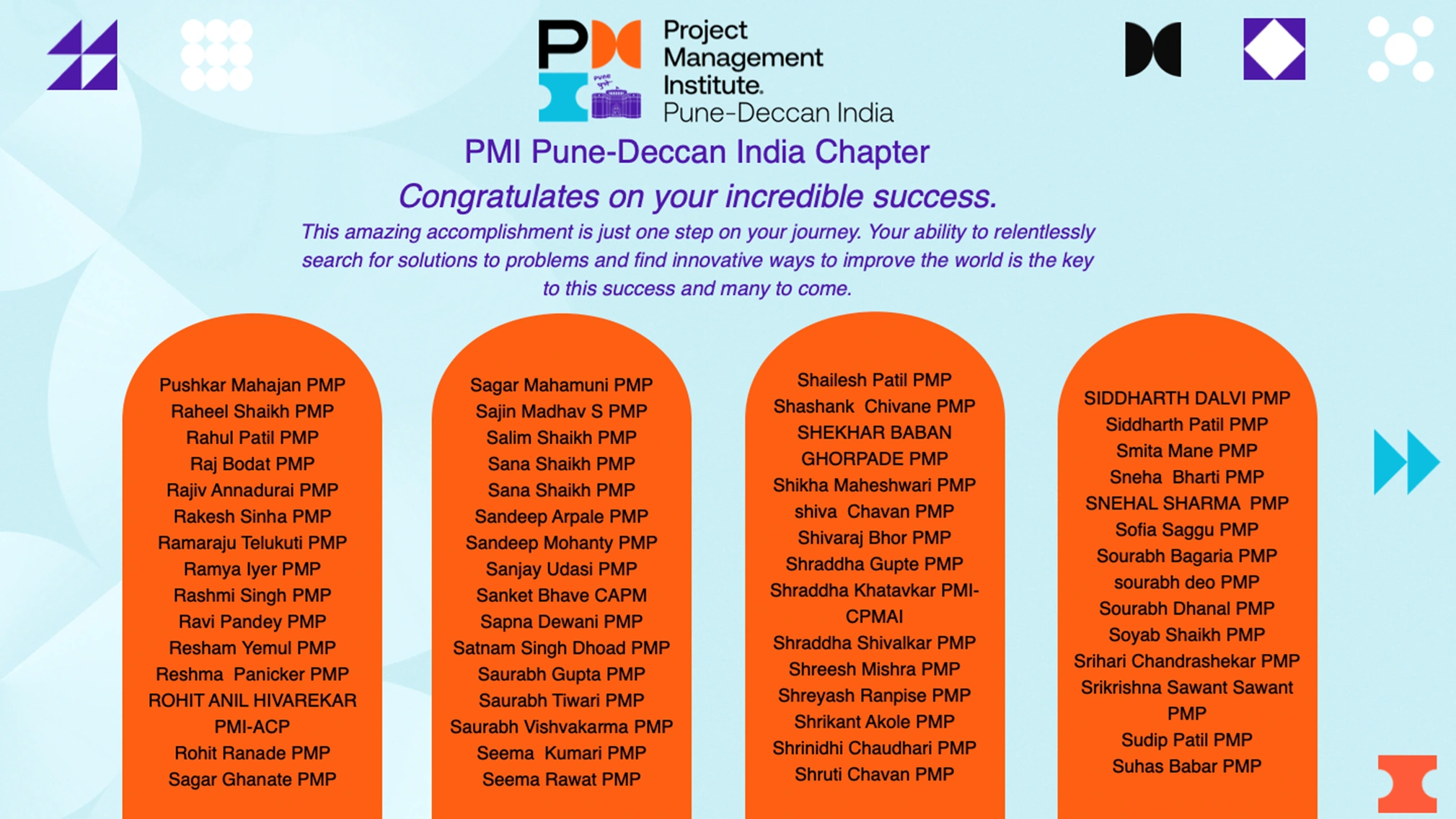
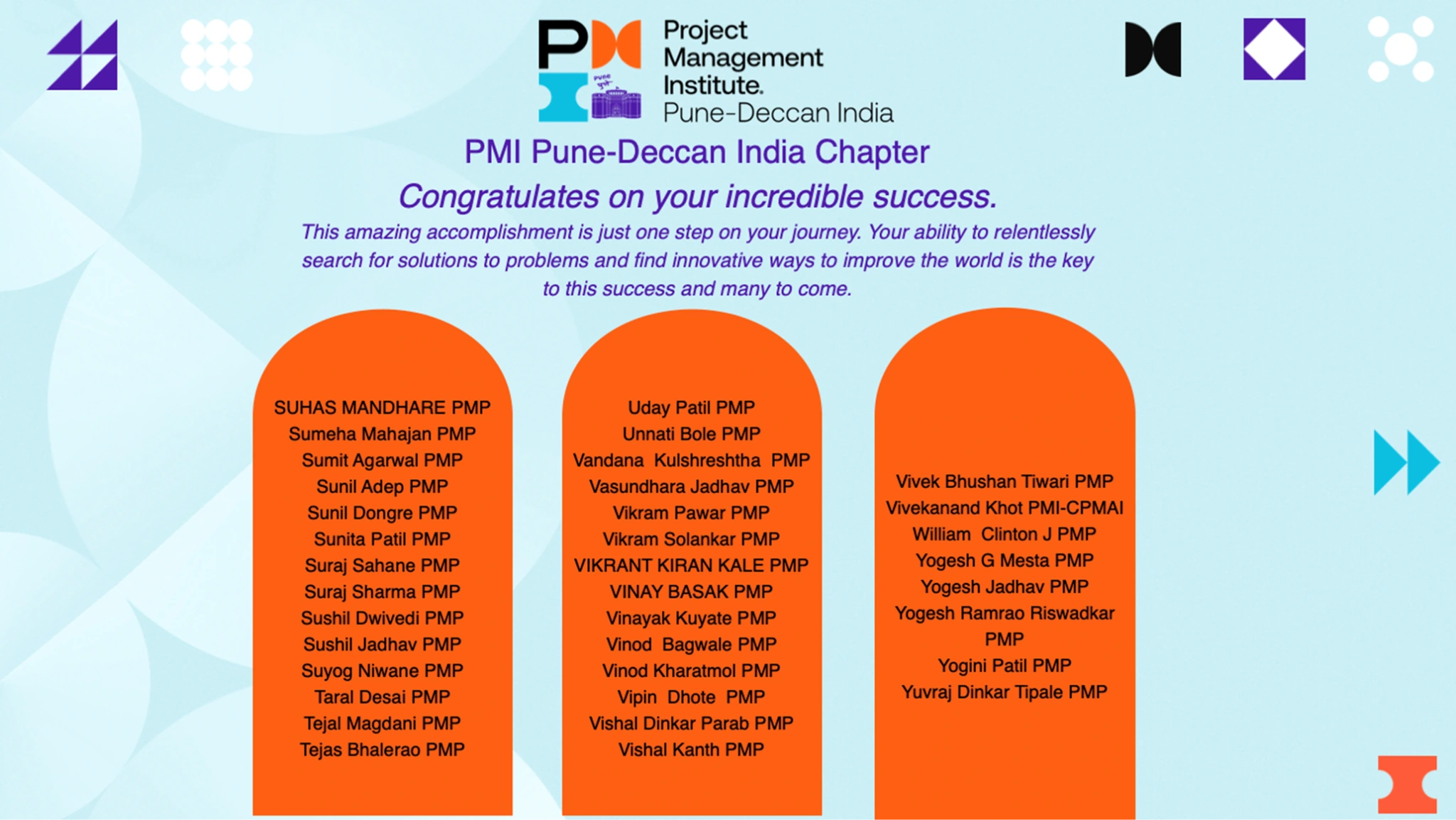
Members wishing to be included can provide their preferred published name, credential, achievement month and a short learning reflection to the Publications team. Please do not send unneeded identity documents or full certificate identifiers for publication.
Share your certification milestone | publications@pmipunechapter.com
Back to contents ↑FROM FY 2025–26
Milestones behind the current programme
A clearly dated look back at the Chapter’s twentieth anniversary and DiSHA 2026.
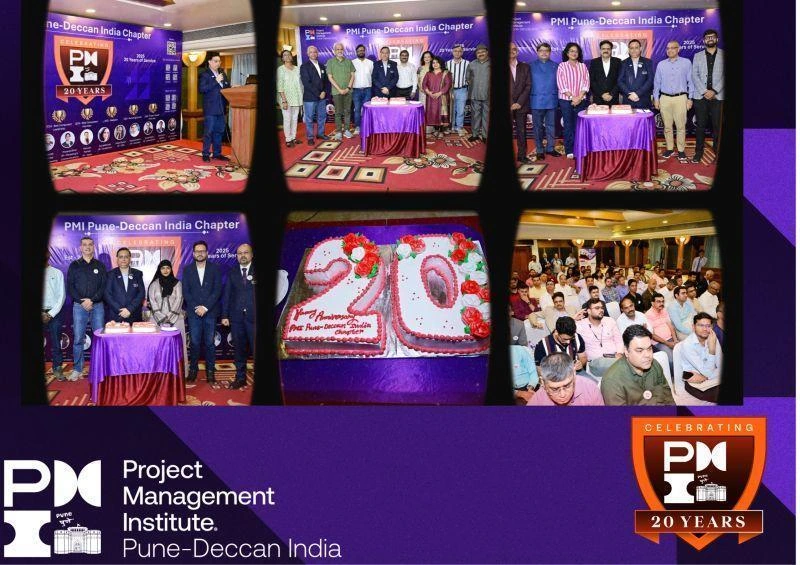
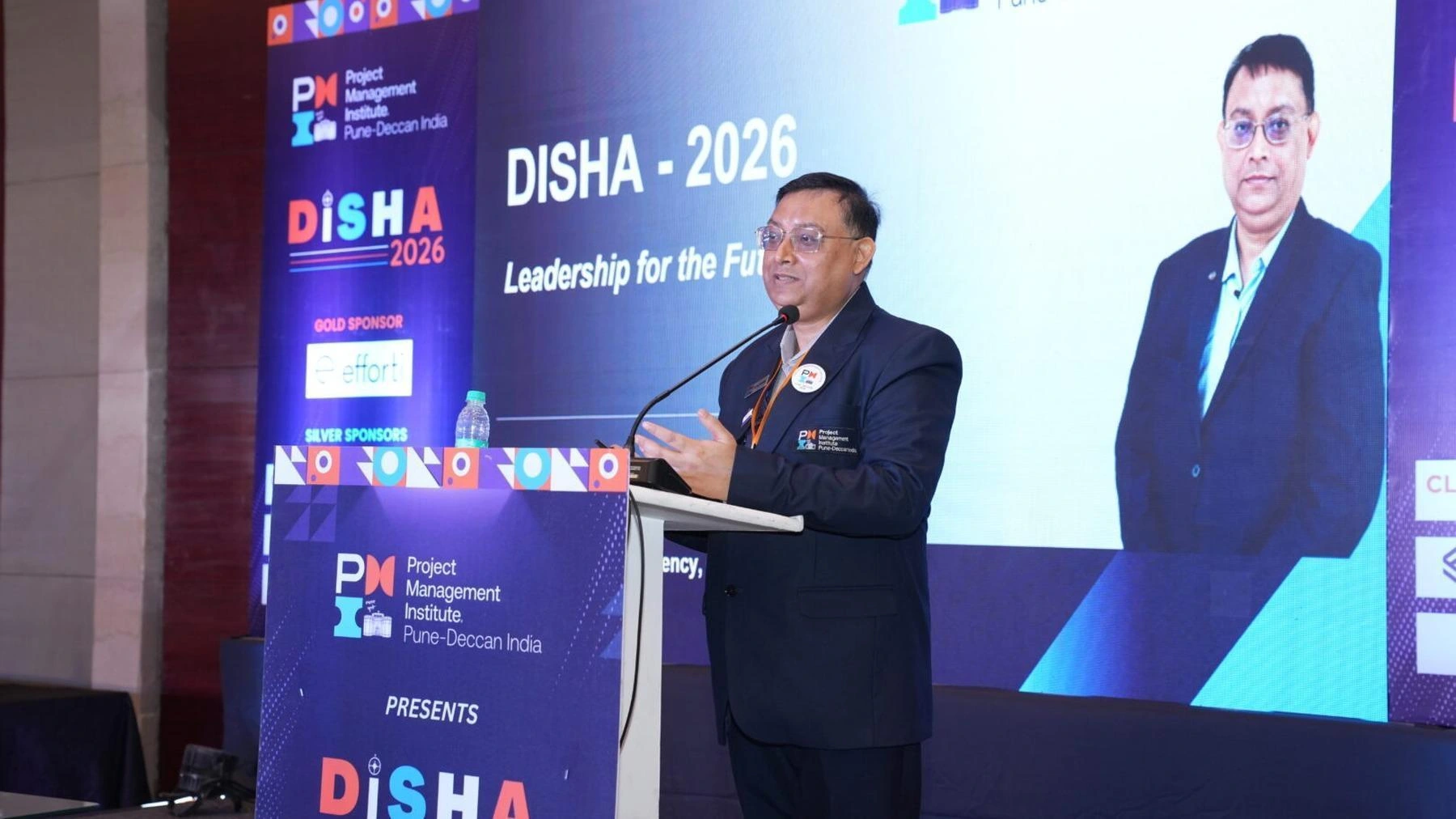
Earlier milestones: twentieth-anniversary celebrations and a speaker at DiSHA 2026.
Twenty years and the 200th monthly seminar
Chartered in 2005, the Chapter marked twenty years during FY 2025–26. The anniversary was celebrated at the AGM on 23 August 2025 and carried into the 200th monthly seminar. Twelve seminars, #195–206, were delivered during that financial year. The current-year series, #207–212, follows those earlier programs.
DiSHA 2026
On 1 February 2026, DiSHA brought more than 350 delegates to Hyatt Regency, Viman Nagar, under the theme “Leading the Future with AI, Innovation and Social Impact”. The programme included keynotes, panels, focused masterclasses and workshops, with awards announced and recognized during the conference.
An AI masterclass was led by Amit Jadhav, and a problem-solving masterclass by Dr. Manoj Apte and Jay Dholakia. These provide concrete examples of professional learning beyond the main-stage programme.
What members can carry forward
A conference becomes more useful when its ideas are revisited through practice, specialist discussions or further learning. The questions raised by AI, innovation and social impact continue to be relevant to project decisions and leadership. The retrospective provides context for this year’s programmes.
Back to contents ↑MEMBER BENEFIT AND PARTNER PROMOTION
Partner offer for the Chapter community
A partner promotion for the Chapter community.
 View full size
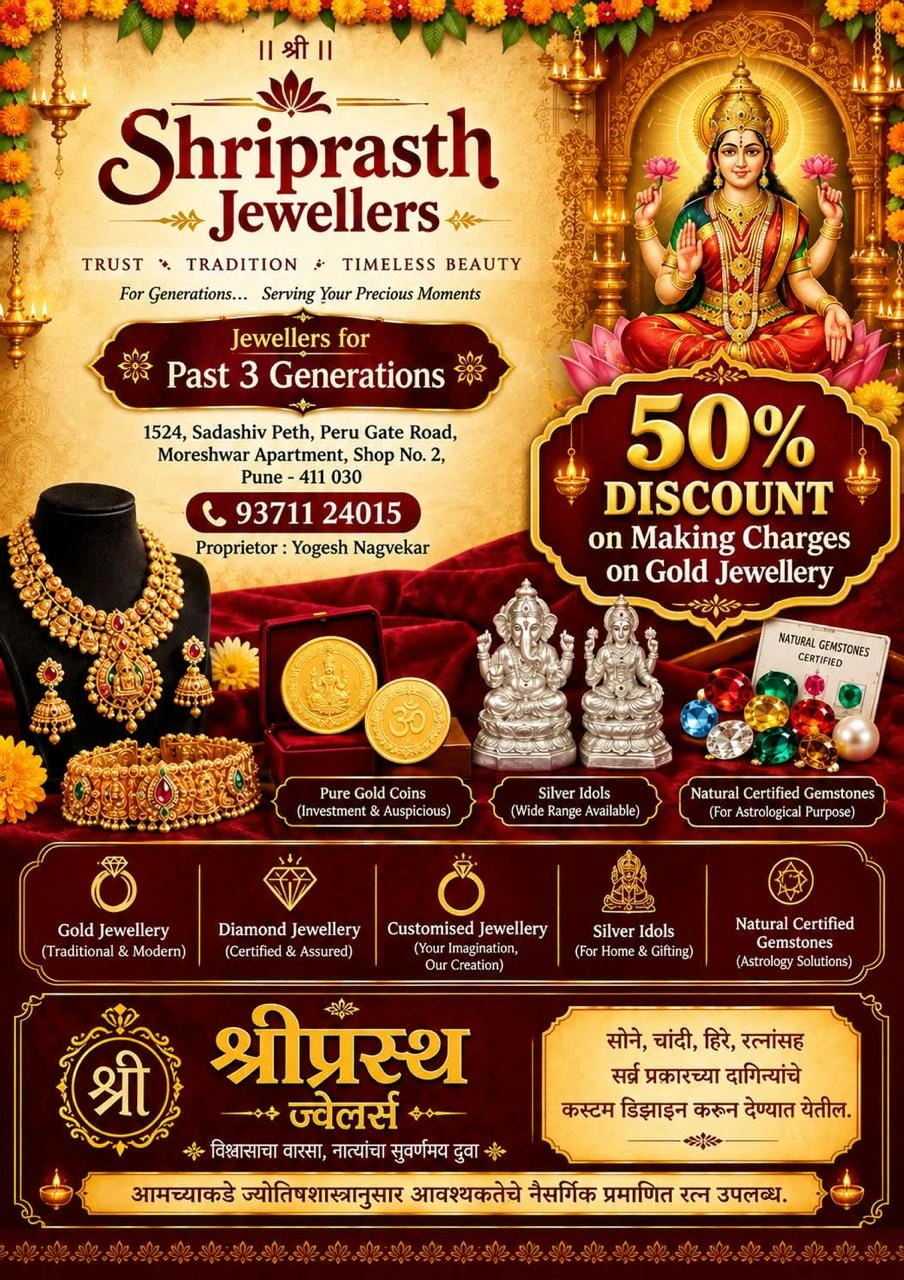
Shriprasth Jewelers partner promotion.
The partner promotion offers Chapter members 10% off making charges on eligible purchases and advertises a festive or gifting offer of up to 50% off making charges on handcrafted jewelry. These are separate offer statements; no combination of discounts is implied.
Offer validity, product eligibility and other conditions should be confirmed directly with the advertiser before purchase. Please refer to the advertiser’s artwork for contact information.
Back to contents ↑MEMBER RESOURCES
Useful links
Official PMI guidance and Chapter participation routes.
Official references
Back to contents ↑EDITORIAL TEAM AND SUBMISSIONS
Write for Member’s Dialog.
Editorial team
Responsibility | Name or team |
|---|---|
Chief Editor | Rinoo Rajesh, President & CEO |
Managing Editor | Lovely Roy, GM - Publications |
Portfolio and section editors | Vallabh Kshirsagar |
Copy editing and fact checking | Afreen |
Design and production | Vallabh Kshirsagar |
Photographs and contributor coordination | Afreen |
How to submit an article or contribution
Send your contribution to publications@pmipunechapter.com. Put “Member’s Dialog submission” and a short topic in the subject line. We welcome practitioner lessons, member experiences, project case reflections, interviews, event takeaways, book or resource reviews and questions that deserve a wider professional discussion.
For an article, a suggested starting length is 500–800 words. Shorter field notes and event reflections are welcome. Explain the situation, the decision or challenge, and what another member could learn. Include a proposed title, your preferred published name, a short professional introduction and contact details for editorial follow-up.
Send editable text and any photographs as separate files. Include captions, names, event dates and credits, and confirm permission to publish. Cite the sources for external claims. Remove confidential client or employer information, and disclose relevant commercial interests so the team can assess the contribution fairly.
Certification achievers and new members can submit their preferred name and verified milestone month for the recognition sections. Programme teams should provide the activity date, delivery summary, member takeaway, next participation route and approved photographs.
NEXT ISSUE — Submission deadline 25th Oct 2026
Managing Editor contact – Lovely Roy, gen-mgr-po-pub@pmipunechapter.com
The editorial team may work with contributors on clarity, length and placement. Submission does not guarantee publication. Member’s Dialog grows more useful when the community shares experience with care and makes it understandable to others.
Back to contents ↑
September 2026 / Issue 1
The conversation continues.
Your Chapter becomes more valuable when you use it.

ONE ISSUE. THREE NEXT STEPS.
Member’s Dialog is a record of the Chapter — and an invitation to shape what comes next.
Explore. Participate. Share what you learn.
MEMBER ACCESS HUB | |
|---|---|
WRITE TO US | |
NEXT ISSUE | Submission deadline: 25 October 2026 |
Learning • Community • Professional growth
SOCIAL PURPOSE AND CHAPTER GOVERNANCE
Social impact and the September AGM
Applying professional discipline to community contribution and institutional decisions.
Project management for social good
The Chapter’s social-purpose offering connects volunteer expertise with community and nonprofit needs. Education, sustainability, rural capability and NGO collaboration are areas in which project-management discipline can help organize purposeful work.
Earlier Chapter programmes explored these questions: seminar #198 examined project management for social good, and DiSHA 2026 placed social impact alongside AI and innovation.
The AGM on 5 September 2026
At the AGM, members approved in principle the Project Librarian initiative and alignment to a January–December governance cycle. Formal by-law and statutory implementation remain subsequent work. PRAKASH G. PATHAK & COMPANY was also approved as the auditor for FY 2026–27.
The September AGM: Chapter representatives and the audience.
Back to contents ↑